
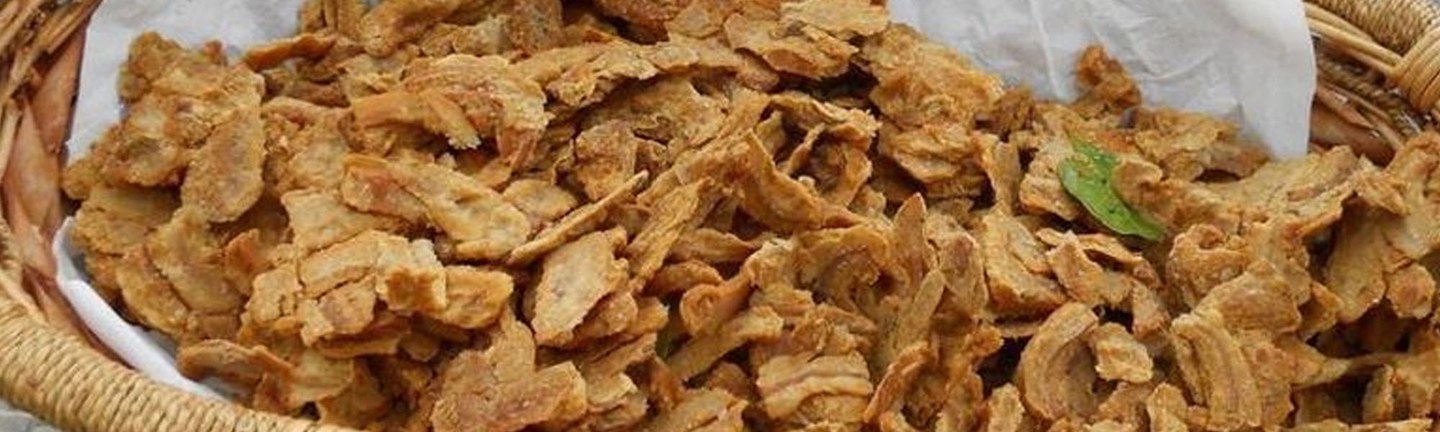
Ciccioli
Produced by slowly rendering pork fat during the preparation of lard, this is a traditional product that arose from the farmers’ need to waste nothing and to turn every part of the animal into a food resource.
In Campagnola Emilia, this tradition is still alive and well, thanks in part to the ‘Il Cicciolo d’Oro’ Association, which safeguards a method of preparation deeply rooted in the rural culture of the area.
The preparation
The pork fat, with the rind removed and cut into small cubes, is cooked slowly for at least three hours in large copper or steel pots.
Cooking over a low heat allows the fat to melt gradually, whilst the water it contains evaporates.
When the pieces turn a golden colour, they are poured onto cloths and pressed.
This process yields lard on the one hand and the solid part – the ciccioli – on the other.
At the end of the process, they can be flavoured with spices such as cloves, cinnamon, pepper and nutmeg, in keeping with the tradition of the norcino (pork butcher).
They can be stored for several months.
Characteristics and use
Rich and flavourful, ciccioli were once a staple energy food in peasant cuisine, often eaten with polenta.
Now, they are mainly served as an aperitif or starter and are used to enhance focaccia, bread and rustic dishes.
Crumbled into the dough, they lend a distinctive flavour to traditional breads and local specialities.
In some regions of southern Italy, such as Irpinia, they still play a central role in traditional dishes such as the so-called ‘pizza di frittole’.
A widespread tradition
Ciccioli are found in many Italian regions, with different names and variations that bear witness to their widespread popularity: from the ‘graséi’ of Reggio Emilia to the ‘gratul’ of Romagna, from the ‘frittule’ of Campania to the ‘cicoli’ of Sicily, right through to the numerous local names that tell their story across different regional cultures.
In Campagnola Emilia, this tradition continues to be celebrated as a living part of the area’s culinary identity.


About us
Where to find us
Opening hours
Press and TV enquiries
Leave us your feedback
