Palazzo Magnani
Timetable
The palace hosts exhibitions and is open to visitors on scheduled expositions or events.
Prices
Ticket prices vary depending on the scheduled exhibition or event.
The palace is currently closed
for restoration work
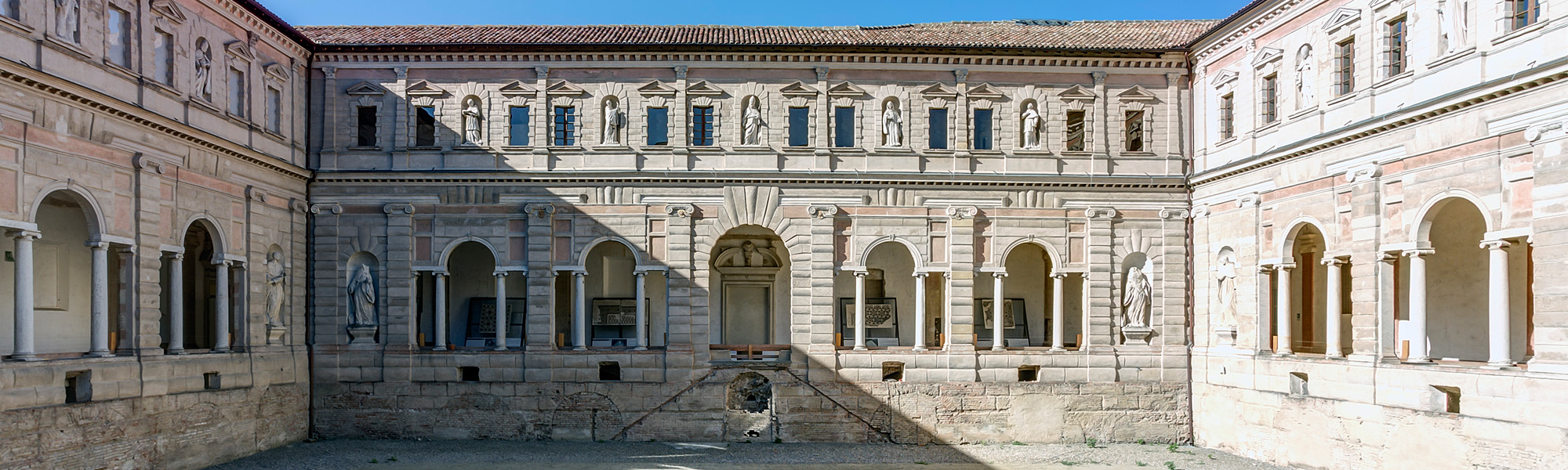
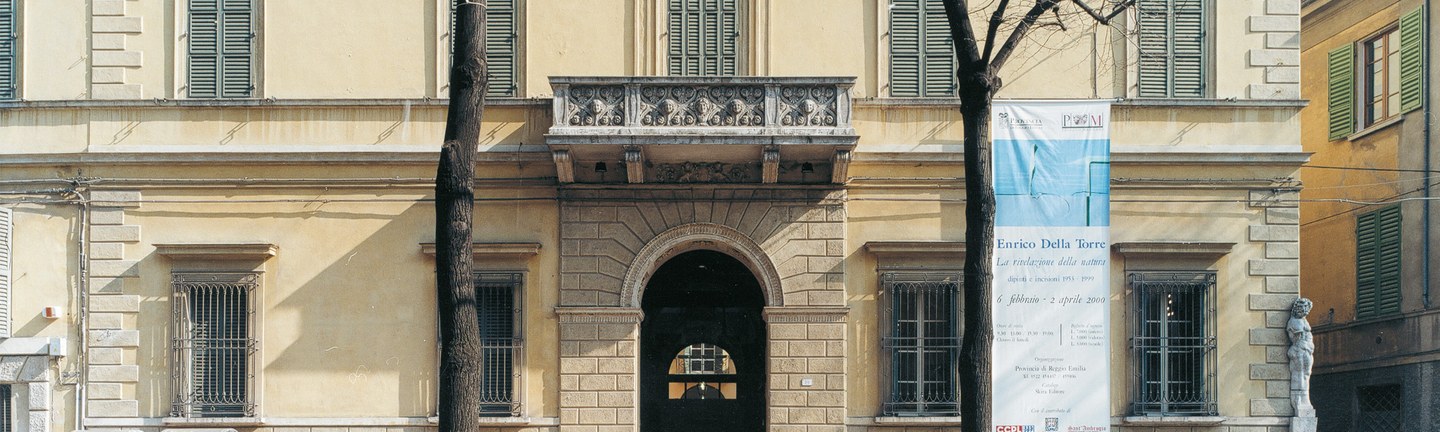
Palazzo Magnani, located in the heart of Reggio Emilia, tells centuries of city history through its architecture, collections, and symbolic details.
The first records date back to 1608, when the palace belonged to the Counts Becchi.
Over the centuries, it passed to the Chioffi, the Magnani, and other noble families, eventually becoming the city residence of Luigi Magnani, an art collector, musicologist, and man of great culture.
In 1984, the palace hosted the prestigious exhibition Masterpieces of Ancient Painting from the Magnani-Rocca Foundation, anticipating the future cultural purpose of the residence.
Following its purchase by the Province of Reggio Emilia in 1987 and restoration work entrusted to architect Ivan Sacchetti, Palazzo Magnani finally opened its doors to the city in 1997 as a cultural center dedicated to art, hosting temporary exhibitions and collections of excellence.
The two-faced Janus by Prospero Sogari known as Il Clemente
One of the most fascinating and singular elements of Palazzo Magnani is undoubtedly the herm of the two-faced Janus.
Located on the right edge of the façade, at the corner of Via Vicedomini and Corso Garibaldi, this sculpture in the round is a true jewel of the Reggiano Renaissance.
Created by Prospero Sogari known as Il Clemente, author of the unfinished façade of the Cathedral of Reggio Emilia, the sculpture represents one of the oldest deities of Roman-Italic religion, guardian of passages, doors, and bridges, symbol of beginnings and ends, of vigilance and protection.
On the building, the "young" face looks toward Via Vicedomini, while the "old" face, framed by a thick beard, turns toward Corso Garibaldi with a deep and meditative gaze.
The ring below bears the date MDCXXVI (1576) and the Latin motto "Aeternum Servabo" on the base, emphasizing the symbolic value of the figure as a perpetual guardian of the palace and its inhabitants.
Palazzo Magnani Today
Now, Palazzo Magnani is a vibrant cultural hub: the rooms host temporary exhibitions, artistic events, and educational projects, offering a dialogue between history and contemporaneity.
Strolling through the rooms means admiring masterpieces of art, immersing oneself in the history of Reggio Emilia, and discovering unique architectural and sculptural details, such as the two-faced Janus, which tell centuries of city life.
Further insights into Luigi Magnani
Luigi Magnani (Reggio Emilia, January 29, 1906 - Mamiano di Traversetolo, PR, November 15, 1984) was one of the most important cultural figures of the Italian twentieth century.
Born to Giuseppe Magnani, an agricultural entrepreneur and dairy industry owner, and Eugenia Rocca, from a noble Ligurian family, Luigi showed exceptional artistic and intellectual sensitivity from a young age.
His education and studies brought him under the guidance of the great art historian Adolfo Venturi; in 1927, he received the Naborre Campanini prize from the Regia Deputazione di Storia Patria for a memoir on Gerolamo Toschi and the Roman Academy of Natural Philosophy.
In 1929, he graduated in Modern Literature from the University of Rome with a thesis on the sixteenth-century sculptor Antonio Begarelli, also earning a postgraduate diploma.
During the 1930s, he collaborated with the Enciclopedia Italiana, editing entries dedicated to art history.
His passion for music led him to study with Alfredo Casella: this dedication gave rise to important musical publications, including Cori della Passione, Oratorio di Emmaus, Pavane, Passacaglia, Due stanze di canzone, and Mallarmé e i miti della musica, as well as highly significant critical essays.
In 1941, when the family moved to Mamiano, Luigi Magnani formed a lasting friendship with Giorgio Morandi, purchasing or receiving numerous works as gifts; even today, the Magnani-Rocca Foundation in Mamiano preserves the heart of his collection.
Recognized both nationally and internationally, in 1962 he became a member of the Pontifical Academy of Fine Arts and Letters of the Virtuosi al Pantheon in Rome.
In 1964, he curated a series of broadcasts for Rai on the occasion of the fourth centenary of Michelangelo's death.
In-depth studies on Beethoven and the Conversation Notebooks marked his essay production.
In 1972, he won the Strega Prize with the novel Beethoven's Nephew, while in 1981 he obtained the Otto/Novecento literary criticism prize in the "Published" section.
In 1982, he published My Morandi, a testament to their friendship and a collection of the correspondence between the two artists.
Luigi Magnani was therefore not only a collector, but a well-rounded man of culture, whose legacy continues to influence the cultural life of Reggio Emilia and the whole of Italy.
Keep exploring