Palazzo dei Musei
Timetable
Tuesday, Wednesday and Thursday
10.00 a.m. – 1.00 pm
Friday, Saturday, Sunday and holidays
10.00 am – 6.00 pm
Monday closed
The Palazzo dei Musei in Reggio Emilia is a fascinating journey through time, a place where history, science and culture intertwine amongst arches, cloisters and extraordinary collections.
A place where time seems to unfold in layers, recounting over seven centuries of history, culture and research.
Its origins date back to 1256, when the Franciscan friars, thanks to a concession granted by Bishop Guglielmo Fogliani, took up residence at the church of San Luca and in the nearby imperial palace, which was then the bishop’s seat.
Over the decades, the building was transformed into a vast monastery, developing around a large porticoed cloister and a large walled vegetable garden, the quiet heart of monastic life.
The monumental appearance we can admire today, however, is the result of a major architectural refurbishment carried out in the early decades of the 18th century.
With the Napoleonic suppressions, the complex underwent a radical change of function: from a convent, it became a barracks and stables for horses, before going on to house educational institutions.
After the Restoration, it housed the Royal Legal Boarding School on the first floor and the Royal College of Chemistry and Physics on the ground floor, marking the beginning of a new scientific vocation.
It was precisely this context that led, in 1830, to the exhibition of Lazzaro Spallanzani’s precious collection, which had been acquired by the City Council a few years earlier.
This was a pivotal moment that transformed the building into a centre for the preservation and dissemination of knowledge.
Another decisive chapter began in 1862 with Don Gaetano Chierici, founder of the Gabinetto di Antichità Patria, which later became the Museo di Storia Patria.
He was also responsible for the Museo di Paletnologia, dedicated to the prehistory and protohistory of Reggio Emilia, organised according to innovative methods that established Chierici as one of the founders of the discipline of palaeontology in Italy.
Now, the Palazzo dei Musei houses an extraordinary heritage.
The Galleria dei Marmi, inaugurated in 1875 and renovated in 1991, offers a fascinating journey through Roman inscriptions, sculptures and stone artefacts from the Middle Ages to the 18th century, with important architectural features also visible in the picturesque cloister.
In the Museum Atrium, visitors can admire Roman geometric mosaics and large medieval fragments from the Cathedral and the city’s churches of San Prospero, San Giacomo and San Tommaso, which bear witness to the vibrant artistic period between the 12th and 13th centuries.
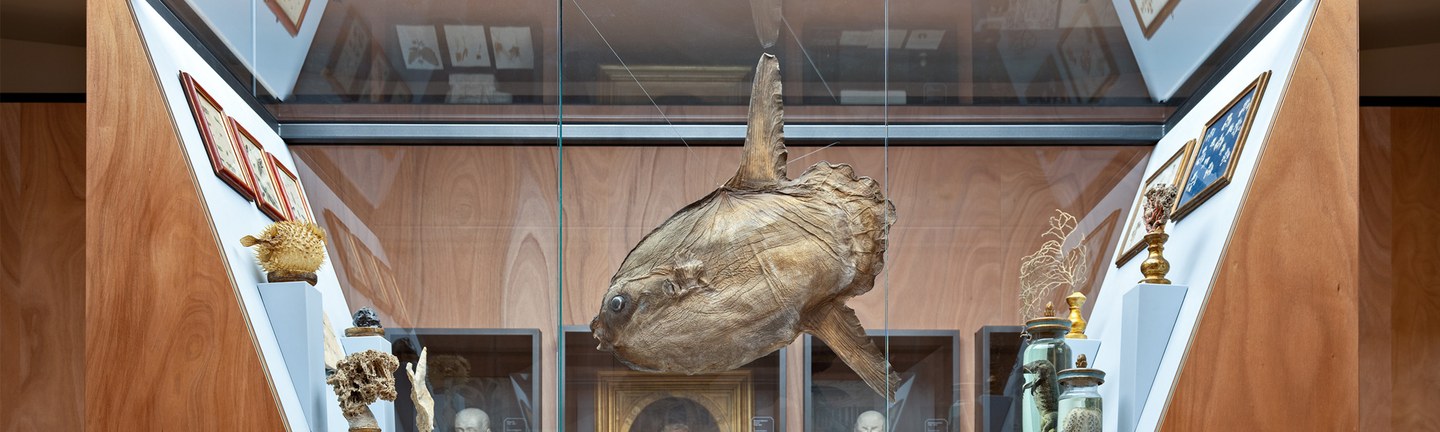
The nineteenth-century collections are complemented by the natural history sections: zoology (the Antonio Vallisneri Room), anatomy (the Paolo Assalini Room), botany and ethnography (the Giambattista Venturi Room), the latter having been redesigned in 1999 and supplemented with items from the Museum of Antiquities in Parma.
A central highlight of the tour is the gallery dedicated to Reggio Romana (1996–1998), which traces the city’s history from its Roman origins through to the Barbarian period via coins, mosaics, ceramics, gold and silverwork, and inscriptions.
Since 2015, the gallery has also housed Regium@Lepidi 2200, a virtual and interactive museum that reconstructs the ancient Roman city using immersive technologies.
The journey continues deep into the past with the sections on the Geology and Fauna of the Reggio area, leading up to one of the most astonishing finds: the remains of Valentina the whale, a 3.5-million-year-old fossilised cetacean discovered in the Secchia Valley.
Newer, Bigger, More Museum
A journey through time, spanning history, art and the contemporary
The recent history of the Palazzo dei Musei began in 2005, when the renowned architect Italo Rota was commissioned to completely redesign and renovate the building.
The project returned the museum’s top floor to the city and refurbished the entire second floor, which now houses the art and archaeological collections, marking a new chapter in the history of this extraordinary place.
Rota envisioned a modern and dynamic museum, where the past engages with the present.
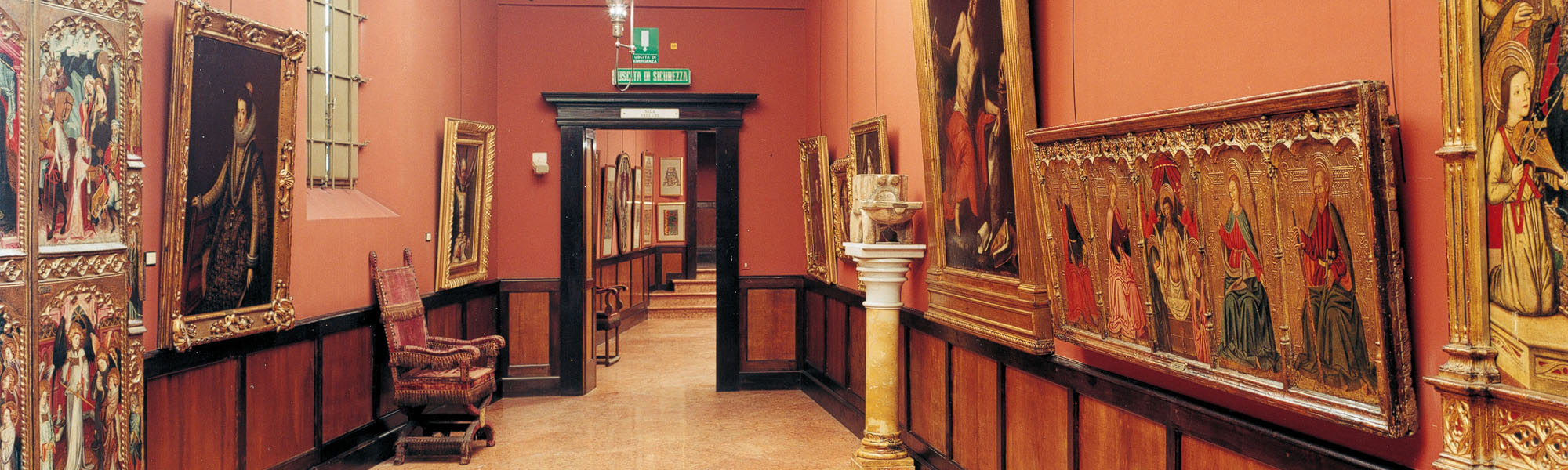
A common thread links the historical collections – such as the famous Spallanzani Collection – to the Fontanesi Gallery and the archaeological collections, leading visitors up to the third floor, where the museum opens up to the complexity of today’s world.
The exhibition itinerary traces the centuries, the key figures and the outstanding achievements of the region: from the founding consul Marcus Aemilius Lepidus to the poet Ludovico Ariosto, from the history of the Italian Tricolour Flag to the photographic work of Luigi Ghirri and the prestigious Fotografia Europea Collection.
The spaces are designed to encourage dialogue and reflection: dioramas and installations stimulate new interpretations and perspectives; the top floor houses the Workshops, spaces for active and creative participation by the public, whilst the Agorà becomes a place for meeting and discussion, where ideas take shape and are shared.
The Manica Lunga (Long Aisle), a temporary exhibition space occupying the entire length of the main gallery on the top floor, stands as a symbol of the contemporary era.
Here, the historic Sperm Whale, one of the museum’s most beloved and symbolic exhibits and a cherished part of the city’s collective memory, has found a new home and is given the prominence it deserves.
Keep exploring