
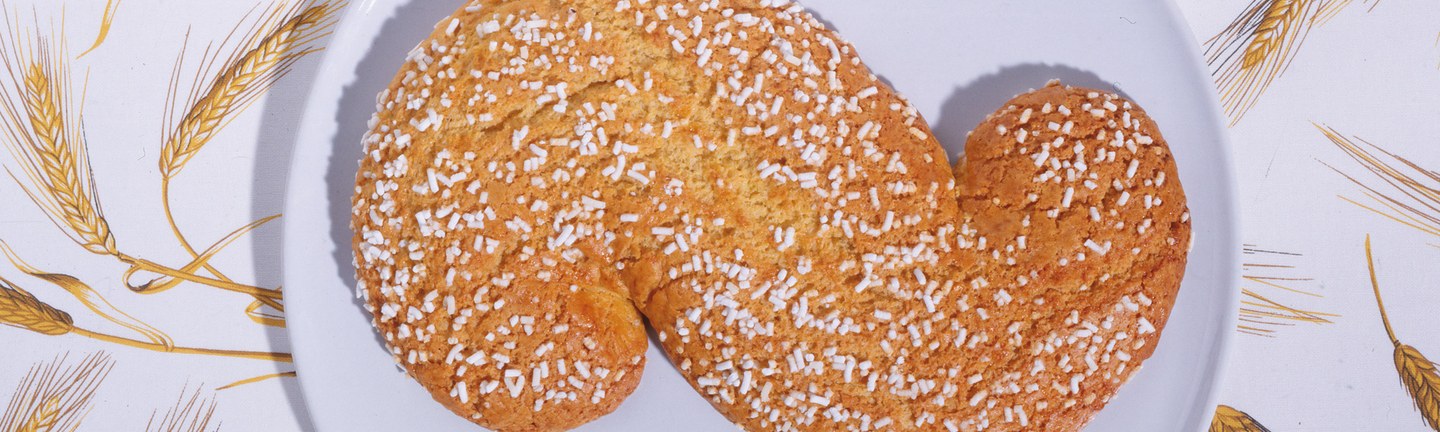
Brasadela
A Symbol of Rural Cuisine
Brasadela comes from a cuisine that made simplicity a true virtue.
The ingredients used were often the same as those for bread: flour, water, and eggs.
This made it widely popular in the countryside and small towns across the province, where the cake was prepared in home kitchens and local bakeries.
Thanks to its dry texture and long shelf life, it represented a valuable food resource for rural families.
It was a cake that could stay fresh for several days, a particularly important feature at a time when food was prepared to last.
From Lenten Breakfasts to Festive Tables
The origins of Brasadela date back to very ancient times. In the past, Brasadel da Acqua was considered a simple and modest food, mainly consumed during religious fasting periods.
It was prepared with a small amount of white flour, permitted within the dietary traditions of the time, and was one of the typical Lenten breakfast foods.
Over time, the recipe evolved and became richer, eventually turning into a beloved homemade dessert.
The Tradition of Bakers and Street Vendors
During the 19th century, Brasadela was a common sight in the streets and squares of Reggio Emilia.
In the colder months, some bakers prepared these light and crisp ring-shaped cakes, sold for just a few cents and greatly appreciated by the local population.
Street vendors carried them in distinctive baskets with curved handles, often displaying them threaded onto long sticks to catch the attention of passers-by.
This now-disappeared image remains one of the most evocative glimpses into everyday life in historic Reggio Emilia.
The Perfect Sweet to Pair with Lambrusco
One of the most beloved traditions is enjoying Brasadela alongside the local wines of the region.
In particular, it is customary to dip it into a glass of Lambrusco or the traditional Bianco di Scandiano, creating a pairing that has defined Reggio Emilia’s food culture for centuries.
This simple gesture reflects the strong connection between traditional pastry-making and local winemaking—two elements that help shape the identity of the territory.
Curiosities
The term Brasadela likely comes from the ancient ring shape of the cake, a feature common to many traditional baked goods in Northern Italy.
Even today, each family preserves its own version of the recipe, passed down through generations and often enriched with small secrets that make every Brasadela unique and special.
Contenuti correlati


About us
Where to find us
Opening hours
Press and TV enquiries
Leave us your feedback
