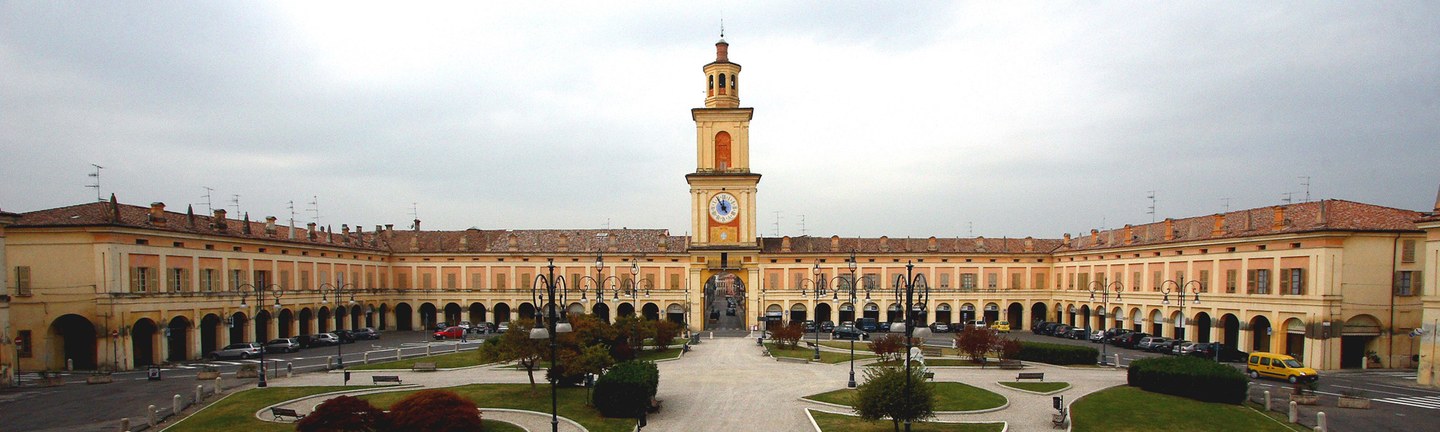
Gualtieri welcomes visitors with the timeless elegance of its Piazza Bentivoglio, a Renaissance masterpiece in the tranquility of the Reggio Emilia plain.
Gualtieri is located in the fertile Po Valley, about 26 km north of Reggio Emilia, surrounded by fields and reclamation canals, symbols of the area's agricultural past and hydraulic works.
The town attracts visitors with its Renaissance elegance and cultural wealth. At the heart of the town is the magnificent Piazza Bentivoglio, one of Italy’s most evocative Renaissance squares, surrounded by historic monuments such as Palazzo Bentivoglio, the Torre Civica, the Casa della Comunità and the Collegiate Santa Maria della Neve Church. Not far away are elegant residences such as Villa Torello-Malaspina-Guarienti and the 18th-century Palazzo Greppi in Santa Vittoria. In the town’s museums, you can discover the life and works of Antonio Ligabue, one of the most important naïve painters of the 20th century, for an experience that combines art, history and landscape.
Gualtieri is a delight to explore in every season. In spring and summer, walks and cycle rides through the reclaimed land and floodplains along the River Po are ideal. In September, the Viaggio a Gualtieri event takes place: a weekend of culture, guided tours, shows and tastings that celebrates art, history and flavours of the local area. In autumn, the village enlivens with events dedicated to food and wine, and local products. Even in winter and spring, you can visit museums, churches and theatres in a more peaceful atmosphere, without rushing.
What to see
Piazza Bentivoglio the heart of Gualtieri, a perfect Renaissance square surrounded by historic buildings.
Palazzo Bentivoglio housing frescoed rooms, the Gentilizia Chapel and exhibition spaces of great artistic value.
Antonio Ligabue Museum Foundation featuring exhibitions dedicated to the painter from Gualtieri.
Antonio Ligabue House Museum the house where the painter lived and worked.
Collegiate Church of Santa Maria della Neve the town’s main church.
Main Events
Festa del Pozzo – third weekend in June Dancing, musical performances, food and drink events.
A trip to Gualtieri (Viaggio a Gualtieri) – September Culture, scenery, food and wine. Performances, concerts, special openings, guided tours, dinners, nature trails to discover and rediscover hidden places and little-known stories of one of Italy’s most beautiful villages.
October Festival – third Sunday in October Tasting and sale of local specialities, funfair, market, Parmigiano Reggiano cheese-making demonstration.
Local History
Gualtieri’s origins date back to the Early Middle Ages, when the village first appears in Lombard documents under the name Castrum Vultureno, which later became Castrum Walterii, in honour of the Lombard nobleman Gualtiero, lord of the area in the 7th century.
The real turning point in the town’s history, however, came between the late 15th and early 16th centuries, when the fiefdom came under the control of the Este family of Ferrara. During this period, major land reclamation works began in the plain, which were essential for transforming a territory prone to frequent flooding into fertile and productive land. The works, started by Cornelio and continued by his son, were subsequently perfected under the Bentivoglio marquisate, which left a profound mark on the identity of Gualtieri. Among the most significant works was the improvement of the water network, with the channelling of the Crostolo stream towards the Po, which helped to secure the area and promote agricultural development. The Bentivoglio family also gave shape to the famous ‘new town’, designed according to refined late-Mannerist architectural plans. Thus arose a spectacular and perfectly proportioned square, conceived by Giovan Battista Aleotti, known as the Argenta, the castle and the Collegiate Church, elements designed to celebrate the prestige and power of the marquisate.
Sport and outdoor activities
Cycle routes along the reclamation lands Nature and history tours in the Reggio Emilia plain.
Curiosities
The name Gualtieri derives from the Lombard name Waltari or Walthari, which was Latinized as Waltherius and then Italianized as Gualtieri, in memory of Gualtiero, an ancient lord who ruled these lands.
Famous People
Antonio Ligabue, one of the most important Italian painters of the 20th century.
Umberto Tirelli, renowned fashion designer and owner of the eponymous tailor’s shop, known for producing highly prestigious film costumes.