San Prospero Tower
Timetable
External viewing only.
The San Prospero Tower: the "sand tower" symbol of the city
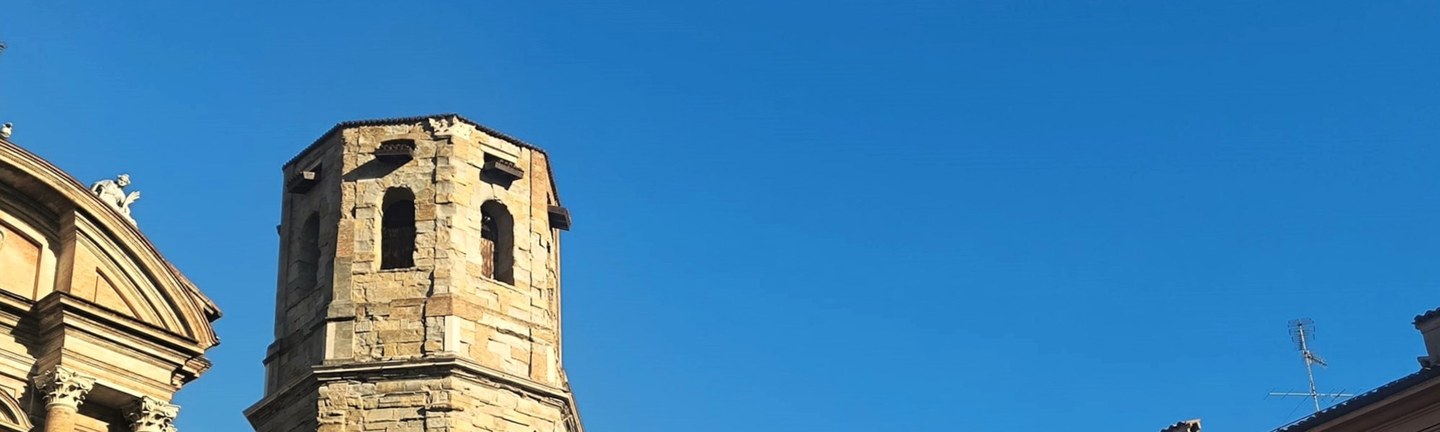
Among the city's most recognizable and fascinating monuments stands the San Prospero Tower, an unfinished octagonal bell tower that is a masterpiece of Reggio's Renaissance architecture.
Designed and built starting in 1535, the tower is traditionally attributed to the work of Alberto Pacchioni and is today one of the most beloved symbols of the historic center.
The San Prospero Tower is often called the "sand tower": its cladding is made of sandstone, a sedimentary rock formed by sand naturally cemented over millennia.
Widespread throughout the provincial territory, this stone is beautiful yet delicate, as it tends to weather due to atmospheric agents.
To preserve its beauty, the tower underwent a meticulous restoration project, completed in 2020, which restored its original elegance.
Construction began under the direction of Reggio architects Leonardo, Alberto, and Roberto Pacchioni, based on a design conceived by the sculptor Cristoforo Ricci, known as Rossino dei Lasagni.
In 1538, the design was submitted to the famous architect Giulio Romano, then active in nearby Mantua, confirming the importance and ambition of the project.
The original design featured a rich decorative layout inspired by the four architectural orders, Doric, Ionic, Corinthian, and Composite, but the latter was never built.
The sculptures of the first Doric order were begun by Ricci himself and, after his death, continued by Prospero Sogari, who completed the third Corinthian order in 1555.
Work resumed between 1563 and 1570 under the guidance of Alberto Pacchioni, but the tower ultimately remained unfinished, adding a timeless aura of mystery and charm to the monument.
Contacts
Piazza San Prospero - 42121 Reggio Emilia (RE)
Keep exploring