
A tour of Jewish Reggio Emilia
A journey through memory, art and culture
Transport methods
Introduction
The Jewish presence in Reggio Emilia dates back to the 14th century. Over the centuries, the city has witnessed both hospitality and persecution, giving rise to a thriving and culturally vibrant community. In 1669, the Este duchess Laura Martinozzi forced the Jews to live in the Ghetto, in the streets now known as San Rocco, Caggiati, della Volta, dell’Aquila, Monzermone and Gennari.
Despite persecution, the community retained a degree of autonomy: its own government, rabbinical court, hospital, schools and welfare centre.
Printers, scholars and prominent families helped to establish the city as a centre of learning and tradition.
The Ghetto was liberated by Napoleon’s troops and finally with the unification of Italy.
But the racial laws of 1938 and the Nazi occupation left deep scars: nine Jewish citizens of Reggio were deported and killed at Auschwitz, while many others found refuge in the city or the countryside.
The itinerary we propose will take you through narrow streets, squares, synagogues and historic houses, evoking the past and the resilience of the Jewish community, right up to the most painful chapters of the 20th century during the Second World War.
1. Canalina Jewish Cemetery
Opened in 1808, the San Pellegrino suburban cemetery is a place of remembrance and contemplation.
The traditional sector respects the custom of not mentioning the name of the deceased.
The 19th-century section, on the other hand, features more prominent gravestones and inscriptions.
Crossing the San Claudio cycle and footbridge, you come to the square dedicated to the deportees, named in honour of all the victims of racial, political and military persecution in the 20th century..
2. Villa Corinaldi – Viale Monte Grappa, 18
This villa was home to Ada, Bice and Olga Corinaldi, who were deported to Auschwitz in December 1943 and killed a few months later. The villa stands as a silent witness to the brutality of the racial laws.
3. San Tommaso Prison – Via delle Carceri, 2
The former prison, now a branch of the State Archives, served as a detention centre for Jews captured in 1943. The registers kept here contain details and physical descriptions of the prisoners, providing a direct account of the ordeal endured by the victims.
4. Il Ghetto ebraico
The old Ghetto stretched between Via San Rocco, Via Caggiati, Via della Volta, Via dell’Aquila, Via Monzermone and Via Sessi. As you stroll through these streets, you can still sense the pulse of everyday life from days gone by:
Via Monzermone, 6: the place where Beatrice Ravà and her daughters were abducted.
Via Monzermone, 8: Oreste Sinigallia's residence.
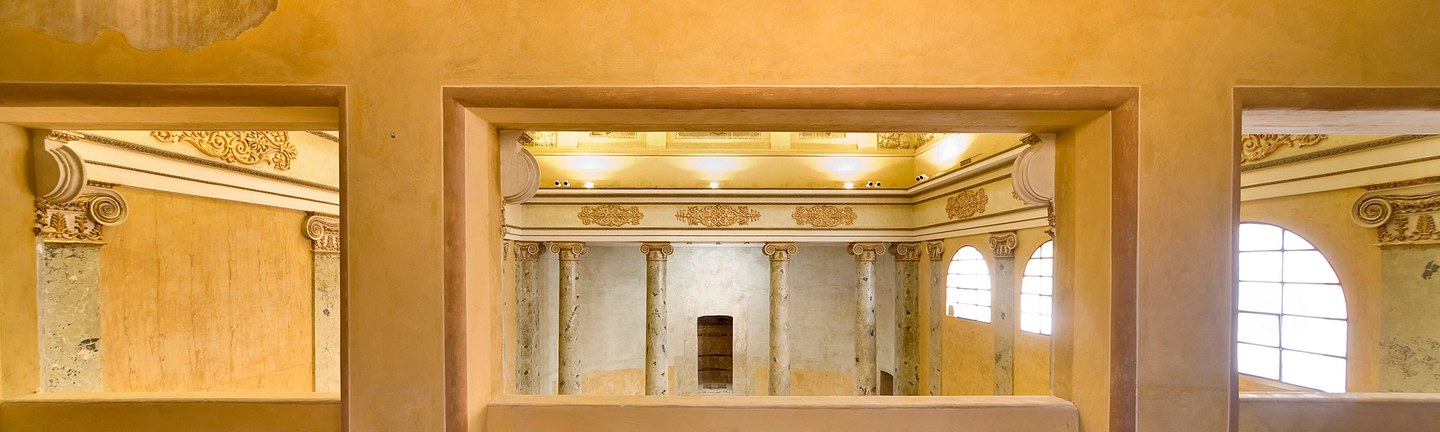
Via dell’Aquila, 3/A: home to the Great Synagogue, built after the establishment of the Ghetto and restored in the 19th century by Pietro Marchelli. Severely damaged by the bombing of 1944, it stands today as a testament to history and memory.
Via della Volta: an old tavern in the Ghetto, once a meeting place for the community.
As you stroll through the narrow streets, you are transported back to stories of everyday life, faith and resilience, on a journey that blends architecture and memory.
5. Via San Pietro Martire, 14
This was the headquarters of the administration responsible for managing property seized from Jews during the Social Republic.
Shops, buildings, farmland and works of art were confiscated, marking the end of an era for many families.
6. Casa Dorina Storchi – Via del Portone, 14
The tour ends at the home of the partisan Dorina Storchi, a symbol of resistance and solidarity.
After 8 September 1943, many survivors of the concentration camps found refuge here, including some members of the Jewish community who had been saved from deportation.
This route is much more than a mere itinerary: it is a journey through the memory of Reggio Emilia’s Jewish community, taking in places of life, suffering and resistance, capable of telling the city’s story through real people and events.
Tips for visitors
Take the time to admire the architectural details of the streets in the Ghetto and the historic houses.
Take a moment to read the plaques and memorial stones: they tell personal stories that restore dignity and preserve the memory of the victims.
The itinerary can be combined with visits to the city’s museums, such as the Museo del Tricolore or the Palazzo dei Musei, to enrich the historical and cultural context of the city.


About us
Where to find us
Opening hours
Press and TV enquiries
Leave us your feedback
