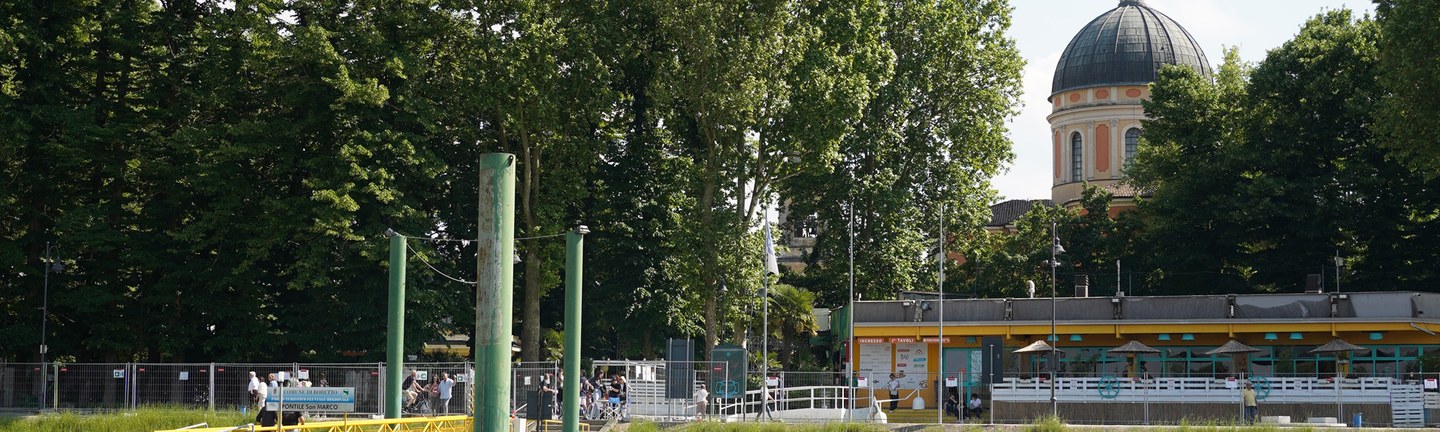
Boretto’s relationship with the Po River lies at the very heart of its identity. River cruises depart from the port, offering visitors the chance to explore the natural landscape and the historic character of the riverside villages, known as the “little capitals of the Po”.
Boretto is situated on the right bank of the River Po, 28 km from Reggio Emilia, separated from the great river only by the main embankment. A typical riverside town, it is one of the most important hubs for regional river navigation, thanks to its well-equipped marina and one of the most significant river marinas in Emilia-Romagna.
Boretto is one of the most authentically “riverine” towns along the entire course of the Po. The well-equipped marina and the recreational and sports marina make Boretto a hub for motorboating and river tourism. During the spring and summer months, a cruise service operates on the Po, offering itineraries of several lengths and, on request, connections to Mantua.
The historic centre, compact and charming, lies immediately behind the main embankment and is dominated by the monumental Basilica of St Mark the Evangelist, which towers over the town as a symbolic guardian of the river. The Town Hall overlooks Piazza San Marco, its Council Chamber adorned with elegant Art Nouveau decorations by Marcello Nizzoli, a leading figure in 20th-century Italian design and creator of the famous Olivetti Lettera 22 typewriter.
The best times to visit are spring and September, when you can combine your time on the water with guided tours and cultural walks along the river.
What to see
Boretto boasts an interesting network of museums exploring the relationship between humans and water:
the Museo del Po e della Navigazione Interna (Museum of the Po and Inland Navigation) dedicated to the history of the river and river transport.
the Casa dei Pontieri Museum which tells the story of the lives and work of those who ensured safe crossings on the Po.
the Museo Multimediale della Bonifica (Multimedia Museum of Land Reclamation ) the only one of its kind, housed within a pumping station dating back to the 1920s, featuring immersive sound and visual installations.
Nearby
In the hamlet of Santa Croce stands the Casa Museo di Pietro Ghizzardi (Pietro Ghizzardi House Museum), dedicated to the famous naïve artist from Boretto, a leading figure in 20th-century art.
Main events
Spring Festival (Fiera di Primavera) - April 25 - May 1 Funfair, market stalls and exhibitions.
Idro GP – International Motorboat Grand Prix (Idro GP – Gran Premio Motonautico Internazionale) – first half of June Spectacular motorboat races.
PiroPo – second half of June A stunning musical fireworks display on the river.
September Festival (Fiera di Settembre) - first weekend of September Concerts, shows, markets and tastings of Borettana onions.
At table
The Boretto area is home to the famous Borettana onion, which has been awarded the De.co. (Municipal Designation) label. Prized for its sweetness and versatility, it is grown in two seasonal cycles - spring and autumn - ensuring its availability on the market all year, and features prominently in numerous traditional local dishes.
Sport and outdoor activities
The Po River offers a wealth of opportunities for outdoor sports and wellness:
canoeing, recreational fishing and motor sports;
the nature cycle path along the banks of the Po, which runs the entire length of the municipality’s riverside area and connects Gualtieri to Brescello;
the Lido Po area, where a Big Bench was unveiled in 2023 as part of the international Big Bench Community Project, locatedin a scenic spot.
Local history
Located along the banks of the great Po Rive, Boretto has its roots in an ancient and fascinating past, where water and land have always been in harmony. Its origins, shrouded in mystery, seem to date back to the prehistoric terramare settlements of Ravisa di San Genesio and Motta Ballestri, between Poviglio and Brescello, in a landscape of reeds, marshes and waterways that intertwined until they flowed into the Po. The western part of the town, on the other hand, maintains a clear Roman influence, linked to the ancient Brixillum.
During the Middle Ages, Boretto experienced a turbulent and contested history: in 1305 it came under the rule of the bishops of Parma, before passing into the hands of the Visconti family. A particularly significant chapter began in 1409, when, along with Brescello, it was occupied by the Venetians. Although brief, Venetian rule left a deep and still visible mark: Boretto shares its patron saint with Venice and, next to the parish church, stands a Lion of St Mark, a symbol of the link with the Serenissima and of the flourishing trade which, thanks to the port on the Po, brought life to the town.
Curiosities
The village is first mentioned by name in documents dating back to 855 as Beruptum, Boruptum and Bisruptum, terms that reflect the frequent breaches in the river’s banks. There is, however, a more poetic interpretation, which suggests the name derives from Poreptum, meaning ‘straight Po’, in reference to the surprisingly straight course the river takes in this very stretch.
Famous people
Boretto is the birthplace of numerous notable figures, including: Saint Alberto degli Avogadri, Mario Nizolio, Guido da Boretto, Don Angelo Dosi, Artemide Zatti (Blessed), Marcello Nizzoli and Pietro Ghizzardi.