Ariosto Theatre
Timetable
The theatre is usually open to the public exclusively during scheduled performances or events.
Prices
Ticket prices vary depending on the scheduled performance or event.
In the center of Reggio Emilia, next to the city's historic gardens, stands the Teatro Ariosto - the city's second theatrical hub, dedicated primarily to prose theater productions.
Its history is intertwined with dramatic events and major cultural transformations that have shaped the artistic landscape of Reggio.
Historical Background
The story begins with a memorable fire: on the night between April 21 and 22, 1851, the Teatro di Cittadella, built near the ancient Gonzaga defensive bastion, was destroyed by flames.
The community, fueled by a passion for the performing arts, reacted with determination, and after just eight months, a new theater named Filodrammatico was rebuilt.
The locals, with a touch of irony, nicknamed it the "cardboard theater" due to its evident flimsiness, but on January 10, 1852, the melodrama La regina di Leone by Angelo Villanis inaugurated the new venue.
For five years, prior to the opening of the Romolo Valli Municipal Theater in 1857, the Filodrammatico served as the city's main entertainment center.
The true transformation came in mid-1875, when enlightened citizens promoted the creation of a politeama (multi-purpose theater), conceived along the lines of London and Parisian models and designed mainly for dramatic plays.
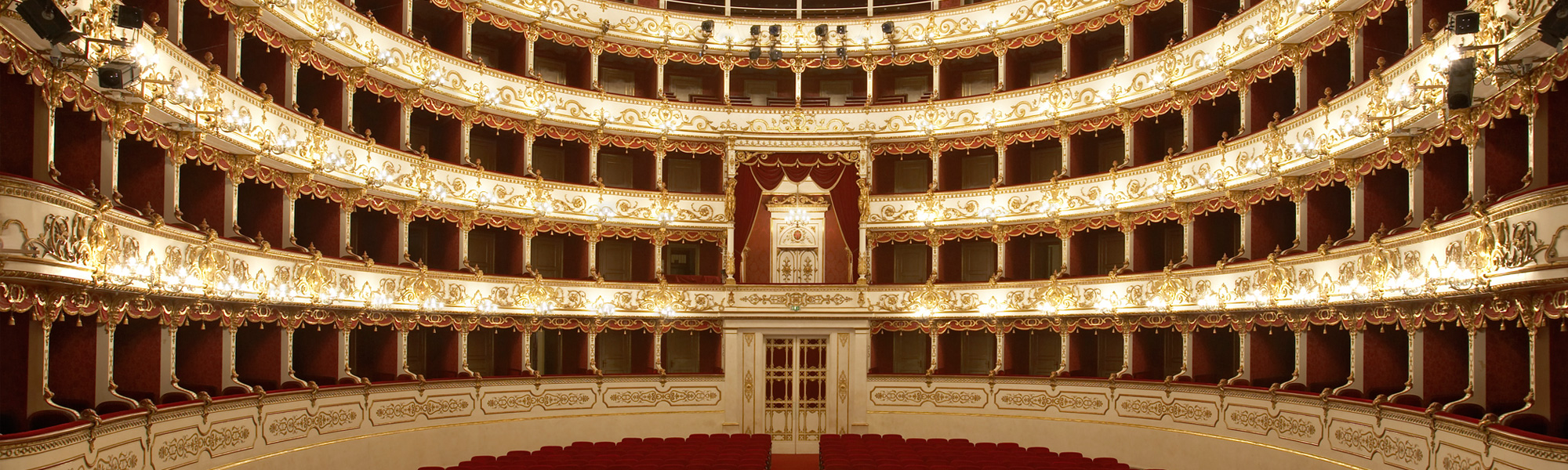
The structure featured a semi-circular cavea and an innovative use of cast iron, with continuous galleries replacing the first and third tiers of boxes, while the second tier retained the traditional box arrangement.
Thus, the Politeama Ariosto was born, envisioned as a modern and versatile theater.
The 20th-Century Face of Teatro Ariosto
In 1927, the theater underwent a major modernization process: the orchestra pit (golfo mistico) was created, and the structures linked to equestrian shows were removed.
On this occasion, the building was completely decorated by the artist Anselmo Govi, who gave it its current, distinctive late Art Nouveau (Liberty) style.
Of particular value are the frescoes on the dome, inspired by episodes from Orlando Furioso and framed by the poem's famous opening lines.
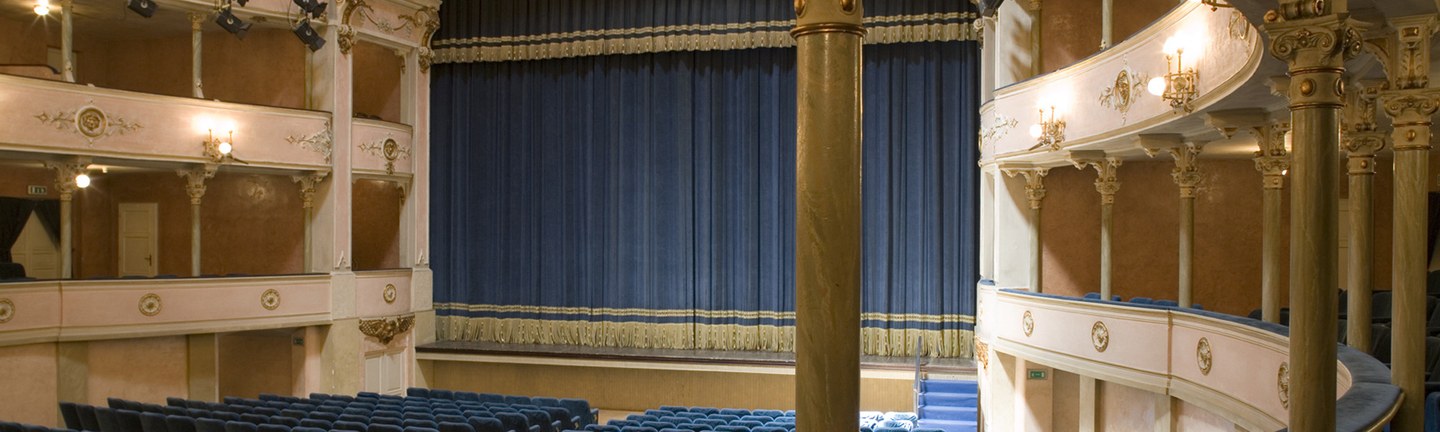
Also extraordinary is the grand, recently restored stage curtain, which depicts Ludovico Ariosto reciting his verses in the garden of a villa - likely the Mauriziano - surrounded by an ideal court of humanists and scholars.
A Living Theater in the Heart of the City
Today, the Teatro Ariosto is a cornerstone for contemporary prose, successfully combining architectural elegance, historical memory, and a high-quality cultural program. It is a place that continues to express, night after night, Reggio Emilia's enduring passion for the theater.
Contacts
Corso Cairoli, 1 - 42121 Reggio Emilia (RE)
- +39 0522 458811 - Valli Theatre Reception
- +39 0522 458854 - I Teatri Ticket Office