Palazzo Fontanelli Sacrati
Timetable
Although the palace is privately owned, the inner courtyard is open to visitors during the day.
Overlooking the historical Via Emilia, Palazzo Fontanelli Sacrati is one of the most fascinating Renaissance residences in Reggio Emilia, the result of a long and layered architectural history reflecting the prestige of the powerful Fontanelli family.
Origins
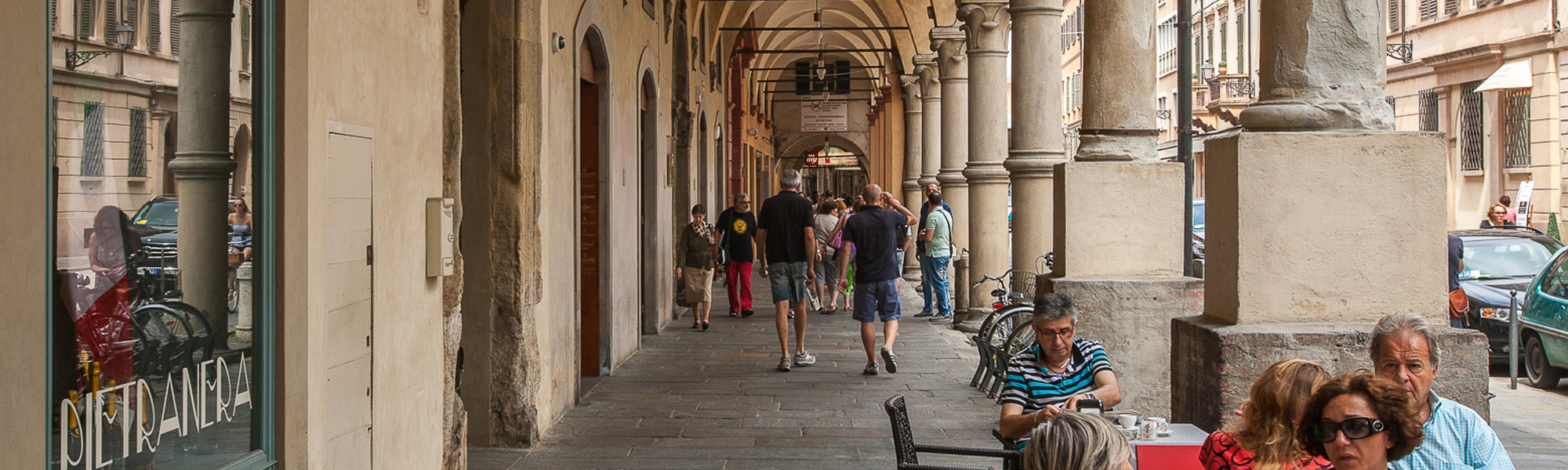
The portico and façade of Palazzo Fontanelli Sacrati were built in 1492 at the behest of the three brothers Giovanni, Andrea, and Jacopo Fontanelli, who altered a pre-existing building they had owned since 1451, when they purchased it from the Da Correggio family.
The 1492 intervention marked a decisive turning point in the palace's appearance: the Fontanelli family promoted the construction of a long, unified front on Via Emilia, adjoining it to a previous residential complex and standardizing its façade.
This project was part of a well-established housing strategy of the family, who over time had repeatedly aggregated various structures to create large, stately homes representative of their status.
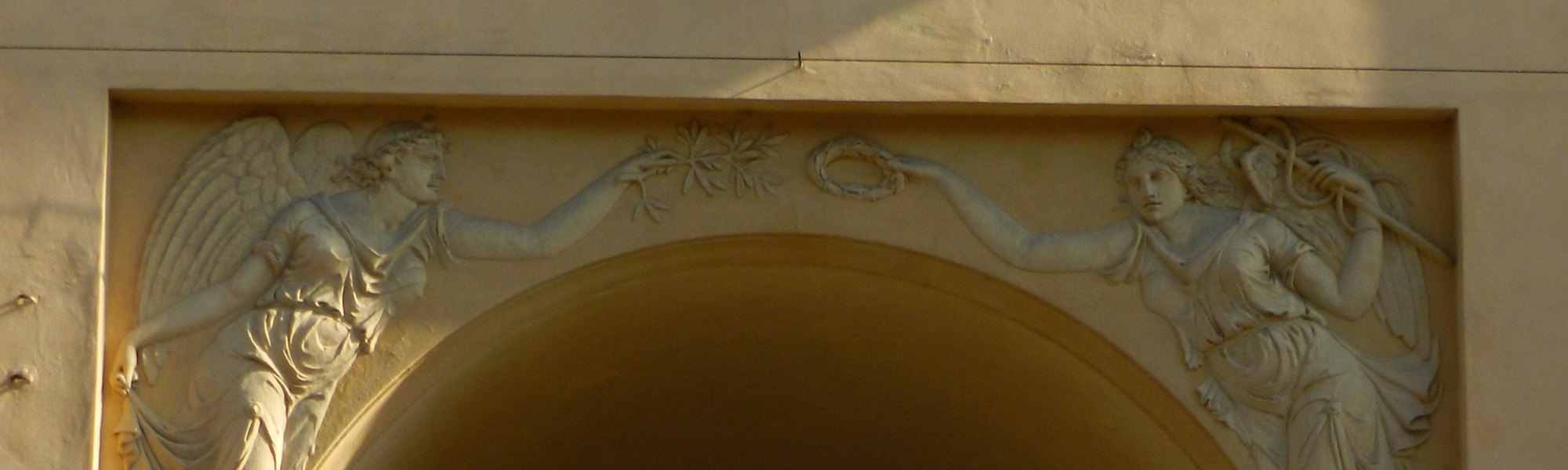
The works continued into the first decades of the sixteenth century, giving rise to an interesting stylistic dialogue: on one side, the fifteenth-century archaism of the water-leaf capitals of the portico, and on the other, the sixteenth-century decorative apparatus with heraldic coats of arms.
This overlap of styles makes it difficult to trace the palace back to a single cultural matrix, although the complex fits within a horizon of references linked to the Ferrarese architectural tradition, which was highly influential in Reggio Emilia between the 15th and 16th centuries.
Architecture and Spaces
Originally, the complex was organized around three courtyards, also including the current Casa Borzagni-Cremonesi, where sixteenth-century Ionic capitals are still visible, superimposed on columns later incorporated into polygonal pillars.
Between 1928 and 1929, a radical restoration campaign - today considered questionable, but consistent with the theories of that era - profoundly modified the façade and, above all, the central courtyard.
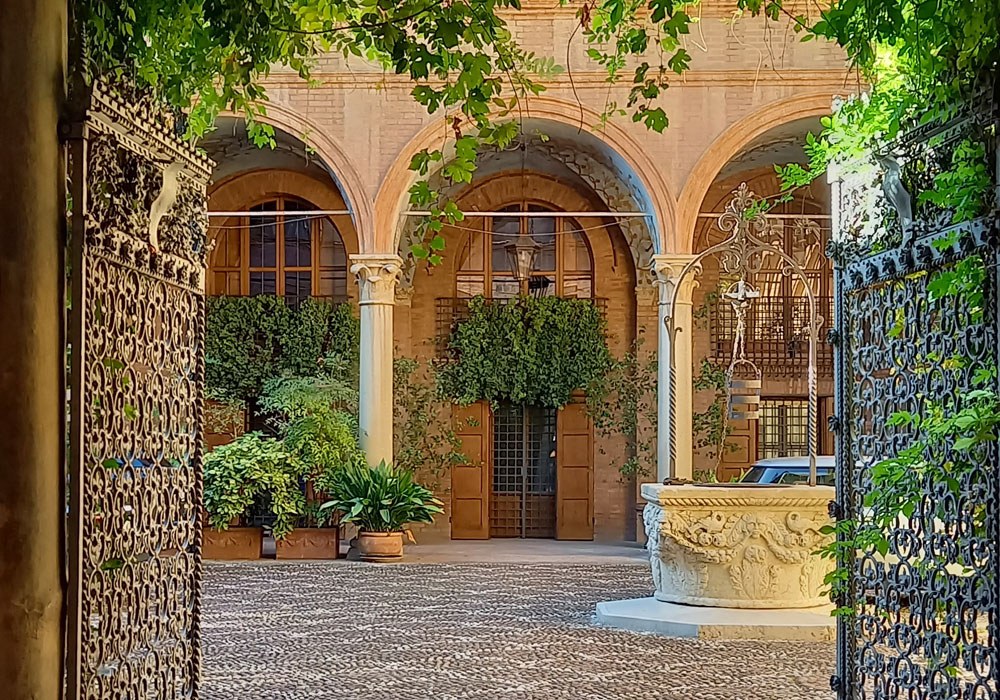
The Renaissance columns now appear set against the left wall, which is crenellated and decorated with the coats of arms of Reggio families related to the Fontanelli, as well as sixteenth-century motifs inspired by the second courtyard of Palazzo Ruini.
Curious and significant is the inclusion of a shield with the fasces, dated 1929, which also features the chronology according to the calendar imposed by the fascist regime.
In the center of the courtyard stands a stone wellhead from Verona, a modern addition but of great scenographic effect.
The elegance of the ensemble is completed by the lantern and the wrought-iron gate by the Reggiano master Giuseppe Bagni, as well as the striking coffered loggia.
The monumental staircase is embellished by a nineteenth-century painting depicting Aurora on her chariot, surrounded by cherubs and plant scrolls, accompanying the visitor on a journey full of history and symbolism.
Contacts
Via Emilia San Pietro, 27 - 42121 Reggio Emilia (RE)
Keep exploring