
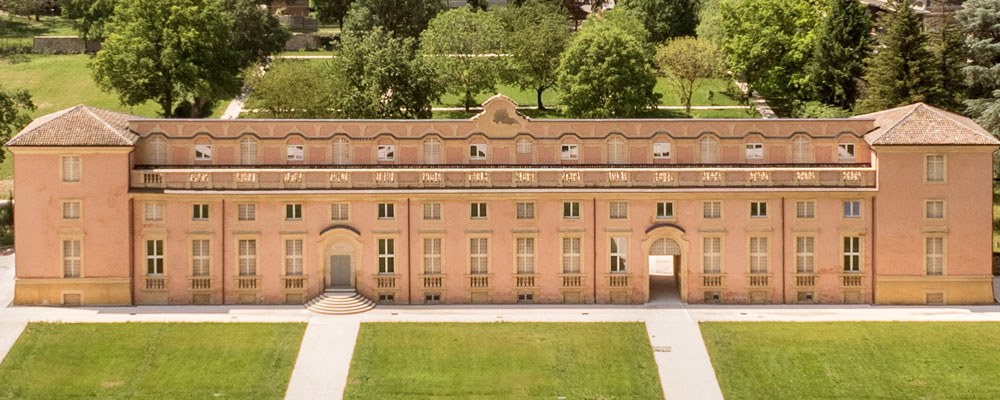
Municipal Palace
Strolling through the streets of Correggio, it is impossible not to be captivated by the elegant, undulating facade of the Palazzo Municipale, a building that tells the story of centuries of city history.
Originally the home of the Confraternita di San Giuseppe Patriarca (Confraternity of Saint Joseph the Patriarch), it served as the seat of public schools starting in 1724 and was converted into the municipal residence in 1783. The structure is the result of joining various preexisting buildings, with the oldest section located on the left.
The facade, remodeled in the 20th century, conceals an extraordinarily well-preserved 18th-century interior. An imposing grand staircase leads to the first floor, which houses commemorative plaques, coats of arms of the Lords of Correggio, and historical standard samples of materials and measurements used during the Principality. Among the prominent artworks stands a bust of Giuseppe Garibaldi, sculpted by Vincenzo Vela, while the walls of the atrium bear the names of the city's most illustrious citizens.
The halls of the Town Hall preserve 19th-century frescoes and decorations created by local painters Luigi Asioli and Andrea Capretti (1821–1870). The vault of the central hall displays evocative views of the city, while an ancient clock set within a painted architectural frame can be seen at the end of the first-floor corridor.
The most fascinating part of the building is located to the left of the undulating facade, beneath the portico with two main doorways. The doorway on the right leads to the former Church of the Confraternita di San Giuseppe Patriarca, built in 1503 for charitable purposes and currently used for municipal offices.
Since December 2000, several rooms within the Town Hall have hosted a permanent exhibition dedicated to the Correggio-born painter Giovanetti, featuring fifteen exhibited works that turn a visit into a journey through local history, art, and culture.


About us
Where to find us
Opening hours
Press and TV enquiries
Leave us your feedback
