
Church of Santi Carlo and Agata
Timetable
Depending on the exhibition or event taking place.
Prices
The church is open to visitors during events and/or exhibitions.
In the heart of Reggio Emilia’s historic centre stands the Church of Santi Carlo and Agata, now deconsecrated but reborn as a striking exhibition space for exhibitions, installations and artistic performances.
Its elegant Baroque architecture, combined with an atmosphere suspended between the sacred and the contemporary, makes it one of the city’s most fascinating venues.
From medieval origins to Emilian Baroque
The church was built on the site of a pre-existing oratory dating back to 857 and was dedicated to Saint Agatha in 1549.
In the early 17th century, the dedication was extended to include Saint Charles Borromeo, to whom the confraternity named the new place of worship.
Between 1662 and 1674, the Confraternity of Santi Carlo and Agata undertook a major restoration and architectural renovation, entrusted to the architect Girolamo Beltrami based on a design by Bartolomeo Avanzini, the renowned architect of the Ducal Palace in Modena.
The work gave the building its current refined and balanced Baroque character, which harmoniously combines devotion and formal beauty.
In 1826, the church became the seat of the Confraternity of the Invention of the Holy Cross, also known as the Confraternity of Death, which continued its worship and charitable activities here.
A Baroque masterpiece of elegance and proportion
The Church of Santi Carlo and Agata is a perfect example of refined Baroque architecture, characterised by an elliptical plan that enhances the interior space with a highly sophisticated visual effect.
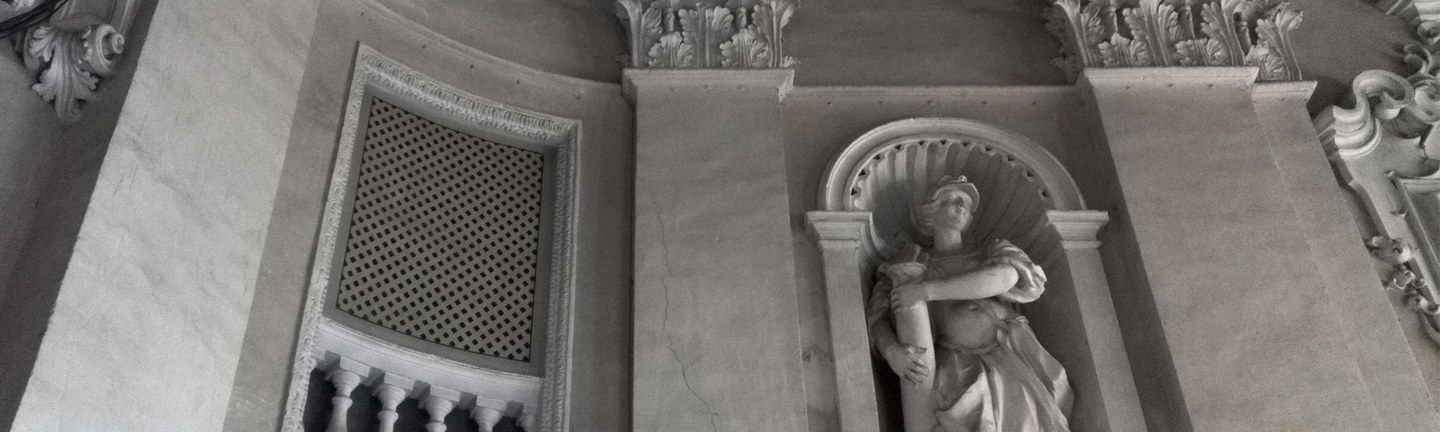
The niches house allegorical statues depicting the Cardinal Virtues – Prudence, Fortitude, Justice and Temperance – whilst the rich decorative stuccoes and the balustrade of the ancient organ create a harmonious and theatrical ensemble, in keeping with the artistic sensibility of the 17th century.
Outside, the sober and elegant façade is adorned with two 17th-century marble plaques commemorating Orazio Colombo and Sebastiano Camuncoli, prominent figures in the city’s life at the time.
From the sacred to contemporary art
Today, although no longer consecrated for worship, the church has become a dynamic cultural space where the past engages with the present.
Its Baroque lines and the light filtering through the windows provide a striking setting for exhibitions, installations and contemporary art projects, transforming the former place of worship into a symbol of cultural regeneration in the heart of Reggio Emilia.
Contacts
Via San Carlo 1 - 42121 Reggio Emilia
- +39 0522 1757930 - Cultural Heritage Office, Curia of Reggio Emilia


