Boiardo's Fortress
Timetable
The interior of the Rocca dei Boiardo is currently closed to the public for restoration work.
Eight centuries of history, art and power
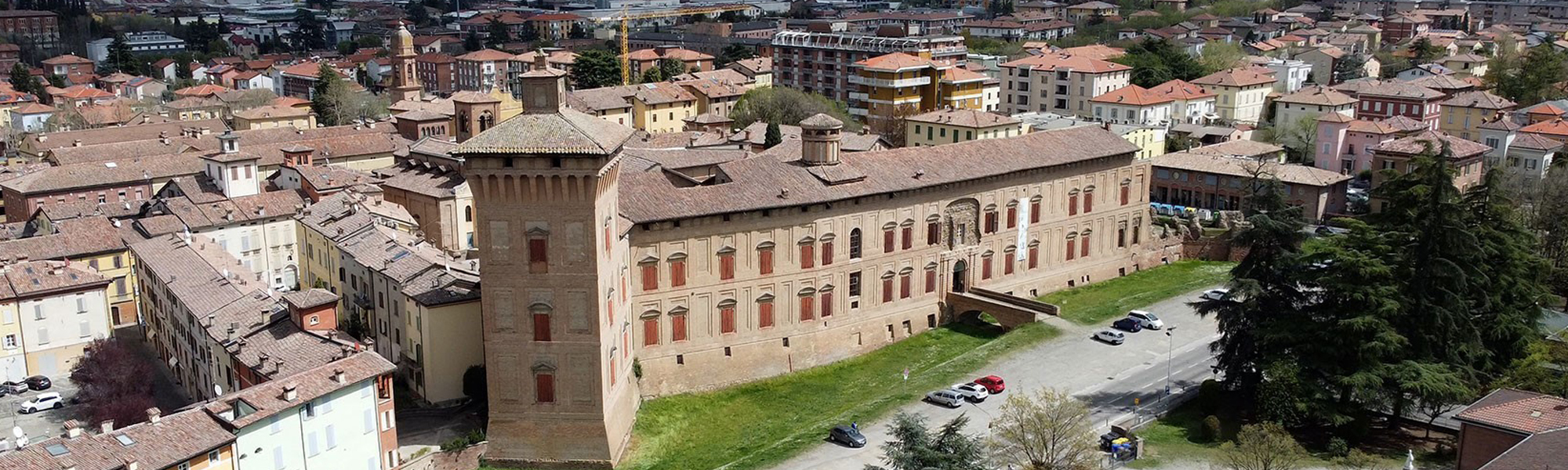
The Rocca dei Boiardo dominates the historic center of Scandiano as the town's primary landmark and the symbol of local political power for over eight centuries.
A monument of extraordinary historical and artistic importance, the fortress preserves a fascinating synthesis of Medieval, Renaissance, and Baroque architectural layers.
The origins of the stronghold date back to the 12th century, when it was erected by the Da Fogliano family as a defensive fort complete with curtain walls, a moat with a drawbridge, and watchtowers.
In 1423, ownership passed to the Boiardo family, who inhabited it for 137 years and gradually transformed the military fortress into an elegant Renaissance residence.
During this period, renowned painter Nicolò dell’Abate created the celebrated fresco cycles in the Camerino dell’Eneide, featuring scenes from Virgil’s epic poem.
These masterpieces were transferred to the Galleria Estense in Modena in the late 18th century.
In 1565, the Rocca became the seat of the Thiene family, who commissioned a major renovation project from the architect Giovan Battista Aleotti (known as L’Argenta).
Aleotti was responsible for some of the site's most defining architectural features:
- the monumental grand staircase leading to the piano nobile;
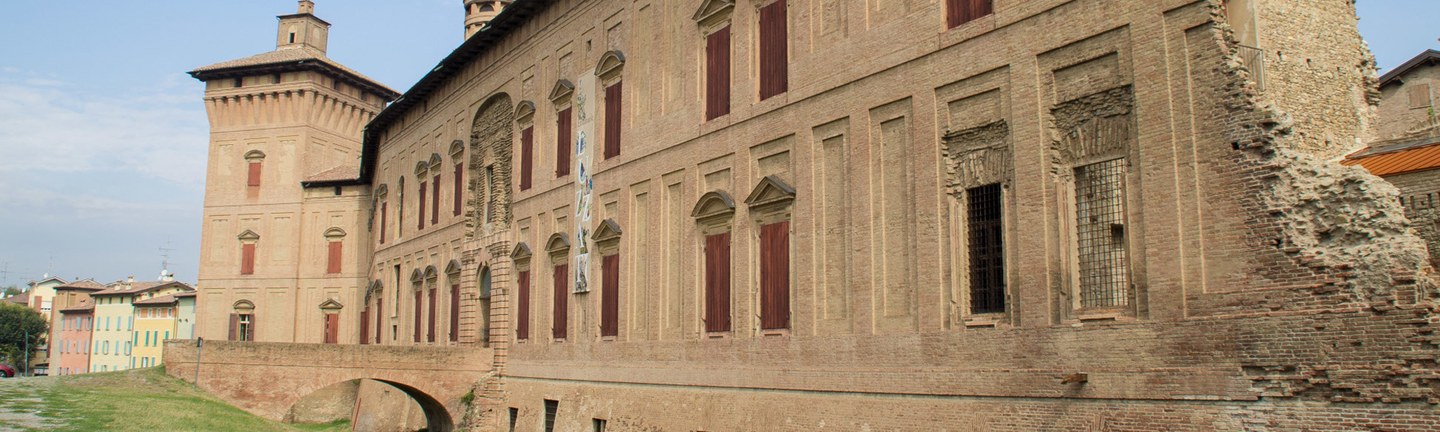
- the imposing southern facade;
- the completion of the western keep (torrione).
Between the 17th and 18th centuries, the Bentivoglio family and later the Marquises of Este embellished the interior with rich Baroque decorative schemes, creating the multi-layered character that defines the complex today.
The accumulated modifications make the Rocca a true textbook of historical architecture:
medieval elements: the Pusterla gate tower on the northern entrance and corbelled arch friezes in the courtyard;
renaissance structures: the elegant courtyard portico;
baroque interventions: visible in the grand staircase, geminated windows (bifore), architraves, and the refined stucco work of the Este Apartments.
The fortress was the backdrop for momentous historical events:
- Birthplace of the Renaissance poet Matteo Maria Boiardo, author of Orlando Innamorato;
- Laboratory for scientist Lazzaro Spallanzani, who conducted groundbreaking experiments in the vaults;
- Host to illustrious guests including Petrarch, John Calvin, and Pope Paul III;
- Site of early Revolutionary zeal on October 10, 1796, when locals joined the Reggiana Republic in honor of Liberty and Napoleon, and the venue for the March 11, 1800 plebiscite annexing Scandiano to the Kingdom of Sardinia.
The courtyard
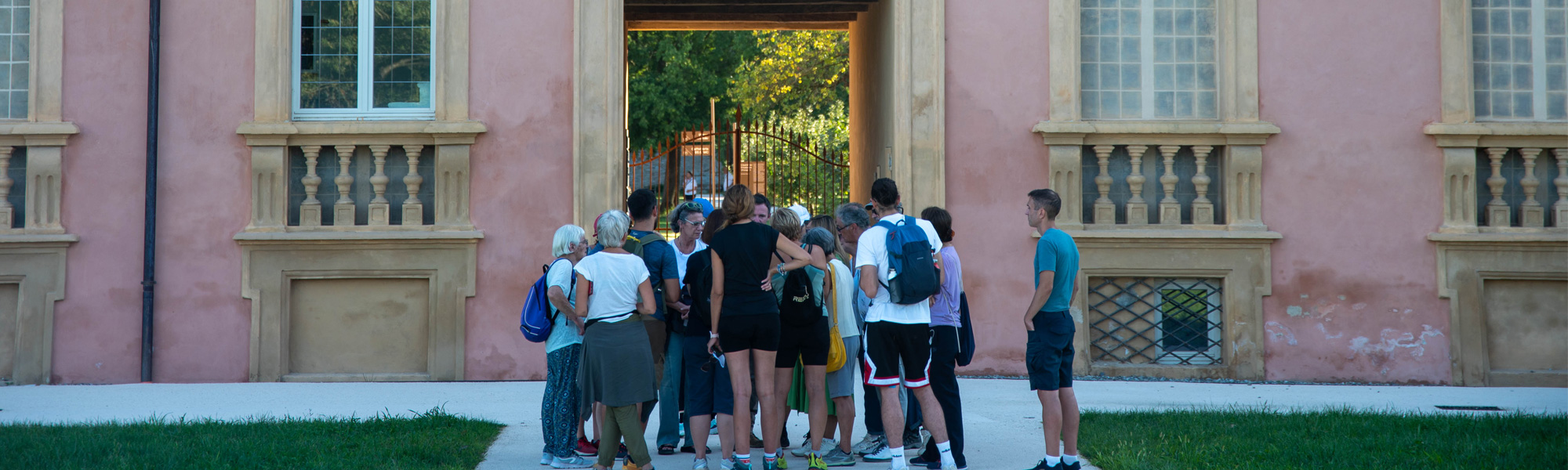
Retains clear traces of successive architectural phases, including a 15th–16th century column topped with a water-leaf capital (a foglia d'acqua), 16th-century monochrome frescoes, and exposed historic masonry.
The gardens
Fully restored in 2017, the gardens offer a charming public space combining ancient walls, green terraces, and overlooks across the moat.
The Este apartments
Located on the ground floor and renovated in the early 18th century, these state rooms feature intricate decorations by the Modenese sculptor Castellino.
Key rooms include the Sala dei Gigli, the Rococo-style Sala del Camino, the Sala del Drappo, the Sala dell’Alcova, and the Sala delle Aquile (featuring portraits of the Este family).
The monumental staircase
Designed by Aleotti in the early 17th century and later modified by the Bentivoglio family, it is adorned with terracotta statues attributed to sculptor Giovan Battista Pontelli (1619) depicting members of the Thiene family.
The "Paradise Room"
Situated above the entrance tower, recent studies identified this space as the original setting for frescoes by Nicolò dell’Abate.
Restorations coordinated by the Opificio delle Pietre Dure in Florence have launched a complex project to conserve and value these surviving pictorial fragments alongside those held at the Galleria Estense.
Contacts
Viale della Rocca - 42019 Scandiano (RE)
Keep exploring