
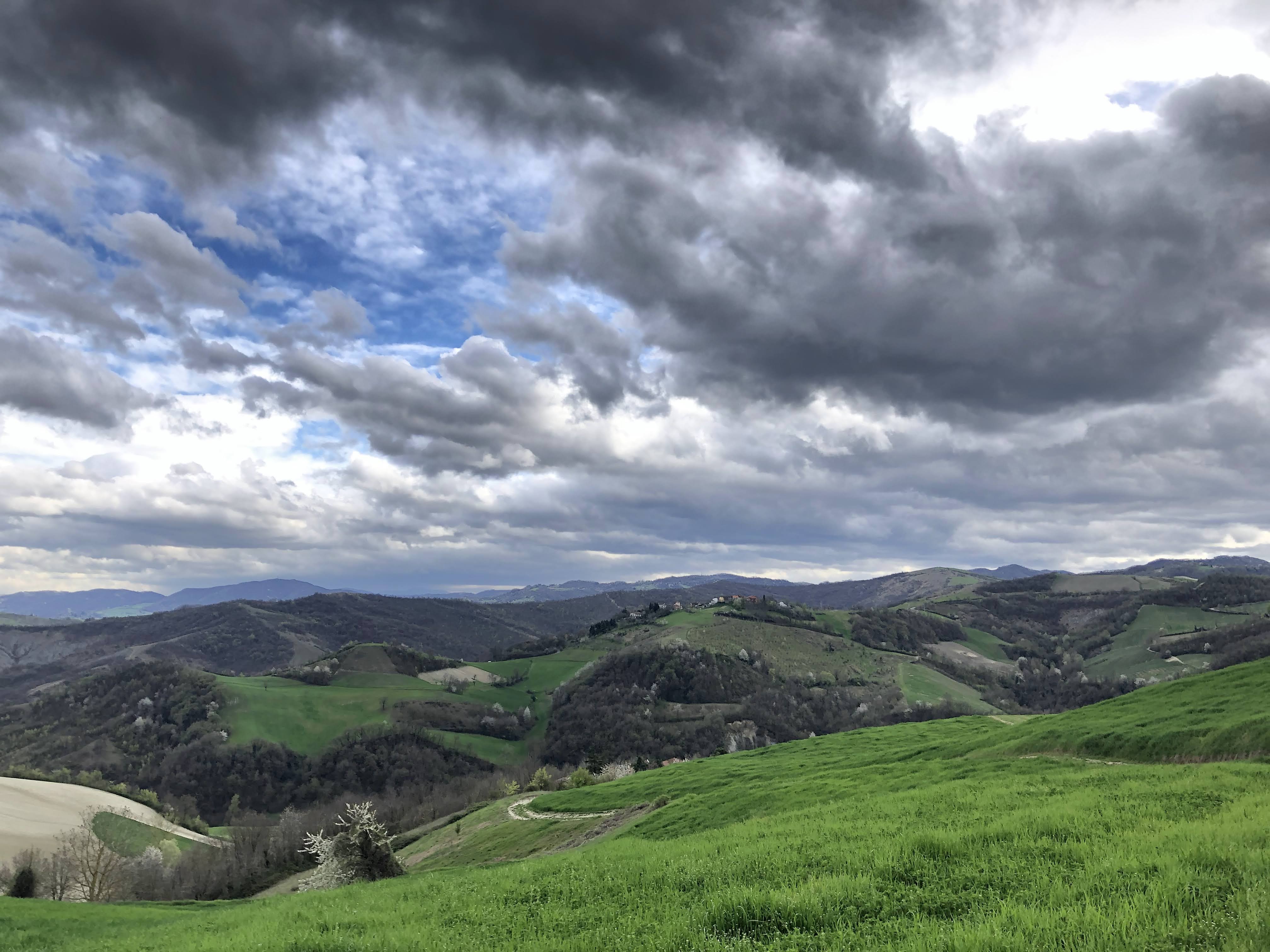
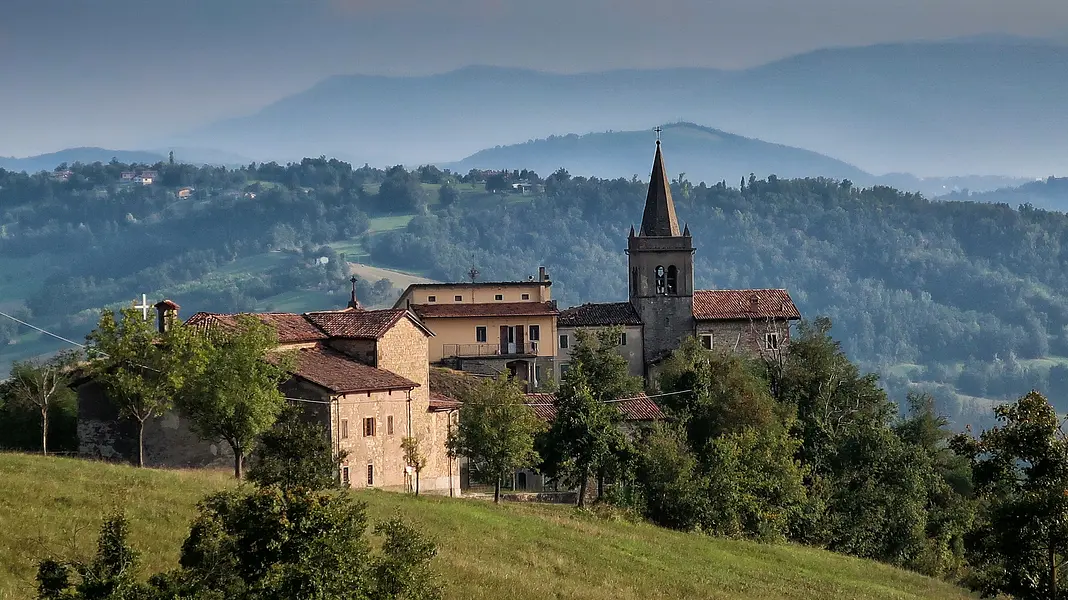
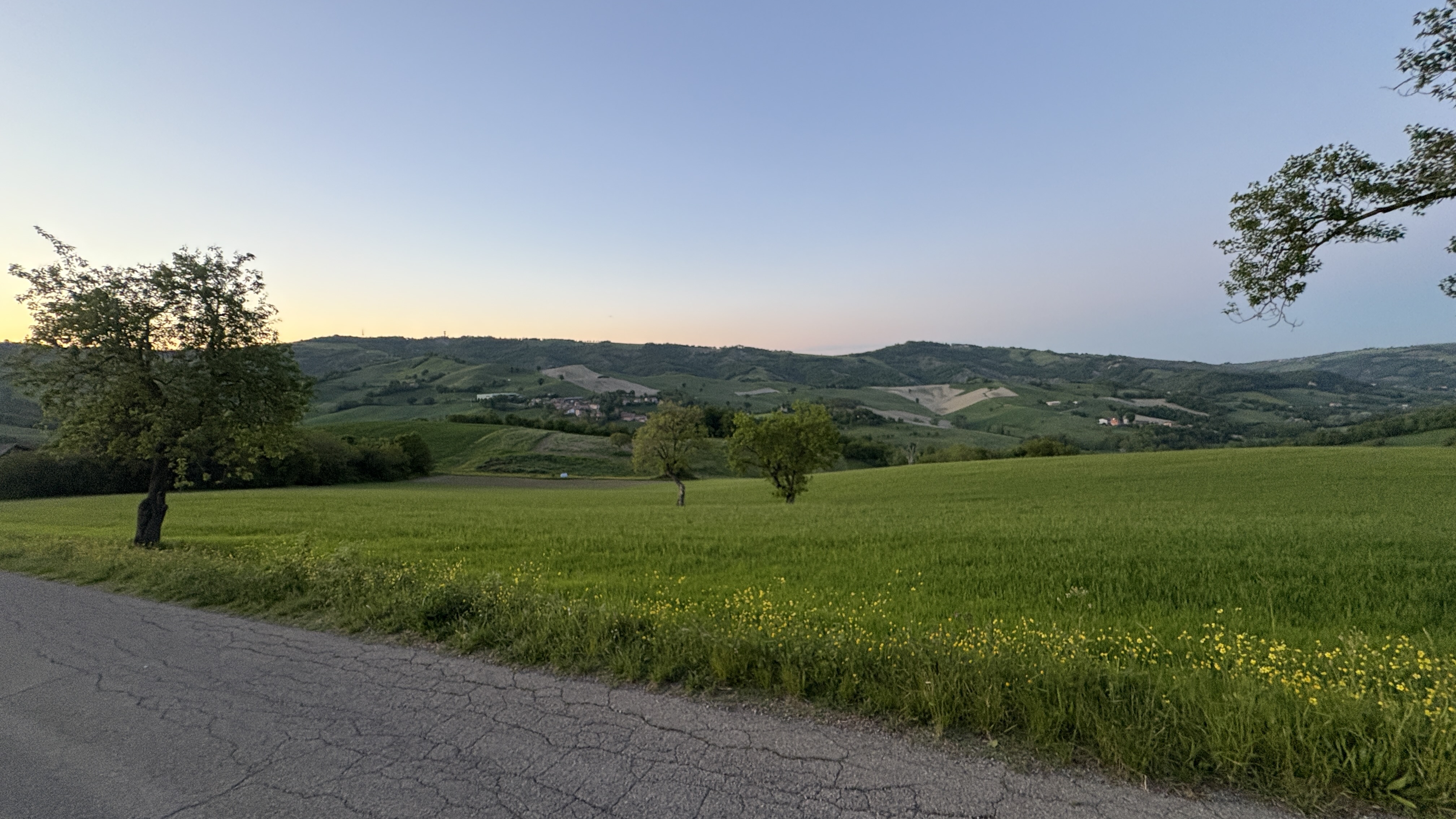
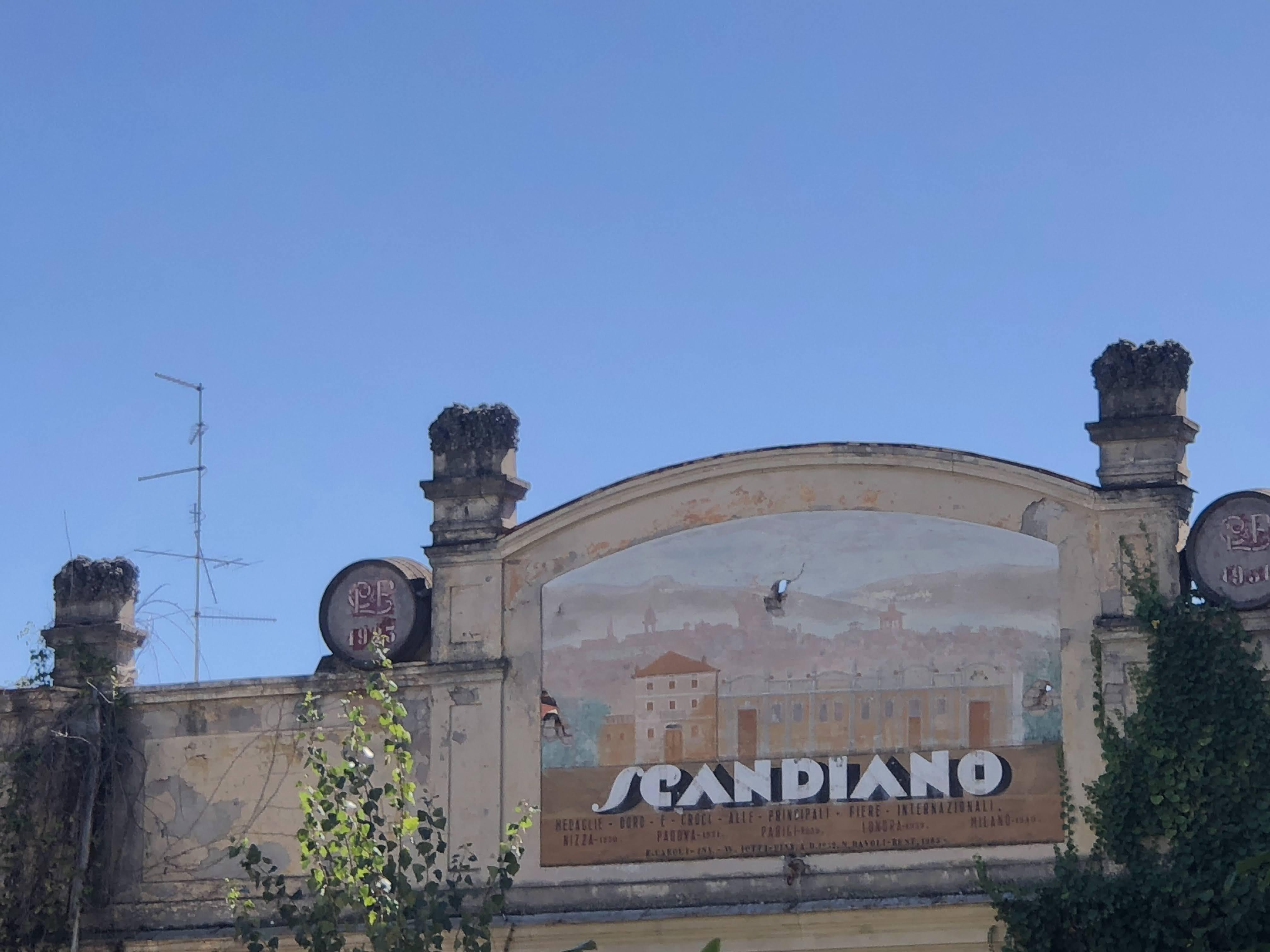
Trekking trails, paths, bike itineraries and places to discover among the municipalities of Vezzano sul Crostolo, Albinea, Scandiano, Casalgrande and Castellarano.

Ca' del Vento Loop

The area traversed by this trail boasts unique habitats that have earned it recognition as a Site of Community Importance (SCI) by the European Union. Crossing the area, you will encounter rocky outcrops, particularly the Messinian Gypsum that characterizes the zone, alongside clay formations. The presence of gypsum formations gives the territory a distinctive morphology, marked by caves, sinkholes, and swallow holes. For this reason, a stop at the Tana della Mussina is a must; it is an important archaeological site due to the discovery of interesting artifacts, but also a magical place imbued with the atmosphere of typical legends—blending history and folklore—which hold that the cave was inhabited by the "Mussina," a historical character somewhere between a sorceress and a witch.

Passing through Borzano, a stop at Borzano Castle is essential. Of medieval origin, its history is closely linked to the Manfredi family, nobles of Longobard lineage who played an important role in the history of the Reggio area. The castle area is still today the site of geological excavations, carried out by the Albinetano Archaeological Group under the supervision of the Superintendence for Archaeological Heritage of the Emilia-Romagna Region, which have brought to light interesting remains of a necropolis dating back to the 7th century AD.

Due to its strategic geographical location and unique climatic conditions, Albinea is well-suited for the growth of vineyards and the aging of Traditional Balsamic Vinegar. Unsurprisingly, it has been chosen as a "Land of Traditional Balsamic Vinegar," making the town its rightful birthplace.

Albinea-Broletto Loop

A circular route, except for the initial and final sections which run along the cycle path known as "Tirabuson" (corkscrew in local language) consisting mainly of secondary paved roads. The route starts in Piazza Cavicchioni, passes through the settlement of Botteghe, and reaches the industrial area. In this zone, you can see the "Albinea Canal," built around the year 1188 by the Bishop of Reggio; taking water from the Crostolo stream for 10 km, this canal irrigated the lands of the canons and turned the millstones of several mills. Climbing along Via Conte Re, you reach Broletto, a historic hamlet of a few rustic houses gathered around a medieval house-tower. From here, you descend past the Pieve of Albinea and return to the settlement of Botteghe. Walking along Via Roma, you take Via Ca’ de Mori and immediately turn left onto Via Crocioni to return to the square.

Albinea-Bellarosa Loop

The departure is from Villa Tarabini, a historic residence and home to the municipal Acetaia (balsamic vinegar cellar). From the villa, the route leads to Piazzale Lavezza and climbs up Via Castellana to reach the Sanctuary of the Madonna of Lourdes, a 19th-century church in the Gothic-Lombard style. The route continues alongside Montericco Castle and then reaches Via Oliveto. From this point, the road heads downhill, and along the way, you encounter the Church of the Madonna dell’Oliveto, built in a neoclassical style. Having become the parish church of Montericco, Ludovico Ariosto served as its rector for a certain period.

Monte Duro Loop

Monte Duro is one of the most interesting natural environments in the hills of Reggio Emilia, extending through the municipality of Vezzano sul Crostolo and the localities of San Giovanni di Querciola, Bettola (with its monument to the Martyrs), and Montalto.

It is recommended to walk this hiking loop in spring when a wide variety of herbaceous species bloom, including some botanical rarities such as the red lily and various Apennine orchids. It is also evocative in autumn and on the finest winter days, though attention should be paid to potentially muddy sections.

The intermediate difficulty level makes it suitable for family trips and excursions.

Vezzano-Pecorile Loop

A few kilometers from the heart of Reggio Emilia, where the plain gives way to the first gentle rolling hills of the Apennines, winds the Vezzano-Pecorile Loop. This itinerary offers a true immersion into the Matildic landscape: a journey that alternates between dense oak woods, spectacular views over the badlands, and the timeless charm of stone hamlets.

The walk has its center of gravity in the Vezzano EcoPark, a perfect natural gateway for those seeking rejuvenation. Climbing the paths that lead toward Pecorile, the landscape opens up into a panoramic embrace that, on the clearest days, allows the gaze to sweep from the entire Crostolo Valley to the peaks of Mount Cusna and, looking north, to the outline of the Alps.

You will cross small hamlets like Casola di Canossa, where time seems to have stopped among rural courtyards and ancient parish churches, witnesses to a past linked to the powerful Great Countess Matilda. It is a route that rewards effort with variety: from the silence of the undergrowth to the warm light that floods the marly ridges.

Antica Corte di Figno Loop

A panoramic itinerary of extraordinary naturalistic value that winds through the lower foothills of Reggio Emilia, offering spectacular views over the plain and a total immersion in local biodiversity.

The route begins at the Iano Schools, taking Via Seminario. From the very first steps on the cart track that climbs westward, the gaze is captured by the panorama: turning around, the view embraces the entire Reggio Plain, with the distinct profiles of Monte Evangelo and Monte del Gesso framing Scandiano. Along the descent toward Borzano, the trail encounters the shrine dedicated to Santa Teresa along Via Cà de’ Duchi.

Before closing the loop, the route touches the Astronomical Observatory.

Tresinaro Loop

A panoramic route with views over Scandiano and the entire plain; on the clearest days, a beautiful view of the Apennines can be appreciated from Bottegaro. The journey begins by following the course of the Tresinaro stream. In this first section, the path winds through a lush river environment, where hygrophilous (water-loving) vegetation creates a cool and refreshing microclimate even on the hottest days. Walking among poplars and willows, the sound of flowing water accompanies your steps, offering a scene of unexpected peace just minutes from inhabited centers. It is a place where nature reclaims its space, ideal for birdwatching or simply disconnecting from the hectic pace of daily life. Leaving the banks of the stream, the trail begins to climb gently toward the hills of Scandiano. The landscape changes: the dense riparian woods are replaced by geometric vineyards and open meadows. We then arrive in the presence of the Great Oak (Quercus Robur). Continuing along the ridge, the gaze roams free. On one side, the clay badlands offer a wild, lunar spectacle; on the other, the hills are tinged with the green of Spergola and Lambrusco vineyards.

Monte Gesso and Monte Evangelo Loop

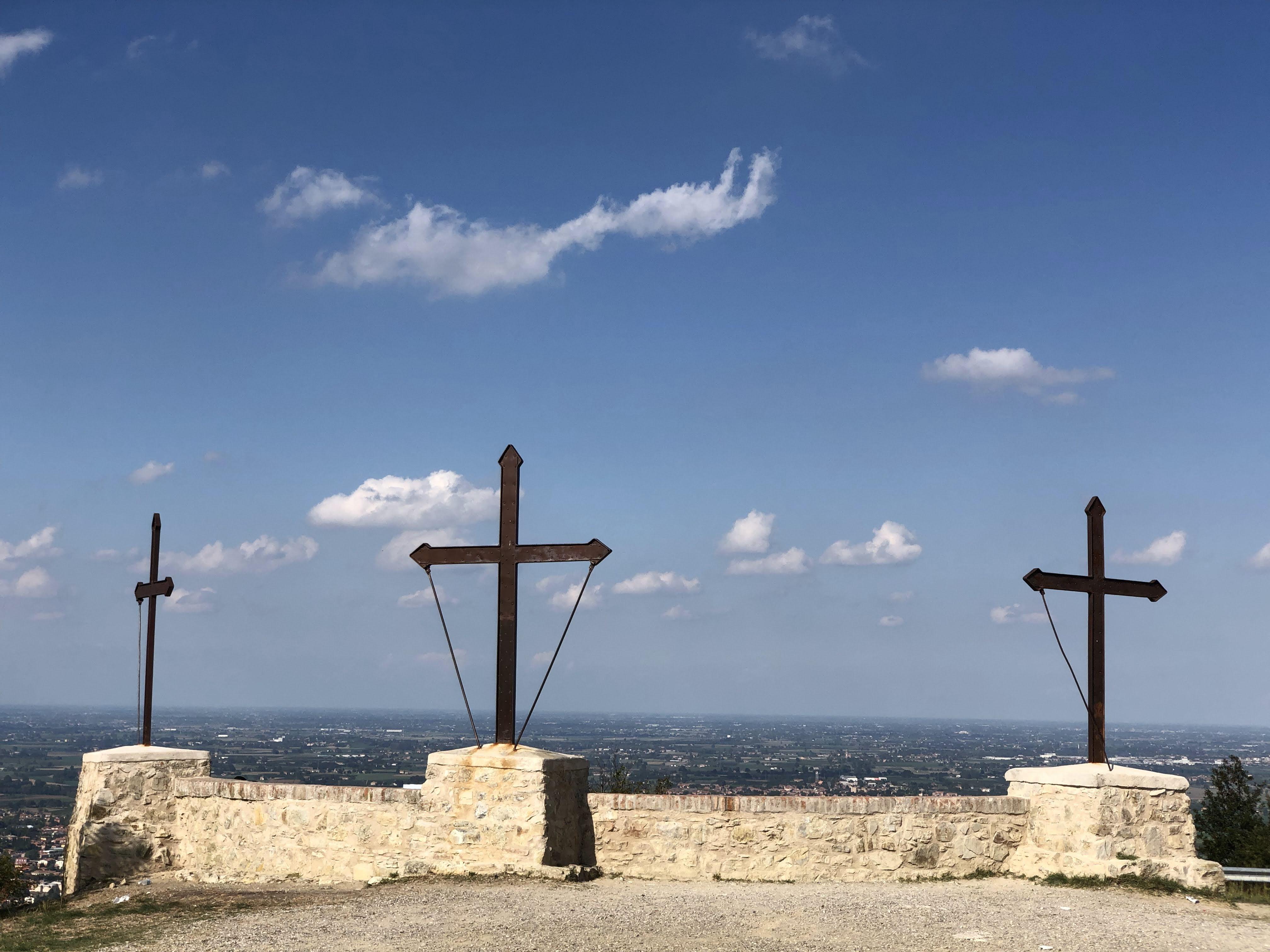
A circular panoramic route with views over Scandiano and the entire plain. Along the way, you will cross various points of interest, such as the characteristic Three Crosses of Monte Vangelo, the badlands, the Great Oak, and the mud mud-volcanoes.

The route partly follows the Spallanzani Trail, CAI trail 604, and the mud-volcanoes trail. In the first few kilometers, there is a possibility of meeting hikers and cyclists on days with fine weather. However, after about three kilometers, you leave the "main road" and cross a beautiful area of badlands. You continue descending toward the Rio Peligaro and then climb the flanks of Monte Vangelo, a barren stretch where it is easy to spot roe deer. This climb is the only somewhat complicated section of the route. Once you reach the top of Monte Vangelo, the route continues on more frequented stretches. The descent back toward Ventoso is partially paved. On days with fine weather, there are highly panoramic views of the Apennines.