
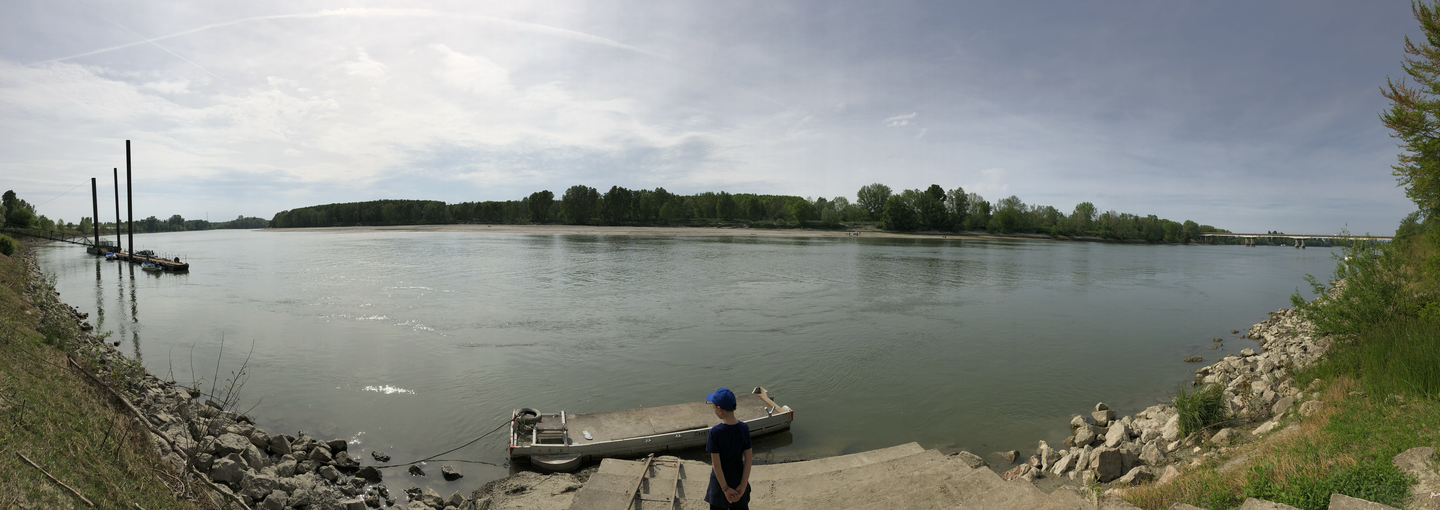
A ‘historic’ cycle route running from Reggio Emilia to Lido Po in Guastalla, also passing through the municipalities of Cadelbosco di Sopra, Castelnovo Sotto and Gualtieri. The route, just over 30 kilometres long, winds mainly along the banks of the Crostolo (over 24 km), with sections on quiet roads (just over 4 km) and cycle paths. The route is of great natural and environmental value and effectively forms an ecological corridor from Reggio Emilia to the River Po.
At kilometre 25.8, you can alter the main route by turning left, crossing the Crostolo via the footbridge serving the Torrioni/Botte Bentivoglio hydraulic plant of the Emilia Centrale Land Reclamation Consortium, and continuing on to the historic centre of Gualtieri. This route allows you to visit the historic centre of Gualtieri with its beautiful Piazza Bentivoglio and the Palazzo Bentivoglio of the same name, a building of considerable architectural value and the venue for various cultural events such as the exhibition dedicated to the painter Ligabue. Along the route leading from the historic centre, via Viale Po, to Lido Po, you will encounter areas of considerable environmental and naturalistic value, such as the ‘I Caldaren’ Ecological Rebalancing Area and the ‘Isola degli Internati’ nature reserve. Before reaching Lido Po, you will also cross the suspension bridge over the Crostolo as it flows into the River Po.
The landscape you encounter is that of the Parmigiano-Reggiano region, set within a context characterised by a network of canals managed by the Consorzio di Bonifica dell’Emilia Centrale, which ranks among the most important in Italy both for its engineering achievements and its historical significance. The route runs lengthways through an area which, thanks to the fertility of its soil, local biodiversity and cultural heritage, is ideally suited to the production of ‘Anguria Reggiana IGP’ watermelons.
The municipality of Guastalla is also home to religious buildings of great historical importance, as is the area around Reggio Emilia, where there are also several monuments linked to the history of the Resistance.


