Teatro Sociale
Gualtieri
Timetable
The theatre is usually open to the public exclusively during scheduled performances or events.
Prices
Ticket prices vary depending on the scheduled performance or event.
From Marshes to Palazzo Bentivoglio
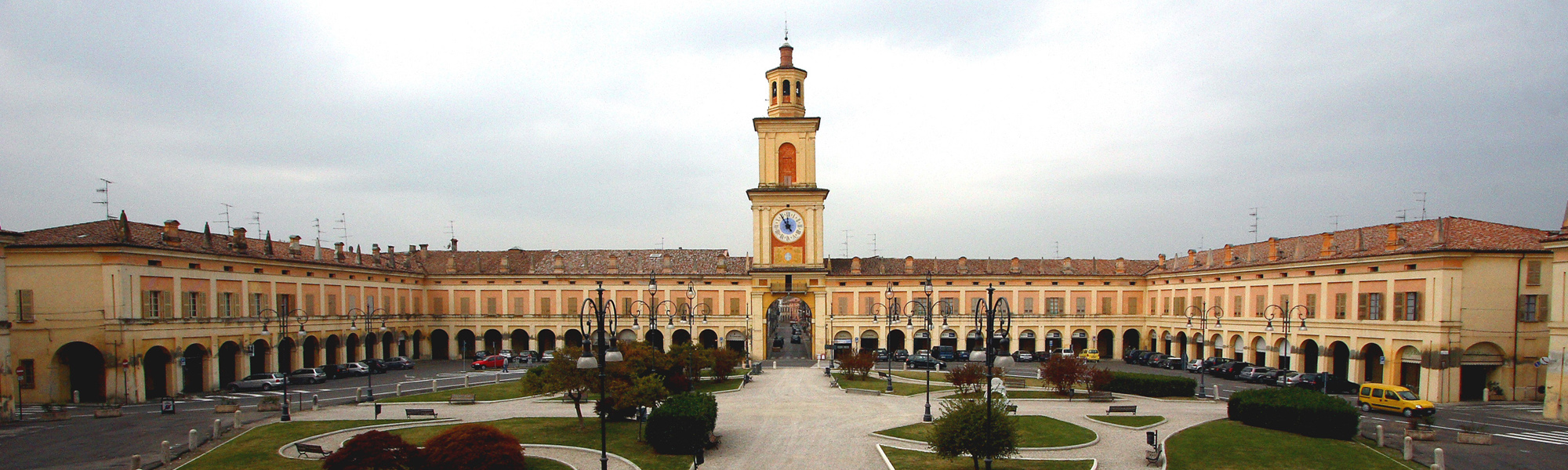
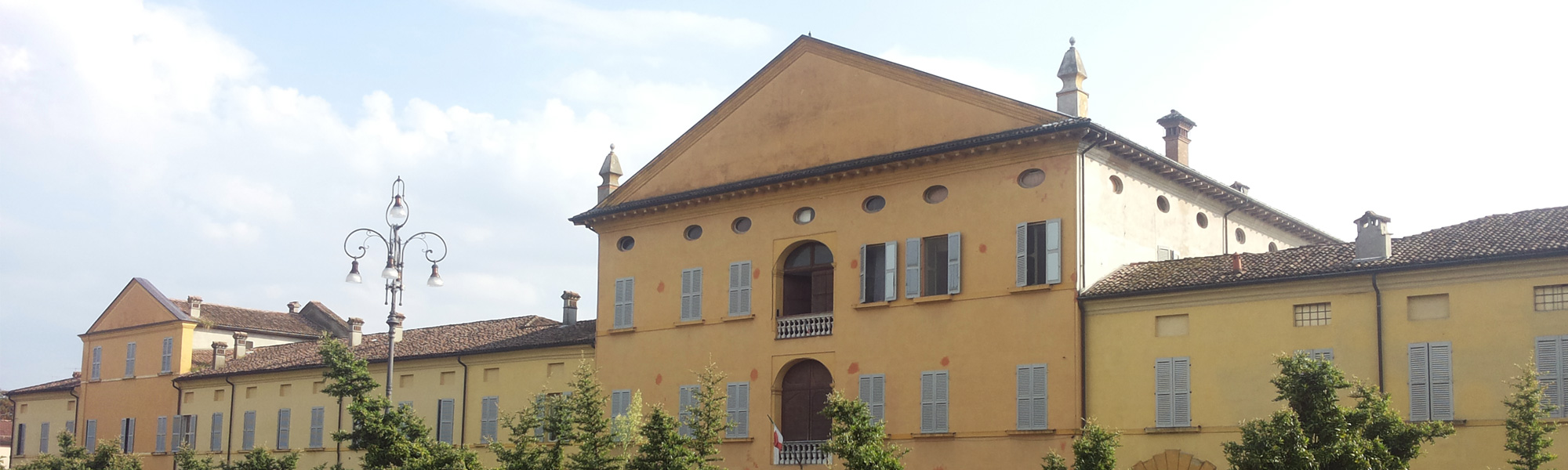
The Teatro Sociale stands inside Palazzo Bentivoglio, an imposing fortress-palace built between the late 1500s and early 1600s by Cornelio Bentivoglio and his son Ippolito.
Before the arrival of the Bentivoglio family, the area was a marshland: local streams made the land difficult to cultivate and inhabit.
Thanks to canalization and reclamation works, the Bentivoglio family managed to create a Renaissance urban plan that transformed Gualtieri into an orderly and functional town.
Over the centuries, Palazzo Bentivoglio experienced alternating fortunes: from a period of splendor to decline and vandalism during the wars of succession.
In 1750, the Town Council of Gualtieri purchased the palace directly from the Este family.
The Teatro Principe (1775)
In 1775, thanks to the initiative of the engineer-architect Giovan Battista Fattori and some local amateurs, the Teatro Principe was born in Gualtieri, the first true public theater in the city.
The proposal, approved by the Community on January 13, 1775, involved using two ground-floor rooms of Palazzo Bentivoglio, which were then occupied by the Doctor and the Surgeon.
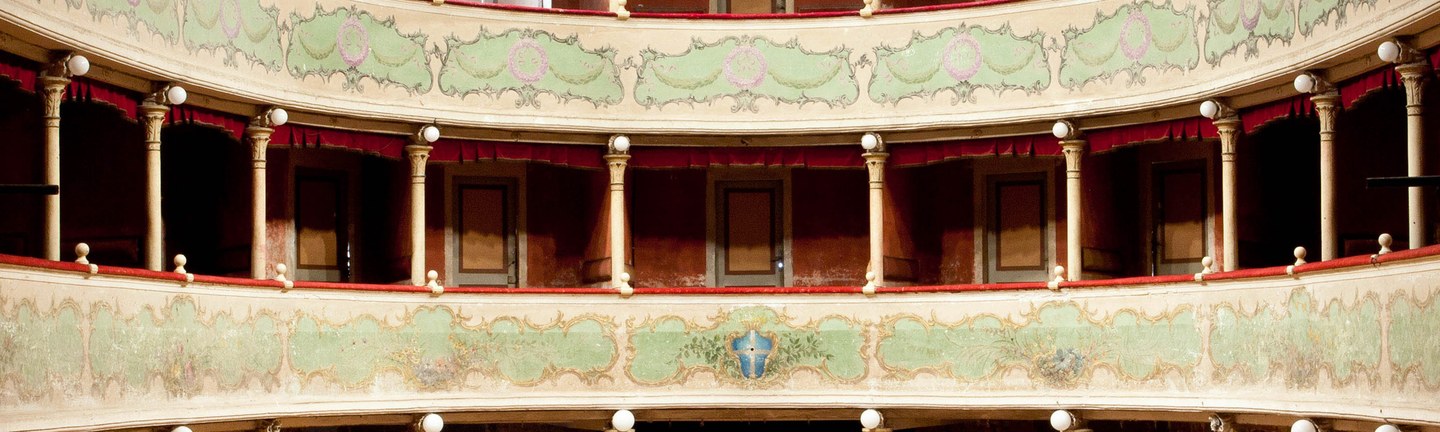
The works began immediately: the floor level was lowered, the foyer, ticket office, a café, and a dressing room were created, and the wooden structure of the boxes was built, arranged in a horseshoe shape across two tiers.
Direct access to the square, closed by an imposing main door, completed the theater's functionality.
The Teatro Principe was a small wooden Italian-style theatre in refined Baroque taste: the hall measured approximately six meters in height, eight in width, and eleven in depth, with a stage as wide as the hall and about seven meters deep, leaning against an ancient sixteenth-century staircase.
The Teatro Sociale (1905-1907)
At the beginning of the 20th century, the municipal administration decided to transform and expand the theatre.
The project was entrusted to the surveyor Vittorio Mazzoli, while the decorations were to be executed by Villa from Reggio Emilia.
However, after an initial estimate, they realized that the funds were insufficient: the Municipality alone could not afford the extremely expensive intervention.
Thus, on June 29, 1905, the "Società Teatrale" (Theater Society) was founded, formed by the "palchettisti" (box owners), the future owners of the first and second-tier boxes.
It contributed about 2,000 lire to the total expenditure of 25,000 and took over the management of the theatre - at this point named Teatro Sociale - for 99 years.
The wooden Teatro Principe was completely demolished; the load-bearing side walls were partially torn down to fit a horseshoe structure wider than the previous one.
The ceiling was destroyed to allow the construction of the third tier, and finally, the stage area was also enlarged by demolishing part of a sixteenth-century staircase dating back to the Bentivoglio family.
The works were completed in 1907, and the theatre opened with a successful opera season, including Mascagni's Cavalleria rusticana and Leoncavallo's Pagliacci.
The Theater in the 20th Century
In 1912, following the success of the previous shows, the Teatro Sociale underwent a further expansion of the stage, reaching unusual dimensions for a provincial theater.
To support the new structure, an imposing pointed arch was built, which still holds up the roof today and constitutes one of the most striking elements of the theatre.
With the outbreak of the Great War, theatrical activity ground to a halt, but resumed in 1919.
Between 1919 and 1923, the theatre experienced its most flourishing period, with eleven performances of Puccini's La Bohème, Umberto Giordano's Andrea Chénier, and Puccini's Tosca.
Opera activities ceased in 1936 with the performance of Bellini's Norma, marking the end of an era.
In parallel, starting from 1907, the theatre also hosted dances and gala parties organized by a company of young workers known as "Palanca Sbusa" ("the pierced penny"), contributing to the social and cultural life of the citizens.
The theatre's activity continued until 1983 when it was closed to the public due to structural issues.
Keep exploring