Franco Tagliavini Municipal Theatre
Novellara
Timetable
The theatre is usually open to the public exclusively during scheduled performances or events
Prices
Ticket prices vary depending on the scheduled performance or event.
The Franco Tagliavini Municipal Theatre is one of the symbolic landmarks of the city's cultural life.
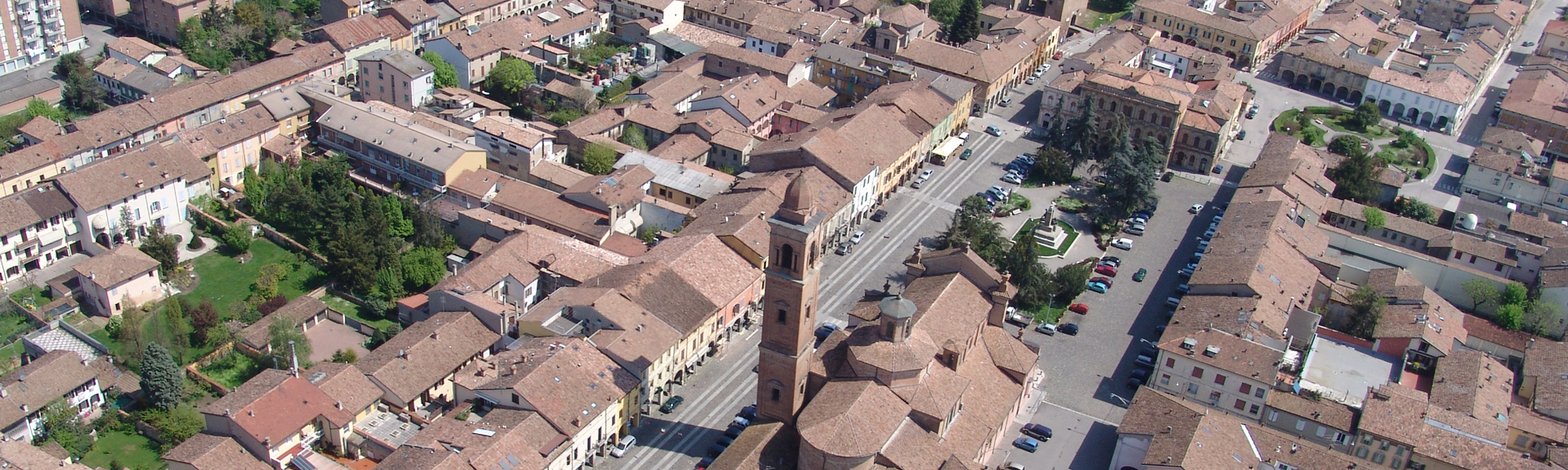
Located inside the Rocca, in the south-east corner of the complex, it is accessible from the internal courtyard and today hosts prose seasons, concerts, and cultural activities.
Built between 1862 and 1868 based on a project by the architect Antonio Tegani from Reggio Emilia, the theatre replaced two previous buildings: a 16th-century court theater linked to the Gonzaga family, and an 18th-century theatre that was no longer adequate for new scenic requirements.
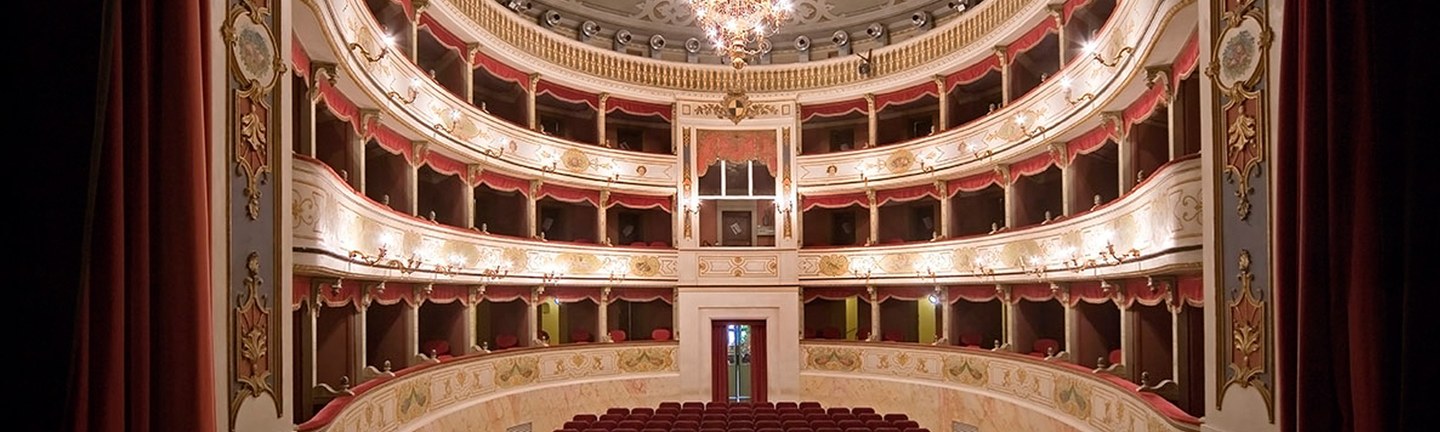
The current building is a refined Italian-style theatre, inspired by the models of the Municipal Theatre of Reggio Emilia and the theater of Carpi.
From Gonzaga Origins to the 19th-Century Theater
The theatrical history of the city began on January 28, 1568, on the occasion of the wedding between Alfonso I Gonzaga and Vittoria da Capua, when the first court theater was inaugurated.
The scenic design was managed by Lelio Orsi of Novellara, a famous Renaissance artist.
Few documentary records remain of this ancient theatre, but it is believed that the original layout remained substantially unchanged until the end of the 18th century, when a few boxes were added.
During the 19th century, however, the structure proved inadequate, and the decision was made to build a new theatre.
The old building was demolished in 1858, along with some rooms on the south side of the Rocca, and works for the current theater began in 1862.
Architecture and Decorations
Tegani's project reproduces, on a reduced scale, the model of the Municipal Theatre of Reggio Emilia: a horseshoe-shaped plan, three tiers of boxes, a gallery, an elegant central box, a large stage with a wooden grid system, and a proscenium arch surmounted by a clock.
The decorations of the hall and the foyer were entrusted to the painter Cesare Cervi from Reggio Emilia, who also designed the elaborate ceiling of the stalls, characterized by a refined framing with curvilinear contours.
As stipulated in the contract, Cervi also created twelve painted backdrops and stage machinery to simulate atmospheric effects such as lightning, rain, thunder, and lightning bolts, similar to those found in the "Romolo Valli" Municipal Theater.
The theatre was inaugurated on July 25, 1868, during the Sant’Anna Fair, with Verdi's opera I Lombardi alla prima Crociata, kicking off a season of intense theatrical activity.
From the 20th Century to the Present
After a period of closure following World War II, the theatre was progressively recovered: an initial reopening took place in 1988, while the complete restoration was concluded after the 1996 earthquake.
Since April 15, 2012, the theatre has been named after the great tenor from Novellara, Franco Tagliavini, paying tribute to one of the most illustrious figures of the local opera tradition.
Today, the Franco Tagliavini Municipal Theatre is once again a reference point for culture and performing arts, successfully combining history, architecture, and contemporary life.
Contacts
Piazzale Marconi, 1 - 42017 Novellara (RE)
Keep exploring