
Po 432 - Po River Museum
Timetable
Open every Sunday and on public holidays.
March, April, May and September:
Museums: 9:30–12:30 & 15:30–18:30
Navigation: 15:30
June, July and August:
Museums: 10:00–12:00 & 16:30–19:30
Navigation: 16:30
During the week, museum visits can be booked for groups and school parties.
Extra Saturday openings are scheduled for cultural and sporting events held at Lido Po and in the Municipality of Boretto.
From October to March, visits are available by appointment only.
On the banks of the majestic River Po, in Boretto, 432 km from its source on Mount Monviso, stands Po 432, the Po River Museum dedicated to river navigation and water management. A unique place where history, technology and industrial archaeology come together to tell the story of work and life along the “Great River”.
The museum houses an extraordinary collection of historic vessels, dredgers, tugs, tools and machinery used primarily in the first half of the 20th century by the Civil Engineering Corps for riverbed maintenance and the regulation of navigation.
Once this shipyard was self-sufficient: everything needed to keep the Po safe was produced here, and its more than 200 employees developed extraordinary technical skills thanks to cutting-edge equipment.
Founded in 1997 and officially opened in 1999 thanks to the collaboration of public bodies and local associations, the museum has overcome difficult times, such as the great flood of 2000, to reopen in 2006 and adopt its current name in 2009: Po 432 – Po River Museum.
The exhibition route winds through five rooms, documenting the history of river navigation, shipbuilding, land reclamation and water management in Emilia-Romagna.
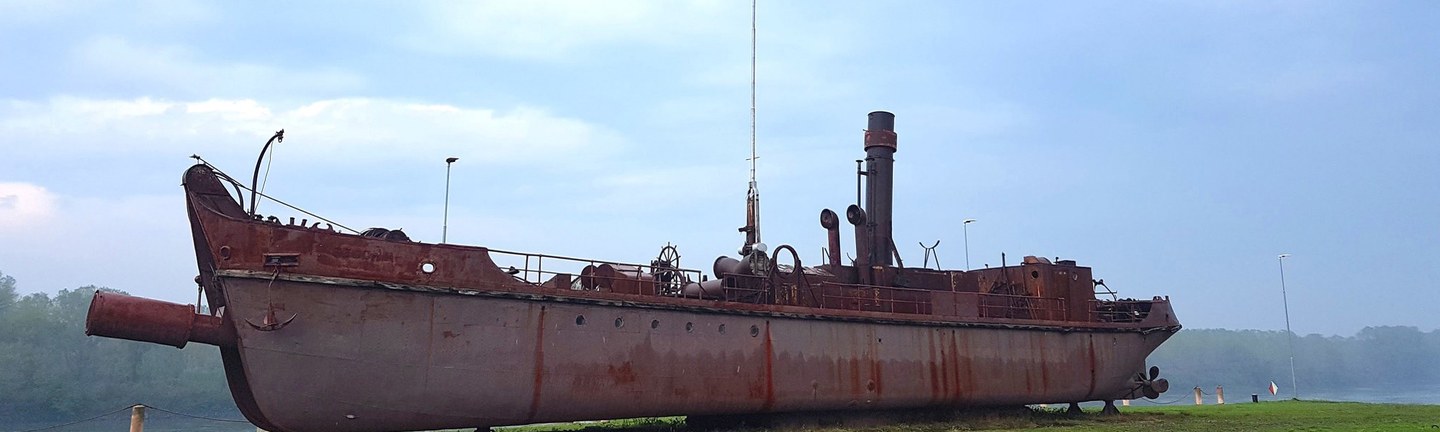
In the outdoor square, the imposing steam dredger ‘Secchia’ – launched in Venice in the early 1930s – a symbol of the extraordinary river engineering of yesteryear. A visit to Po 432 offers a real insight into the region’s industrial and river history: it is perfect for enthusiasts of industrial archaeology, families, school groups and anyone wishing to discover the vital role played by the River Po in the cultural, economic and social development of Emilia-Romagna.


About us
Where to find us
Opening hours
Press and TV enquiries
Leave us your feedback
