Jewish Cemetery
A place of remembrance where history, art and tradition tell the story of more than two centuries of Jewish life in Reggio Emilia
Timetable
The cemetery can be visited only during the European Day of Jewish Culture in September, or by prior appointment for school groups through Istoreco.
Established in 1808 with the burial of the young nobleman Beniamino Foà, Reggio Emilia's Jewish Cemetery is a remarkable testament to the city's long-standing Jewish heritage.
The cemetery was created following Napoleon's Edict of Saint-Cloud (1804), which required burial grounds to be moved outside city walls. As a result, the Jewish community relocated its cemetery from the area near the former ghetto to this new extra moenia site, where the earlier graves and headstones were transferred.
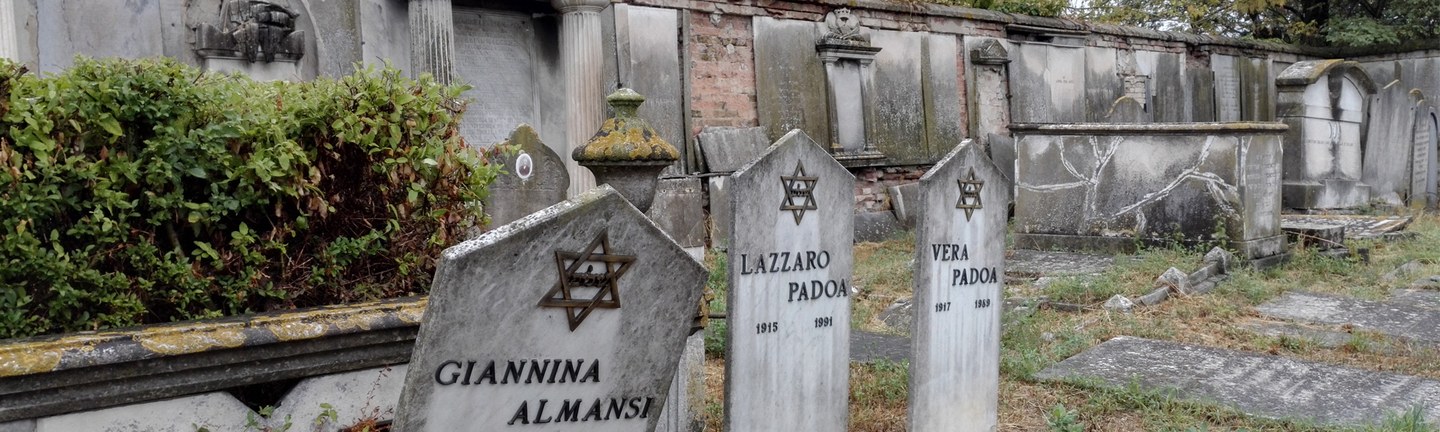
In 1853, the cemetery was expanded with a second enclosure featuring family tombs, chapels and memorials that combine Jewish tradition with the monumental style of the 19th century, reflecting the community's deep roots in the city's history.
A highlight of the site is the Neoclassical mortuary chapel, believed to have been designed by architect Pietro Marchelli.
Its triangular pediment bears four Hebrew letters referring to the opening words of the Book of Ecclesiastes: "Vanity of vanities, all is vanity."
As you walk among the graves, you can also trace the evolution of Jewish funerary traditions.
While the oldest headstones follow the traditional prohibition against depicting the deceased, many 19th- and 20th-century monuments feature sculpted portraits and photographs, illustrating the gradual blending of tradition and modernity.
Keep exploring