Synagogue and the Jewish Ghetto
Timetable
The Synagogue is open for scheduled exhibitions and events.
For further information, please contact Istoreco.
Historical Background
The first Jewish families arrived in Reggio Emilia at the beginning of the 15th century, obtaining permission from the City Senate to settle and practice moneylending, an activity that was forbidden to Christians at the time.
Over the years, starting from 1413, the community grew steadily, expanding into the production and trade of silk, textiles, and grains alongside their established lending activities.
In 1492, following the expulsion of Sephardic Jews from Spain, numerous families found refuge in the cities of the Este Duchy, welcomed by the relative tolerance of the princes of Ferrara.
However, this climate of tolerance was destined to change: for over a century, the 1555 papal decree regarding the establishment of the ghetto was not applied in Reggio Emilia.
It was Duchess Laura Martinozzi, widow of Duke Alfonso IV, who ordered that the Jews of Reggio, until then scattered throughout the city, be concentrated within the streets known today as San Rocco, Caggiati, della Volta, dell’Aquila, and Monzermone.
This marked the birth of the ghetto - a true "city within the city" - where approximately 885 people lived in cramped and often unsanitary spaces. Jews were only permitted to leave during the day, wearing a distinguishing mark: a red ribbon tied to the hats of men and clearly visible on women.
With the arrival of Napoleon and the creation of the Cispadane Republic, the gates were symbolically torn down. However, after the return of the House of Este, the ghetto was re-established until its final abolition in 1859, following annexation to the Kingdom of Sardinia.
During the Risorgimento, Reggio's Jewish citizens actively participated in the uprisings and wars for national unity, taking on full civic roles.
Among them, Ulderico Levi stands out as a senator of the Kingdom and a patron of major public works, such as the city aqueduct and the restoration of the Teatro Ariosto.
The achievement of full citizenship was tragically cut short by the racial laws of 1938. Reggio's Jewish community was decimated: many were forced to flee abroad or isolate themselves from public life, and in 1943, ten members were deported to Auschwitz, where they lost their lives in the gas chambers.
After the war, the remaining community was no longer large enough to form a minyan - the minimum number of adult men required to hold a religious service.
The few survivors integrated into the Community of Modena, leaving the Ghetto as a living memory of centuries of history, culture, and resilience.
The Synagogue
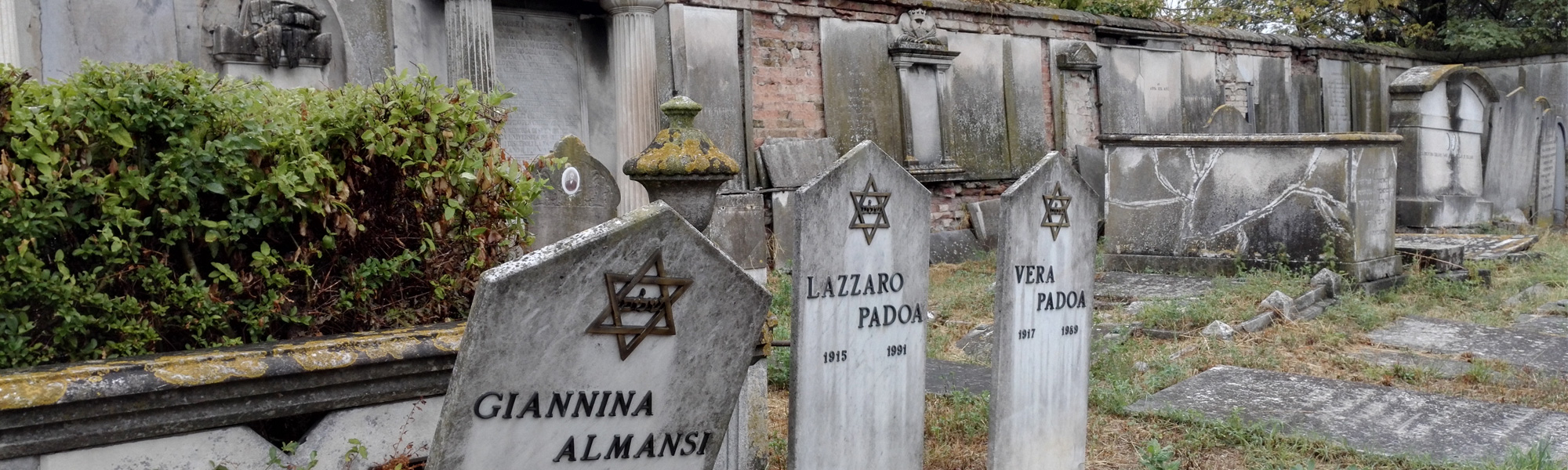
Within the Ghetto, the Jewish community of Reggio had to address all the needs of communal life within a cramped space: worship, the education of the youth, and the burial of the deceased.
In 1669, by order of Duchess Laura Martinozzi, the city's main Synagogue, located near the church of San Giovannino, was suppressed.
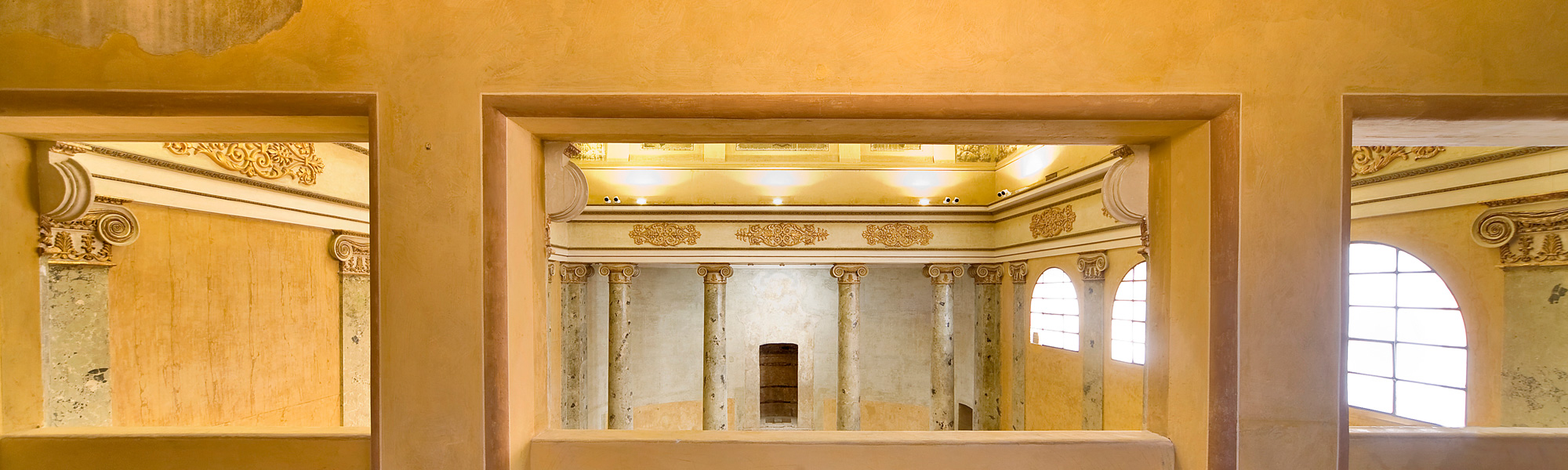
Construction on the new temple inside the Ghetto began in 1672, creating a place of worship that would become the spiritual hub of the community.
In 1755, Agostino Canciani was commissioned to craft an elegant wooden Aron - the tabernacle designed to hold the Sefer Torah, the scroll of the Law.
This work, which survived the looting of World War II, is now located in Haifa, Israel.
In the following centuries, the Synagogue underwent several modifications, mostly ornamental. However, in 1849, due to the building's severe state of deterioration, the decision was made to reconstruct it.
The project, entrusted to the local architect Pietro Marchelli, was complex and respected both architectural requirements and symbolic-religious traditions, reaching completion in January 1858.
During the bombings of 1944, the temple lost its religious function, and in the following decades, it was repurposed for various uses, including a printing shop, until the dome collapsed in the mid-1950s.
Restoration efforts finally began in the late 1990s, restoring the facade and the internal structure of the spaces.
This culminated in 2003 with the reconstruction of the dome, faithfully following Marchelli's original design.
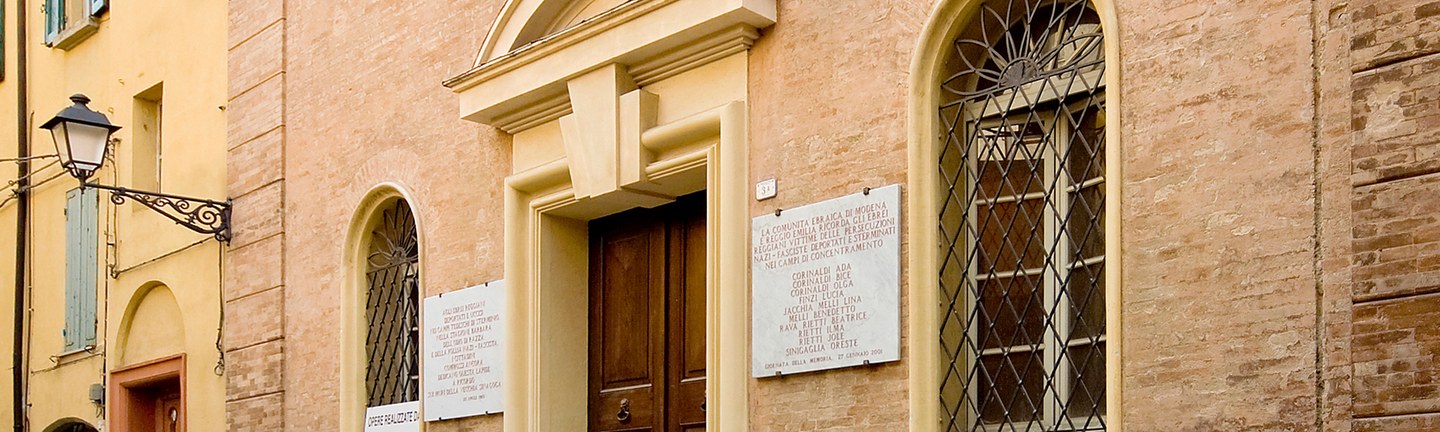
Today, the facade of the Synagogue features a commemorative plaque in memory of the ten Jewish citizens of Reggio deported to Auschwitz - a silent yet powerful reminder of a community that moved through centuries of history, resilience, and culture.
Find out more about:
Pietre d'inciampo - A permanent tribute to the ten Jews from Reggio Emilia who died in Auschwitz
Enciclopedia storica dell'Ebraismo reggiano-ESTER
Keep exploring