Villa d'Este - Vasca di Corbelli
Timetable
The interior is only open to visitors on special occasions.
The surrounding basin is accessible during the opening hours of the Centro Sociale "Vasca di Corbelli".
Prices
The basin can be visited free of charge.
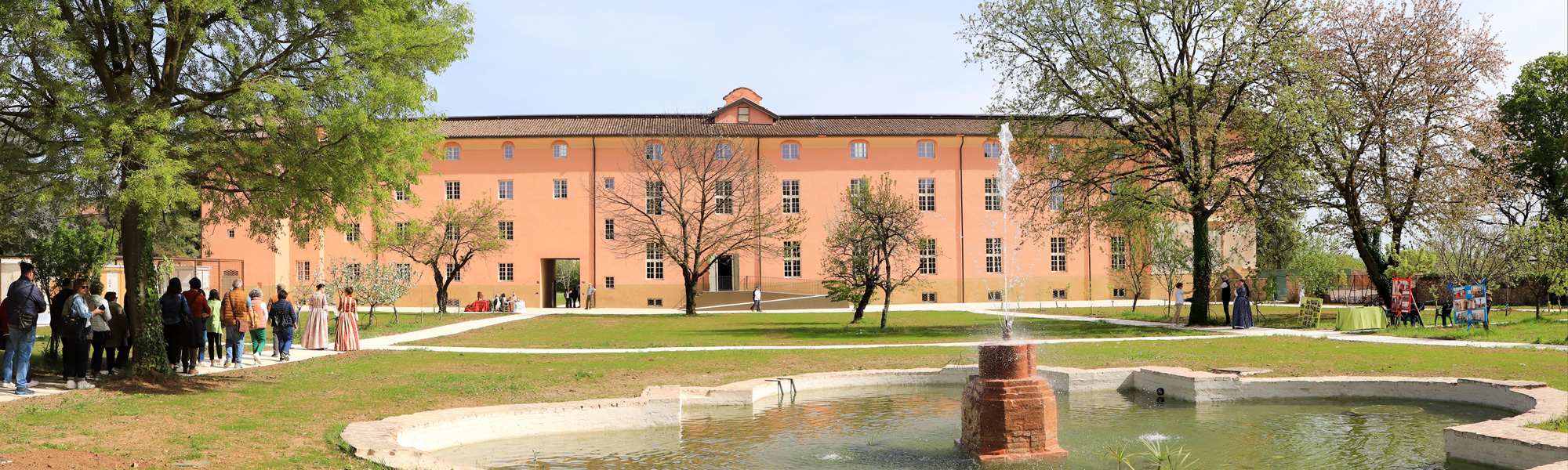
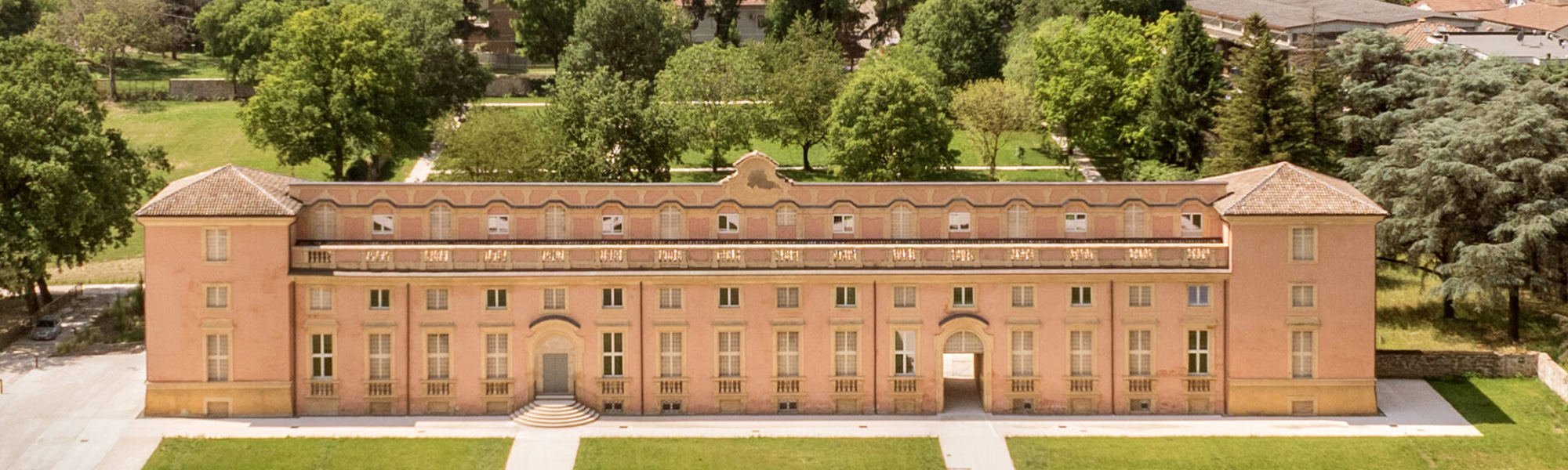
Nestled in the landscape on the outskirts of Reggio Emilia, Villa d’Este, with the Corbelli Basin, is one of the most evocative sites linked to the grand Este project of the Ducal Palace of Rivalta and its famous "park of delights".
Origins and Architecture
The complex originated as a fishing and leisure retreat for Duke Francesco III d’Este, conceived to combine nature, architecture, and the pleasures of country life.
The design of the casino and the monumental basin is attributed to architect Giovanni Maria Ferraroni, while the construction, which began in 1730 and concluded in 1757, was overseen by Giovan Battista Bolognini and his brother Francesco, key figures in eighteenth-century Este architecture.
The Monumental Basin
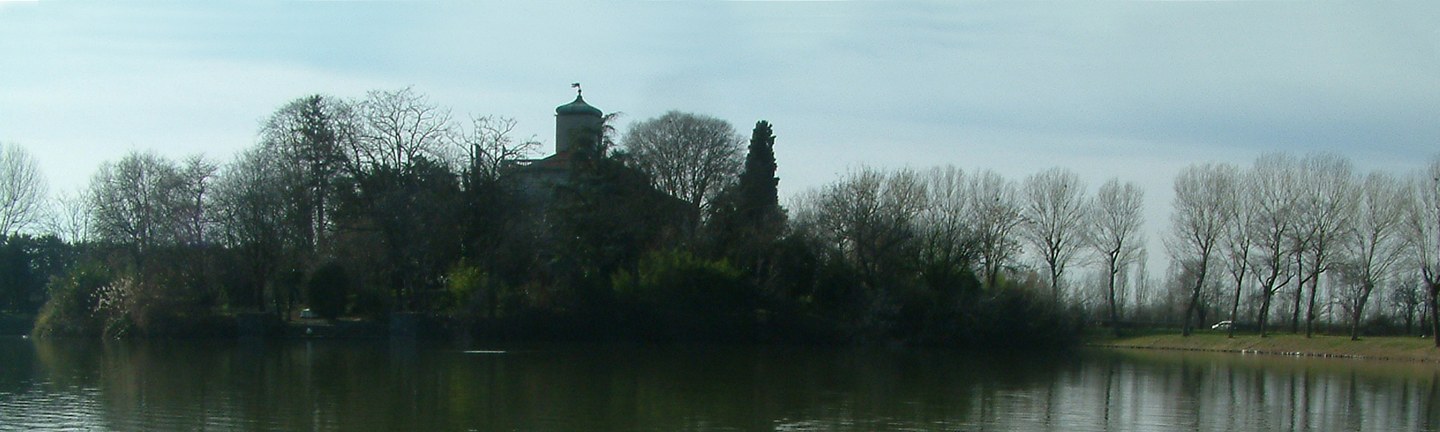
The large oval basin served a purpose that was as much technical as it was scenographic: it collected the water needed to supply the fountains in the gardens of the Reggia di Rivalta, to which it was connected via an intricate system of underground pipelines that still exist today.
In turn, the basin received water from the nearby Crostolo stream through an artificial canal that also served as the original access route to the villa, which could be reached exclusively by boat.
This sophisticated hydraulic system bears witness to the high level of engineering and planning within the Este Duchy.
The "Fuggi l'ozio" Casino
The Casino, poetically known as "Fuggi l’ozio" ("Flee Idleness"), features a simple and elegant quadrangular layout developed over multiple levels.
The compact volume is enhanced by a central terrace topped by a small tower, which serves as a distinctive element of the building.
Inside, the U-shaped layout is organized around a large, double-height salon - the true heart of the residence - which opens eastward onto a large terrace overlooking the ancient main entrance and the body of water.
The Frescoes and Decorations
Between 1764 and 1765, the interior spaces were embellished with a cycle of frescoes painted by Gian Filiberto Pagani from Modena, which are partially preserved today.
Later, following the purchase of the villa by the Corbelli family in 1782, the decorative apparatus was further enriched with interventions attributed to Francesco Scaramuzza and, possibly, Domenico Pellizzi, adding new pictorial elements to the complex.
Today, Villa d’Este and the Corbelli Basin offer a rare opportunity to walk through history, art, and nature, following the waters that once fed the fountains of the Reggia di Rivalta, and to admire a landscape that tells the story of the fascination of the noble Este past.
Keep exploring