Palazzo del Monte di Pietà
Timetable
The ground floor is accessible during the 'Calliope' store's opening hours.
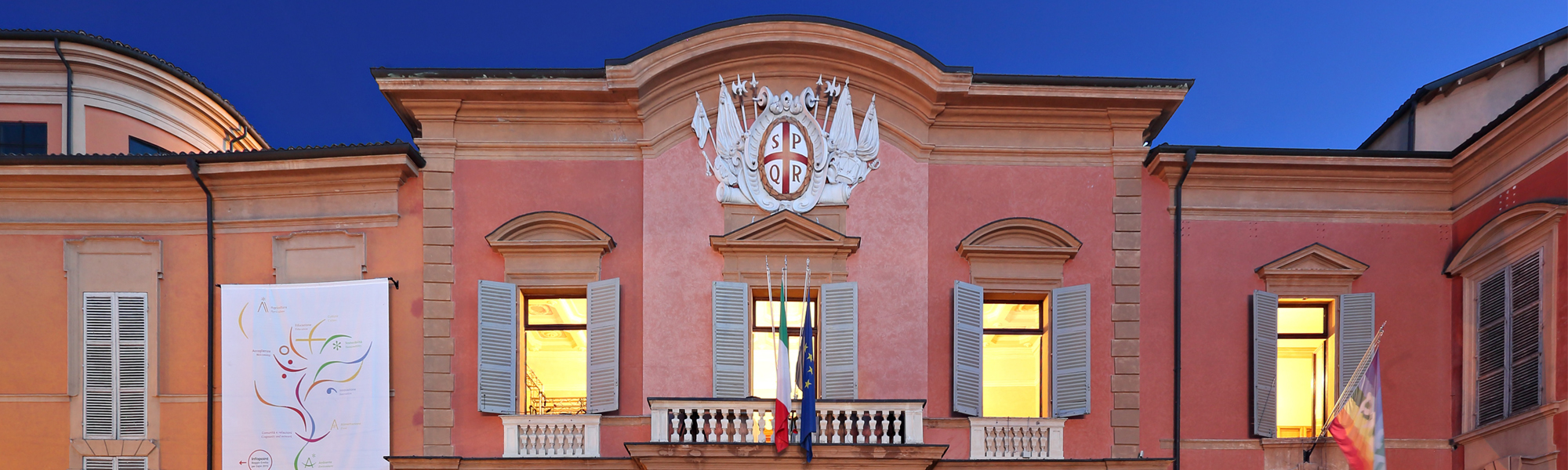
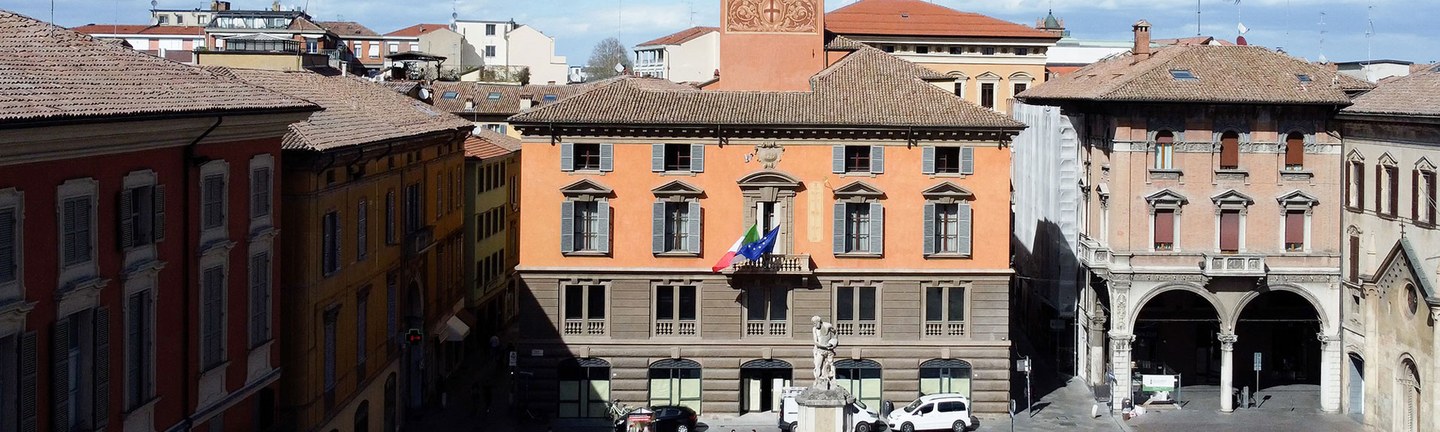
In the heart of Reggio Emilia's historic center stands Palazzo del Monte, one of the oldest and most significant buildings in the city.
Its origins date back to the 11th century, a time when the city was beginning to take shape as a political and cultural center.
For centuries, it served as the hub of local political, economic, and cultural life a silent witness to transformations, conflicts, and rebirths.
From Town Hall to Monte di Pietà
For a long time, Palazzo del Monte housed the Town Hall (Comune), until the beginning of the 15th century when the institution moved to the opposite side of the square, where it remains today.
Originally, the building was connected via a small covered bridge to the nearby Palazzo del Capitano del Popolo, the headquarters of another important municipal magistracy.
In 1494, the palace became the seat of the Monte di Pietà (the municipal pawnshop), while the ground floor hosted shops and currency exchange activities, confirming the building's central economic role in city life.
The Tower, the Clock, and the Sundial
One of the most fascinating elements of the palace is its clock tower, built in 1481 by Gianpaolo Ranieri - the same master craftsman who designed the famous clock in St. Mark's Square in Venice.
The sophisticated mechanism, which originally included an image of the Madonna, is now partially preserved at the Palazzo dei Musei in Reggio Emilia.
The facade also features a unique geographical sundial dating back to 1847, which is capable of indicating solar noon not only locally but also for several European capitals.
The City's First Theater
From the 16th to the 18th century, Palazzo del Monte hosted the city's first public theater, with a capacity of about 800 spectators.
The success of the performances was such that it required expansions using wooden structures that extended into Piazza del Monte.
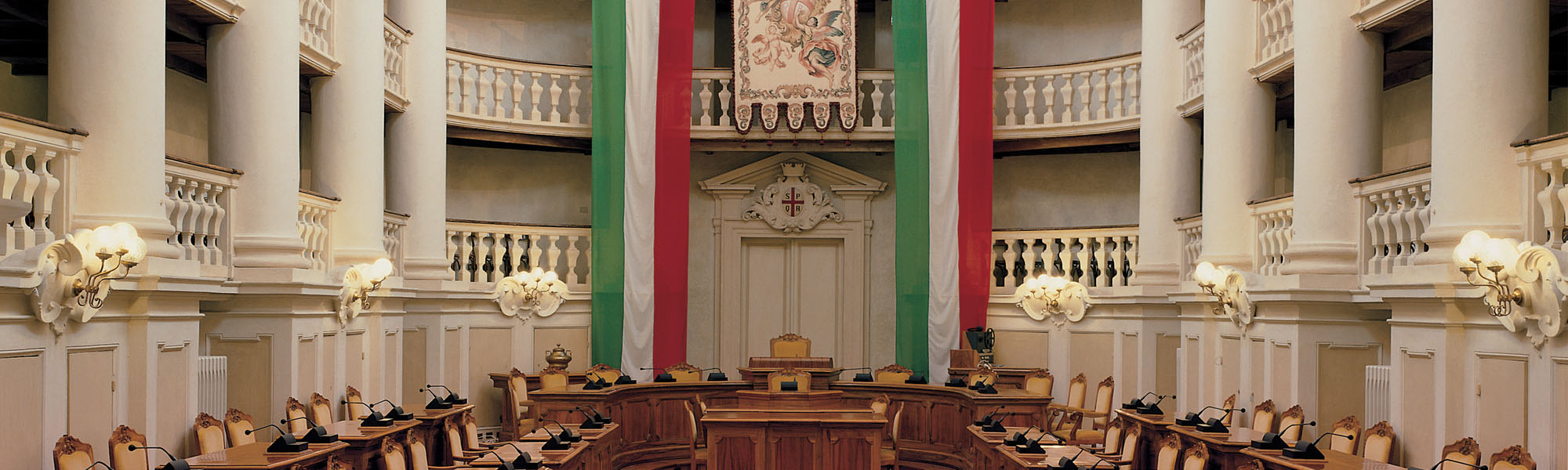
The first official theatrical space was set up inside the Assembly Hall of the Public Council (Sala delle adunanze del Pubblico Consiglio), a large rectangular room located on the first floor.
Using civic spaces for theatrical performances was common practice at the time, and Reggio was one of its earliest adopters.
In 1568, on the occasion of the visit of Duchess Barbara of Austria, the play Alidoro by the Reggio writer Gabriello Bombace was performed here.
Over time, the growing popularity of theater led to continuous structural changes, culminating in a major renovation in 1637, to which Gaspare Vigarani - the famous Baroque architect and scenographer - likely contributed.
The theater thus took on a shape akin to the emerging Italian-style theater (teatro all'italiana), with a U-shaped cavea surrounded by four vertical tiers of boxes, each separated by partitions and decorated with the owning family's coat of arms.
The boxes accommodated 4 to 6 spectators, while movable benches and chairs were arranged in the stalls. In total, the hall featured 100 boxes, offering an elegant setting decorated according to Baroque taste - a model that would deeply influence European theatrical history.
The Palace Today
Now, the Palace presents itself completely renovated.
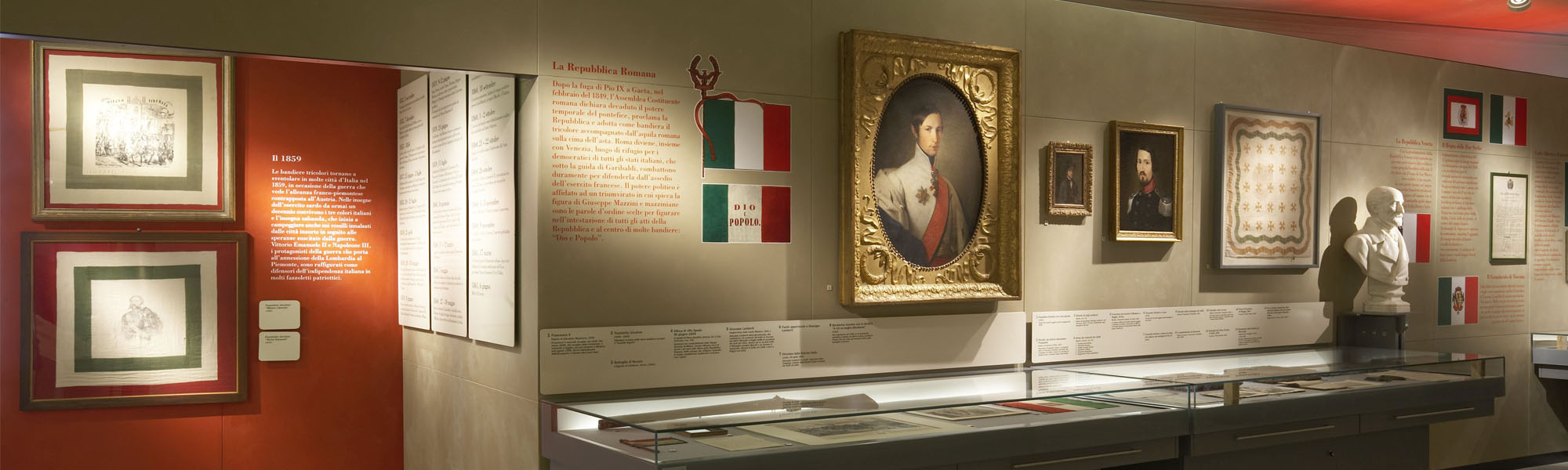
The interiors were enhanced between 1981 and 1985 with an elegant modern layout designed by architects Afra and Tobia Scarpa, while the recent restoration of the facade has brought back to light the municipal coat of arms, surrounded by refined ribbons and plant tendrils.
Contacts
Piazza del Monte - 42121 Reggio Emilia (RE)