Palazzo Ancini
Timetable
The palace can only be visited on special occasions as it is the seat of municipal administration offices.
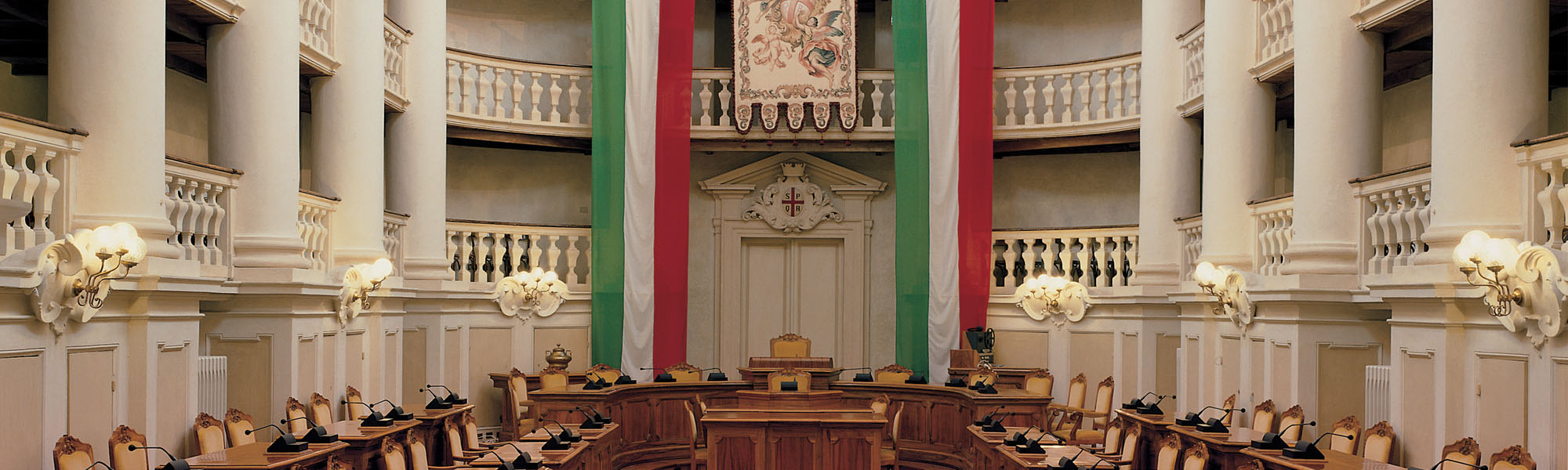
Located in the heart of Reggio Emilia, Palazzo Ancini is an elegant historical residence witnessing centuries of history and art.
The first records date back to the 16th century, when the building began to take shape; over the centuries, it passed from the Ruggieri to the Pegoletti, to the Counts Sormani, and finally to the Counts Ancini in 1821.
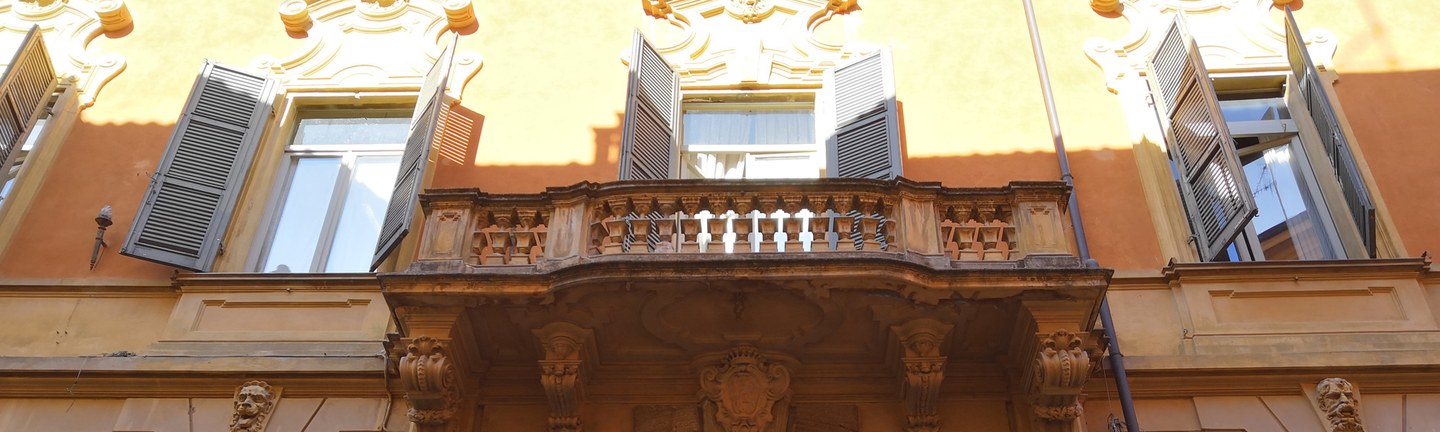
In the years 1924-1930, Professor Luigi Bertolini carried out important alteration works on the façades on Via Farini and Via Don Minzoni, enriching them with Mannerist and Baroque elements without altering the original structure.
The entrance portal, windows, and shops remained intact, while elegant masquerons, pilasters, and pseudo-caryatids now give the building a unique charm.
Architecture and courtyards
Passing through the entrance door, you find yourself in a unique, scenographic space, with two courtyards separated by a double colonnade of the Ionic order.
- Courtyard of Honor: located on the entrance side, it preserves a quadripartite hanging small arch from the sixteenth century and windows decorated with trompe-l'œil. The eighteenth-century grand staircase of honor is also located here, subsequently enriched with pictorial and decorative elements.
- Second courtyard: preserves pictorial traces that recall transit and service portals, closely linked to the original functionality of the palace.
On the noble floor, niches with sculptures and eighteenth-century decorations enrich the environment, while the grand staircase of honor, restored over the centuries, houses a magnificent ceiling frescoed by Anselmo Govi in the 1920s, featuring a complex allegory of Charity.
Decorative notes and restoration
Recent restoration works have made it possible to rediscover polychrome beams and rooms with a sixteenth-century appearance, confirming the historical dating hypothesized for the building and enhancing the original architectural elements.
Palazzo Ancini stands today as an example of a harmonious fusion between sixteenth-century severity and the decorative elegance of the twentieth century.