Casalgrande Castle
Timetable
External viewing only.
A historical sentinel overlooking the Secchia Valley
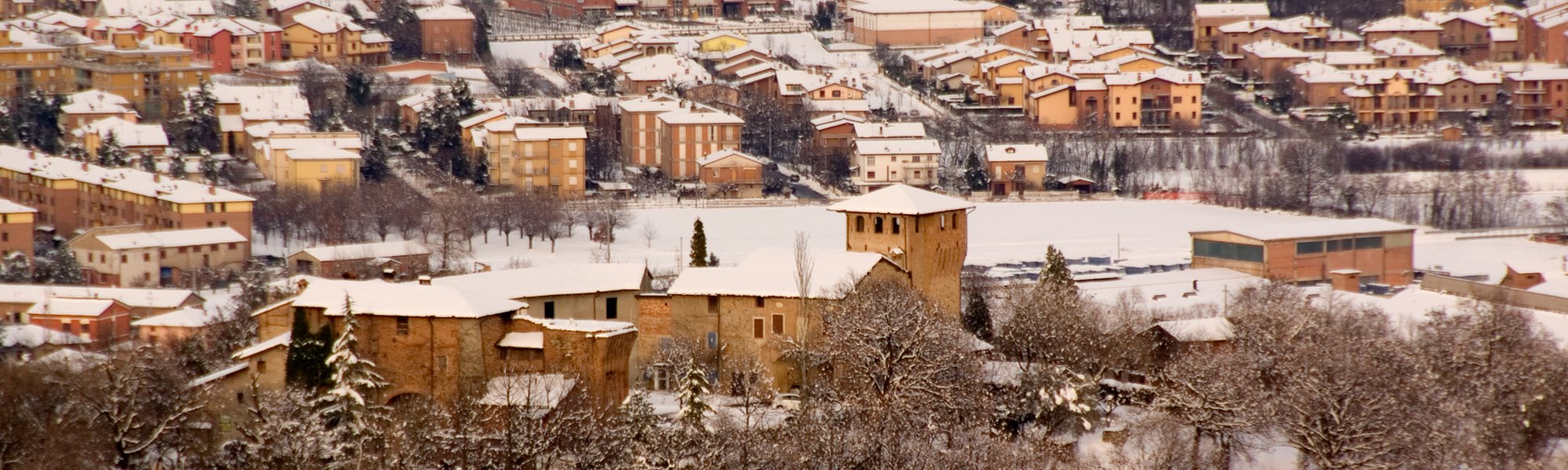
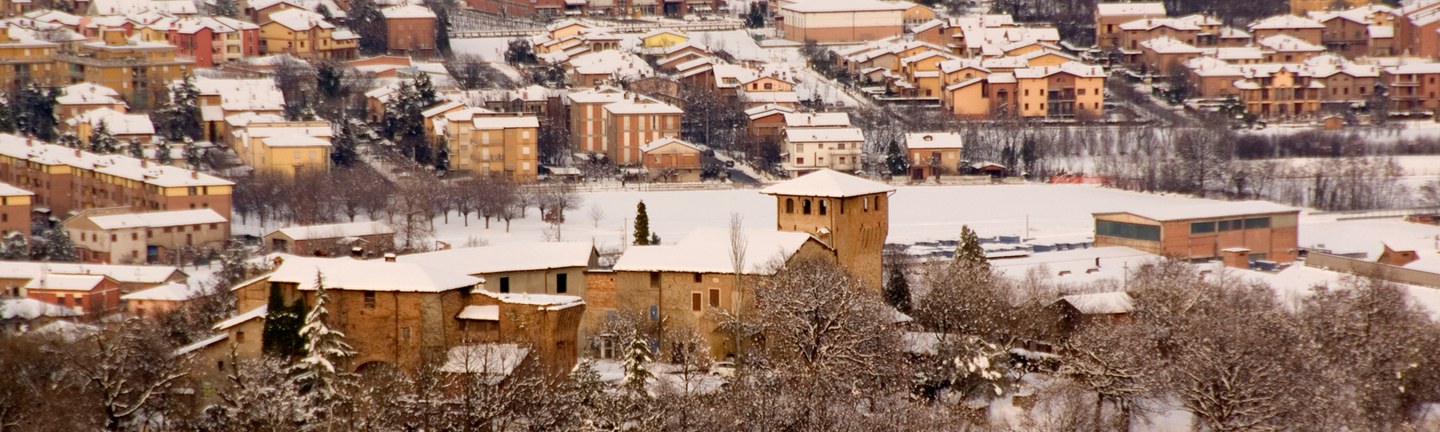
The remains of Casalgrande Castle still dominate the plain traversed by the Secchia River from a spectacular position, telling a centuries-old story of power, sieges, and reconstructions.
Built in a strategic location, this fortified complex represents one of the area's most evocative sites for understanding the medieval evolution of the territory.
According to a fascinating legend, the castle's origins are tied to the Lombard King Liutprand, as suggested by a marble plaque bearing the inscription "Liutprando rege felicissimo" that detached from the tower in 1704.
Modern historiography, however, tends to consider this inscription the product of legend, attributing the castle's construction to the Guidelli family, though not ruling out the existence of an earlier fortification.
From 1335, the castle entered the sphere of influence of the powerful Fogliani family, who maintained control over Casalgrande until 1409 despite internal conflicts.
In that year, Nicolò III d’Este, determined to punish Carlo Fogliani for allying with his enemy Otto Terzi, conquered the fortress.
The castle was subsequently granted to Alberto della Sala, a nobleman from Ferrara, alongside other major strongholds in the region.
In 1444, the House of Este regained control of Casalgrande, granting it as a fiefdom to Feltrino Boiardo, Lord of Scandiano, in 1452.
The 16th century marked one of the most dramatic chapters in the castle's history: in 1557, amidst rivalries between the Este and Farnese families, the fortress was besieged by Spanish troops led by Ottavio Farnese.
A fire breaking out among the internal munitions aided the assault, and the castle was stormed and burned despite the memorable, stubborn resistance of its defenders.
Following its destruction, the castle was rebuilt according to its previous structure by order of Count Ottavio Thiene, whose family governed it until 1622.
In subsequent centuries, various lordships succeeded one another, including the Bentivoglio, the Este, and Marquess Giambattista de Mari, until the fief returned to the Ducal Chamber.
At the end of the 18th century, the castle passed into private hands, including the Grulli and Croci families.
Today, the remaining structures of the castle and village belong to the Grimaldi family, while the Municipality retains ownership of the East Gate (Porta a Levante) and the Pretorian Tower (Torrione del Pretorio).
What remains of the complex is a 15th-century elliptical rural courtyard, with spaces once dedicated to both military residence and agricultural use.
The fortified residence features two square towers with machicolations, connected by a central body, and an entrance keep with traces of battlements, a fortified portal, and structures for a drawbridge.
Passing through the keep leads to a large inner courtyard with a well, once the focal point of castle life.
The keep originally housed an alarm bell, which is now located on the tower of the parish church.
Outside, along the ancient path leading to the village, stands the Oratory of Saint Sebastian, built in 1479.
Today used as a barn, it preserves a simple yet harmonious structure with a gabled facade, a pitched roof, and an interior featuring exposed wooden beams enriched by an interesting altarpiece decorated with cherubs.
Contacts
Via Castello Casalgrande - 42013 Casalgrande (RE)
Keep exploring