<?xml version="1.0" encoding="utf-8" ?>
<rdf:RDF xmlns:rdf="http://www.w3.org/1999/02/22-rdf-syntax-ns#" xmlns:dc="http://purl.org/dc/elements/1.1/" xmlns:syn="http://purl.org/rss/1.0/modules/syndication/" xmlns="http://purl.org/rss/1.0/">


<channel rdf:about="https://www.reggioemiliawelcome.it/en/search_rss">
  <title>English</title>
  <link>https://www.reggioemiliawelcome.it</link>

  <description>
    
            These are the search results for the query, showing results 56 to 70.
        
  </description>


  <image rdf:resource="https://www.reggioemiliawelcome.it/logo.png"/>

  <items>
    <rdf:Seq>
      
        <rdf:li rdf:resource="https://www.reggioemiliawelcome.it/en/discover-the-area/routes-and-tours/history-and-culture-routes/not-to-be-missed/nearby-sites-to-see"/>
      
      
        <rdf:li rdf:resource="https://www.reggioemiliawelcome.it/en/reggio-emilia/discover-the-area/art-and-culture/museums-and-galleries/museum-palace"/>
      
      
        <rdf:li rdf:resource="https://www.reggioemiliawelcome.it/en/scandiano/how-to-get-there/getting-around/rentals/mi-muovo"/>
      
      
        <rdf:li rdf:resource="https://www.reggioemiliawelcome.it/en/pictures/mediagallery"/>
      
      
        <rdf:li rdf:resource="https://www.reggioemiliawelcome.it/en/quattro-castella/discover-the-area/people-history-traditions/famous-people/matilda-of-canossa"/>
      
      
        <rdf:li rdf:resource="https://www.reggioemiliawelcome.it/en/trade-fairs-and-convention-services/tourist-services/tourism-professionals/tourist-guide-martinelli-marco"/>
      
      
        <rdf:li rdf:resource="https://www.reggioemiliawelcome.it/en/reggio-emilia/discover-the-area/people-history-traditions/famous-people/melato-maria"/>
      
      
        <rdf:li rdf:resource="https://www.reggioemiliawelcome.it/en/reggio-emilia/discover-the-area/people-history-traditions/famous-people/marco-gerra"/>
      
      
        <rdf:li rdf:resource="https://www.reggioemiliawelcome.it/en/reggio-emilia/discover-the-area/people-history-traditions/famous-people/malaguzzi-loris"/>
      
      
        <rdf:li rdf:resource="https://www.reggioemiliawelcome.it/en/guastalla/discover-the-area/people-history-traditions/curiosities/lido-po"/>
      
      
        <rdf:li rdf:resource="https://www.reggioemiliawelcome.it/en/novellara/discover-the-area/people-history-traditions/famous-people/lelio-orsi"/>
      
      
        <rdf:li rdf:resource="https://www.reggioemiliawelcome.it/en/scandiano/hotels-and-restaurants/where-to-stay/bed-breakfast/la-formica-b-b"/>
      
      
        <rdf:li rdf:resource="https://www.reggioemiliawelcome.it/en/reggio-emilia/discover-the-area/art-and-culture/modern-architecture/high-speed-mediopadana-railway-station"/>
      
      
        <rdf:li rdf:resource="https://www.reggioemiliawelcome.it/en/guastalla/trade-fairs-and-convention-services/useful-services/health/guastalla-hospital"/>
      
      
        <rdf:li rdf:resource="https://www.reggioemiliawelcome.it/en/reggio-emilia/how-to-get-there/getting-around/parkings/funakoshi-parking"/>
      
    </rdf:Seq>
  </items>

</channel>


  <item rdf:about="https://www.reggioemiliawelcome.it/en/discover-the-area/routes-and-tours/history-and-culture-routes/not-to-be-missed/nearby-sites-to-see">
    <title>Nearby sites to see</title>
    <link>https://www.reggioemiliawelcome.it/en/discover-the-area/routes-and-tours/history-and-culture-routes/not-to-be-missed/nearby-sites-to-see</link>
    <description></description>
    <content:encoded xmlns:content="http://purl.org/rss/1.0/modules/content/"><![CDATA[<h4 class="subtitle" style="text-align: left; ">Terre matildiche (The land of Matilda)</h4>
<p style="text-align: left; ">In the hills near Reggio Emilia, the importance of the Medieval period has been well preserved in time. The castles ( in <a href="https://www.reggioemiliawelcome.it/en/quattro-castella/discover-the-area/art-and-culture/castles-towers-bell-towers/bianello-castle" class="internal-link">Bianello</a>, Sarzano, <a href="https://www.reggioemiliawelcome.it/en/montecchio-emilia/discover-the-area/art-and-culture/castles-towers-bell-towers/montecchio-castle" class="internal-link">Montecchio</a>, Carpineti, Rossena and Canossa) which form the heart of the ancient County of Matilda, have maintained the charm of a time when, amid this scenery of woods and gullies, important events in European politics of the 11th and 12th century unfolded. The best preserved Castle is that of Rossena, which still has its Medieval look-out tower. The castle of Canossa has only a portion of the outer walls still standing and, inside this area, are the crypt of the Church of Saint Apollonio and the small National Museum “Naborre Campanini”. Scene of the famous historical episode, the phrase “Andare a Canossa “ (Go to Canossa) which is used as a synonym of penance and forgiveness, has been translated into more than 30 languages.</p>
<h4 class="subtitle" style="text-align: left; ">Renaissance Courts</h4>
<p class="visualClear" style="text-align: left; ">The itinerary through the plains north of the city, extending to the Po River, offers an array of interesting artistic landmarks.</p>
<p class="mceContentBody documentContent" style="text-align: left; "><a href="https://www.reggioemiliawelcome.it/en/brescello/discover-the-area/tourist-locations/brescello" class="internal-link">Brescello </a>is notable for having hosted the films “Don Camillo and Peppone” to whom the museum is dedicated;<br /><a href="https://www.reggioemiliawelcome.it/en/boretto/discover-the-area/tourist-locations/boretto" class="internal-link">Boretto</a><span> boasts of having one of the best equipped ports for river navigation;<br /></span><a href="https://www.reggioemiliawelcome.it/en/guastalla/discover-the-area/tourist-locations/guastalla" class="internal-link">Guastalla</a><span> preserves its memories from the period of Gonzaga domination;<br /></span><a href="https://www.reggioemiliawelcome.it/en/gualtieri/discover-the-area/tourist-locations/gualtieri" class="internal-link">Gualtieri</a><span> with its majestic town square, “Bentivoglio”, and its Museum dedicated to the famous artist who lived there, Antonio Ligabue;<br /></span><a href="https://www.reggioemiliawelcome.it/en/novellara/discover-the-area/tourist-locations/novellara" class="internal-link">Novellara </a><span>is home of the Gonzaga fortress and its museum;<br /></span><a href="https://www.reggioemiliawelcome.it/en/correggio/discover-the-area/tourist-locations/correggio" class="internal-link">Correggio</a><span> with its well preserved historical centre and its Princes’ Palace.</span></p>
<p style="text-align: left; ">South of the city, another destination is <a href="https://www.reggioemiliawelcome.it/en/scandiano/discover-the-area/tourist-locations/scandiano" class="internal-link">Scandiano</a> with its impressive Boiardo fortress and the house where Lazzaro Spallanzani, the scientist, was born. Today it houses the Study Centre dedicated to his works.</p>
<h4 class="subtitle" style="text-align: left; ">The Apennines</h4>
<p style="text-align: left; ">Of particular interest are the landscapes and naturalistic panoramas, most of which are located in the National Park of Tuscany-Emilia. From Mount Cusna to the Alps of Succiso, from Lake Calamone to the waterfalls of Lavacchiello, they extend along deep valleys, steep ravines, charming reflective pools of water, thick, dark woods filled with chestnut and beech trees, grasslands and moors. The scenery is characterized by exceptional examples such as the “Pietra di Bismantova” (Rock of Bismantova), a huge natural sandstone monolith that towers over the town of Castelnovo Ne’ Monti, a place mentioned by Dante Alighieri in his Divine Comedy. <a class="external-link" href="http://www.appenninoreggiano.it/database/iat/iat.nsf?OpenDatabase&amp;lng=ing&amp;">www.appenninoreggiano.it</a></p>
<p style="text-align: left; "> </p>
<p style="text-align: left; "> </p>]]></content:encoded>
    <dc:publisher>No publisher</dc:publisher>
    <dc:creator>magnaf</dc:creator>
    <dc:rights></dc:rights>
    <dc:date>2013-10-20T08:05:00Z</dc:date>
    <dc:type>Page</dc:type>
  </item>


  <item rdf:about="https://www.reggioemiliawelcome.it/en/reggio-emilia/discover-the-area/art-and-culture/museums-and-galleries/museum-palace">
    <title>Museums Palace</title>
    <link>https://www.reggioemiliawelcome.it/en/reggio-emilia/discover-the-area/art-and-culture/museums-and-galleries/museum-palace</link>
    <description>Former Franciscan convent, it has hosted the first private collection of the great naturalist Lazzaro Spallanzani since 1830. In 2005 the square and the Museum were redisigned by the famous contemporary architect Italo Rota. The exhibition area was expanded to over 1,800 metres. New entrance hall, new exhibition gallery, workshop space, Agorà, Fab Lab, new library and Wi-Fi service. </description>
    <content:encoded xmlns:content="http://purl.org/rss/1.0/modules/content/"><![CDATA[<div class="event_body generic_comunereggio_field_text generic_comunereggio_field">
<h4 class="subtitle">Address and details</h4>
<p>Via Spallanzani, 1 - 42121 Reggio nell'Emilia<br /><img src="https://www.reggioemiliawelcome.it/copy2_of_icone-info/phone" alt="Phone" class="image-inline" title="Phone" /> <strong>0039 0522 456816</strong> - Museums Palace<br /><img src="https://www.reggioemiliawelcome.it/copy2_of_icone-info/phone" alt="Phone" class="image-inline" title="Phone" /> <strong>0039 0522 456477</strong> - Offices<br /><img src="https://www.reggioemiliawelcome.it/icone-servizi/email.gif" alt="Email" class="image-inline" title="Email" /> <a class="external-link" href="http://musei@municipio.re.it" title="Opens the email address of: &quot;Musei&quot;">musei@comune.re.it</a><br /><img src="https://www.reggioemiliawelcome.it/icone-info/website" alt="sito web" class="image-inline" title="sito web" /> <a class="external-link" href="http://www.musei.re.it/en/collections/palazzo-dei-musei-museums-palace/" target="_blank" title="Opens the external link to: &quot;Musei&quot;">Museum Palace</a><br /><img src="https://www.reggioemiliawelcome.it/icone-info/website" alt="sito web" class="image-inline" title="sito web" /> <a class="external-link" href="http://www.girareggio.it/eng/index.html#museiciv2" title="Opens the external link to: &quot;Comune di Reggio Emilia, Girareggio&quot;">GiraReggio</a></p>
<h4 class="subtitle">Opening times</h4>
<p><strong><span class="text-success">September-June</span><br /></strong><strong>Tuesday-Thursday<br /></strong><strong><span class="muted">10.00 a.m. - 1.00 p.m.<br /></span></strong><strong><br /></strong><strong>Friday</strong><strong>-</strong><strong>Sunday </strong>and <strong>holidays</strong><br /><span class="muted"><strong>10.00 a.m. - 6.00 p.m.</strong></span></p>
<p><strong><span class="text-success">July-August<br /></span></strong><span><strong>Tuesday-Sunday</strong><br /></span><span><strong>10.00 AM - 1 PM<br /><strong>Monday closed</strong></strong></span></p>
<h4 class="subtitle"><strong><span class="muted"><strong> </strong></span></strong>Prices</h4>
<p>Free entrance</p>
<h4 class="subtitle">How to get there</h4>
<p><strong>Reggio nell'Emilia - Town centre</strong></p>
<p>The museum overlooks Piazza Martiri del 7 Luglio and is located in front of the Valli Municipal Theatre.</p>
<h4 class="subtitle">Historical notes</h4>
<p class="event_body generic_comunereggio_field_text generic_comunereggio_field">The history of the Museums Palace begins eight centuries ago, exactly in <strong>1256 </strong>when the Franciscans, by concession of the bishop Guglielmo Fogliani, settled in the church of San Luca and the adjoining imperial palace, in use as a bishopric starting from 1195. The transformation from palace to convent will take place a few decades later. Over the centuries the convent took shape, first developing on two floors and around a large porticoed cloister, then acquiring a large space used as a vegetable garden and surrounded by a wall. The aspect with which we know it now is a great makeover in the early decades of the XVIII century. During the Napoleonic suppressions, The Museums Palace ceases to be a convent and turns into a barracks and stable for horses, therefore in the seat of educational institutions.</p>
<p class="event_body generic_comunereggio_field_text generic_comunereggio_field"> </p>
<p class="event_body generic_comunereggio_field_text generic_comunereggio_field"><img src="https://www.reggioemiliawelcome.it/en/reggio-emilia/discover-the-area/art-and-culture/museums-and-galleries/images-museums-and-galleries/Collezionenaturalistica.jpg/@@images/e2821ea2-32bc-4f55-ab60-54685097b705.jpeg" alt="Museo &quot;Gaetano Chierici&quot; di Paletnologia" class="image-inline" title="Museo &quot;Gaetano Chierici&quot; di Paletnologia" /></p>
<p class="event_body generic_comunereggio_field_text generic_comunereggio_field">After the Restoration, the building housed the Royal Boarding School or Legal College on the first floor and the Royal High School of Chemistry and Physics on the ground floor. Precisely the presence of scientific <strong>educational institutes</strong> led to the decision, in 1830, to set up the private collection of <strong>Lazzaro Spallanzani</strong>, purchased by the Municipality in 1799. In 1862 the Reggio Don Gaetano Chierici founded the Cabinet of Antiquities country, from 1870 Museum of Homeland History, divided into large collections that favor the collection and conservation of material of local interest, but placing them within the framework of the national cultural tradition. The <strong>Museo Chierici di Paletnologia </strong>exhibits local prehistory and protohistory materials collected by Chierici himself, accompanied and compared with objects of the same period, but of different geographical origin, especially Italian. The collection reflects the methods of the new palethnological discipline that Chierici himself was defining.</p>
<p class="event_body generic_comunereggio_field_text generic_comunereggio_field"> </p>
<p class="event_body generic_comunereggio_field_text generic_comunereggio_field"><a style="width: 0px;" href="https://www.reggioemiliawelcome.it/en/reggio-emilia/discover-the-area/art-and-culture/museums-and-galleries/images-museums-and-galleries/SalaAssalinierbario.jpg" class="internal-link"><img src="https://www.reggioemiliawelcome.it/en/reggio-emilia/discover-the-area/art-and-culture/museums-and-galleries/images-museums-and-galleries/SalaAssalinierbario.jpg/@@images/d8dd4d0a-dbb2-4bf4-ae9e-0c5f674da3c4.jpeg" alt="&quot;Paolo Assalini&quot; Room and Botany" class="image-inline" title="&quot;Paolo Assalini&quot; Room and Botany" /></a></p>
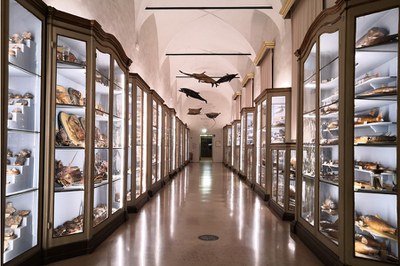
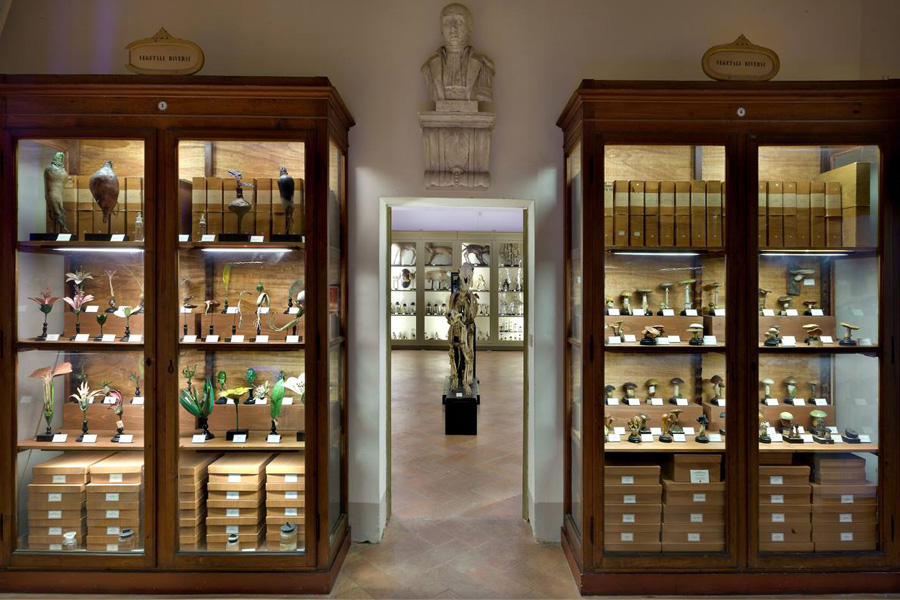
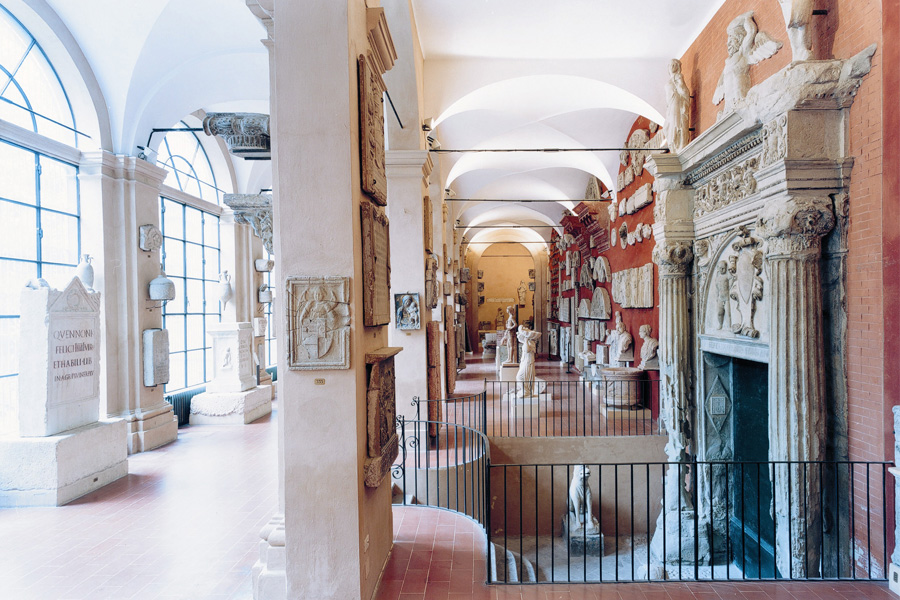
<p class="event_body generic_comunereggio_field_text generic_comunereggio_field">The <strong>Marbles Gallery</strong>, established and open to the public in 1875, then restored and enlarged in 1991, houses stone finds and Roman epigraphs, mostly funerary, remains of architectural decorations, epigraphs and sculptures from the Middle Ages to the 18th century. Roman architectural marbles are also displayed outdoors in the adjacent <strong>Cloister</strong>. The <strong>Atrium </strong>of the Museums preserves, in addition to mosaics with geometric motifs from the Roman age, large mosaic fragments of the floor decorations, dating back to the XII-XIII century, of some churches in Reggio: Cathedral, San Prospero, San Giacomo and San Tommaso. The XIX-century collections are completed with the naturalistic collections of <strong>zoology </strong>(<strong><em>Antonio Vallisneri room</em></strong>), <strong>anatomy </strong>(<strong><em>Paolo Assaliniroom</em></strong>) and <strong>botany</strong>. They are flanked by the collections of <strong>Ethnography </strong>(<strong><em>Giambattista Venturi room</em></strong>), rearranged in 1999 with the integration of a nucleus of objects acquired by the Museum of Antiquity of Parma.</p>
<p class="event_body generic_comunereggio_field_text generic_comunereggio_field"> </p>
<p class="event_body generic_comunereggio_field_text generic_comunereggio_field"><a style="width: 0px;" href="https://www.reggioemiliawelcome.it/en/reggio-emilia/discover-the-area/art-and-culture/museums-and-galleries/images-museums-and-galleries/GalleriadeiMarmi.jpg" class="internal-link"><img src="https://www.reggioemiliawelcome.it/en/reggio-emilia/discover-the-area/art-and-culture/museums-and-galleries/images-museums-and-galleries/GalleriadeiMarmi.jpg/@@images/b179ce35-73f8-4ee8-bf7c-3827a7abc788.jpeg" alt="&quot;Roman Reggio&quot; Room" class="image-inline" title="&quot;Roman Reggio&quot; Room" /></a></p>
<p class="event_body generic_comunereggio_field_text generic_comunereggio_field">Ideal extension and completion of the Chierici Collection, it is the room dedicated to the <strong>Roman Reggio</strong> (1996-1998), in the context of the new archaeological collections, including numismatic and epigraphic collections, sculptures, mosaics, fragments of architecture, ceramics, goldsmith's art and minor arts, from the Roman foundation of the city to the barbarian age. In May 2015, the room was renovated with a permanent virtual museum: <strong><em>Regium @ Lepidi-Project 2200</em></strong>, with a totally innovative concept. In fact, it is dedicated to a not only virtual, but also interactive reconstruction of the Roman city, through the use of different equipment. In the naturalistic field, the collections dedicated to <strong>Geology</strong> (1989), <strong>Fauna</strong> <strong>del reggiano</strong> (1992) and the display of the remains of the <strong><i>Valentina whale</i></strong> (2001), a 3.5 million-year-old fossil cetacean found on the hills, were added to the XIX-century collections from the Secchia Valley.</p>
<div class="event_body generic_comunereggio_field_text generic_comunereggio_field">
<p class="event_body generic_comunereggio_field_text generic_comunereggio_field"> </p>
<p class="event_body generic_comunereggio_field_text generic_comunereggio_field"><a style="width: 0px;" href="https://www.reggioemiliawelcome.it/en/reggio-emilia/discover-the-area/art-and-culture/museums-and-galleries/images-museums-and-galleries/LasolitudineAntonioFontanesi.jpg" class="internal-link"><img src="https://www.reggioemiliawelcome.it/en/reggio-emilia/discover-the-area/art-and-culture/museums-and-galleries/images-museums-and-galleries/LasolitudineAntonioFontanesi.jpg/@@images/aa4fd8e7-e887-4d2c-81b3-10a8f2972ece.jpeg" alt="&quot;The solitude&quot; painting of Antonio Fontanesi" class="image-inline" title="&quot;The solitude&quot; painting of Antonio Fontanesi" /></a></p>
<p class="event_body generic_comunereggio_field_text generic_comunereggio_field">On the upper floor of the building, the <strong>Prehistory and Protohistory Collection </strong>(1992) displays the archaeological collections after the Chierici order, presenting an exhaustive overview of the most ancient civilizations that inhabited our territory, through artifacts found from the most recent excavations and findings.</p>
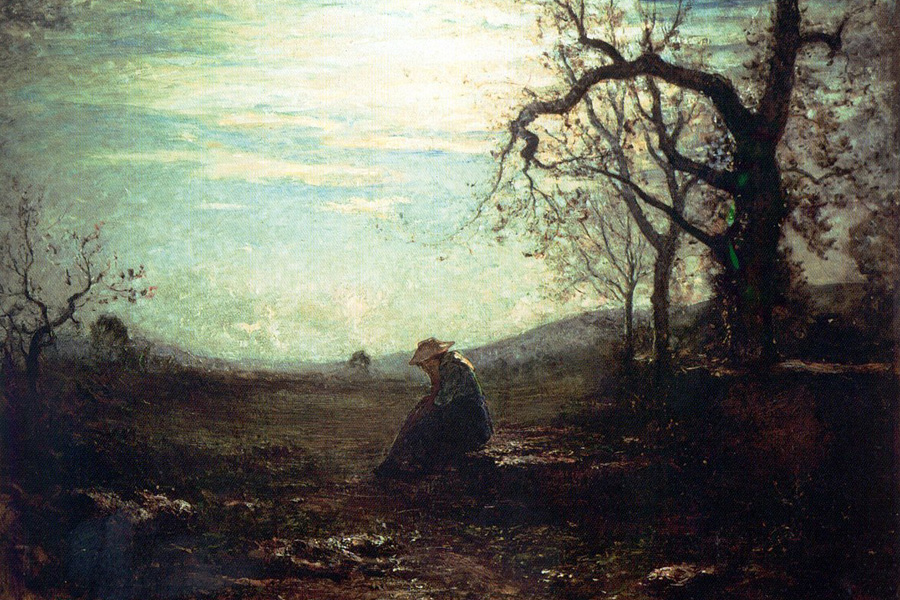
<p class="event_body generic_comunereggio_field_text generic_comunereggio_field">The <strong>Antonio Fontanesi Gallery</strong>, established in 1902 and reordered, enlarged and enriched several times, documents the artistic culture in Reggio from the XIV to the XX century. In the collection, the sections dedicated to the deposits of the works of art by Bipop-Carire, the Art Institute of the Artistic Lyceum Gaetano Chierici, the room dedicated to paintings, sculptures, drawings and engravings by <strong>Antonio Ligabue</strong>, and the room dedicated to <strong>Marco Gerra.</strong></p>
<p class="event_body generic_comunereggio_field_text generic_comunereggio_field"> </p>
<p class="event_body generic_comunereggio_field_text generic_comunereggio_field"><a style="width: 0px;" href="https://www.reggioemiliawelcome.it/en/reggio-emilia/discover-the-area/art-and-culture/museums-and-galleries/images-museums-and-galleries/Terzopiano.jpg" class="internal-link"><img src="https://www.reggioemiliawelcome.it/en/reggio-emilia/discover-the-area/art-and-culture/museums-and-galleries/images-museums-and-galleries/Terzopiano.jpg/@@images/20e7c44d-27e2-44eb-adde-c76ee0e1bc63.jpeg" alt="Top floor projected by Italo Rota " class="image-inline" title="Top floor projected by Italo Rota " /></a></p>
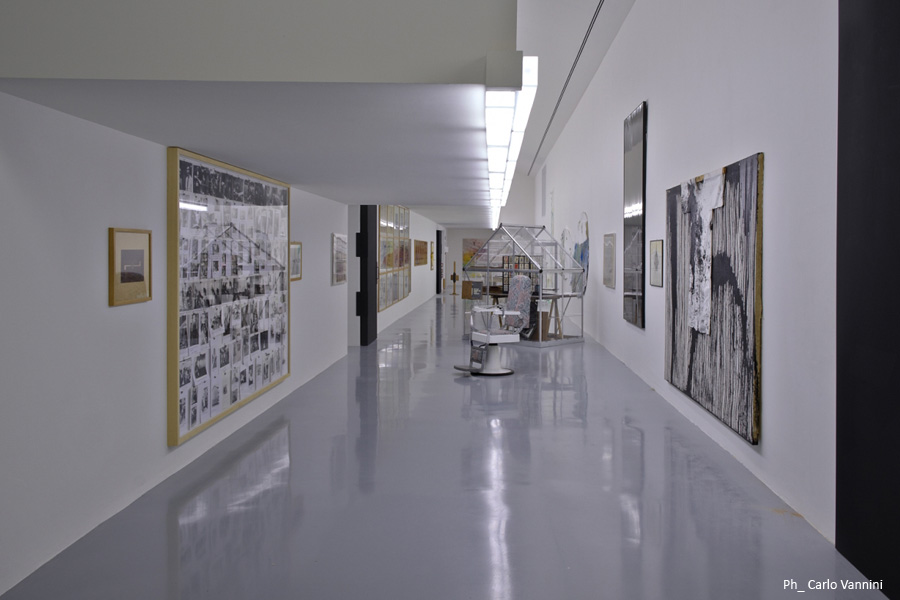
<p class="event_body generic_comunereggio_field_text generic_comunereggio_field">The recent history of the Museums Palace begins in 2005: the project to rethink and renovate the museum is entrusted to the great architect <strong>Italo Rota</strong>. The return to the town of the <strong>top floor</strong> <strong>of the building</strong>, unusable for several years, is the main novelty introduced by Rota's project, which intends to propose a new idea, a new museum project, which compares and <strong>dialogues with the contemporary</strong>. The architect has reconstructed a red thread that binds and connects the old with the new, the plan of the historical collections, first of all the Spallanzani Collection, with the plan of the Fontanesi Gallery and of the archaeological collections up to the third and last floor where the museum is it opens up to the complexity and contamination of contemporaneity. The comparison is with the generation of the new contemporary museums and with the territorial civic museums that offer themselves as an individual and collective opportunity in which the architecture and materials of the museum are transformed together into a museum and simultaneously become a source of experience and a means of knowledge.</p>
<p class="event_body generic_comunereggio_field_text generic_comunereggio_field"> </p>
<p class="event_body generic_comunereggio_field_text generic_comunereggio_field"><a style="width: 0px;" href="https://www.reggioemiliawelcome.it/en/reggio-emilia/discover-the-area/art-and-culture/museums-and-galleries/images-museums-and-galleries/Crocediluce.jpg" class="internal-link"><img src="https://www.reggioemiliawelcome.it/en/reggio-emilia/discover-the-area/art-and-culture/museums-and-galleries/images-museums-and-galleries/Crocediluce.jpg/@@images/84b3146a-7e18-4ffc-ba94-62336295abeb.jpeg" alt="&quot;Cross of light&quot; by Claudio Parmiggiani" class="image-inline" title="&quot;Cross of light&quot; by Claudio Parmiggiani" /></a></p>
<div class="event_body generic_comunereggio_field_text generic_comunereggio_field"></div>
<div class="event_body generic_comunereggio_field_text generic_comunereggio_field">
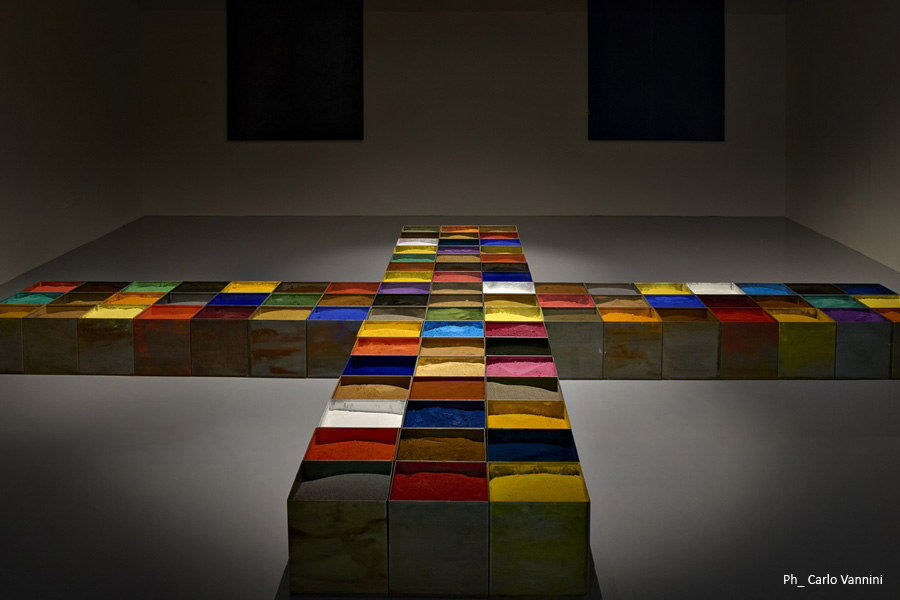
<p class="event_body generic_comunereggio_field_text generic_comunereggio_field">On the first floor, the entrance hall has been completely renovated through a library, ticket office and studio. In all three levels of the building, a<strong> unique Pièce</strong> was designed: the precious and very rare <strong><em>Gold Cup</em></strong> dating back to the Bronze Age (about 3,700 years ago), found in Montecchio Emilia; the <strong><em>Venus of Chiozza</em></strong>, classifiable among the most ancient Paleolithic idols; the contemporary works <strong><em>La monta solar</em></strong>, sculpture in brass and ceramic from 1969-79 by Fausto Melotti; <strong><em>Cross of light</em></strong>, a work of particular spiritual intensity by Claudio Parmiggiani. They are unique pieces, masterpieces that also have a special attractive function and invite the viewer to linger and reflect.</p>
<p class="event_body generic_comunereggio_field_text generic_comunereggio_field"> </p>
<p class="event_body generic_comunereggio_field_text generic_comunereggio_field"><a style="width: 0px;" href="https://www.reggioemiliawelcome.it/en/reggio-emilia/discover-the-area/art-and-culture/museums-and-galleries/images-museums-and-galleries/Capodoglio.jpg" class="internal-link"><img src="https://www.reggioemiliawelcome.it/en/reggio-emilia/discover-the-area/art-and-culture/museums-and-galleries/images-museums-and-galleries/Capodoglio.jpg/@@images/c5c749e5-9f34-4e85-8e15-e091c0b2cfa2.jpeg" alt="The Sperm Wale" class="image-inline" title="The Sperm Wale" /></a></p>
</div>
<div class="event_body generic_comunereggio_field_text generic_comunereggio_field"></div>
<div class="event_body generic_comunereggio_field_text generic_comunereggio_field">
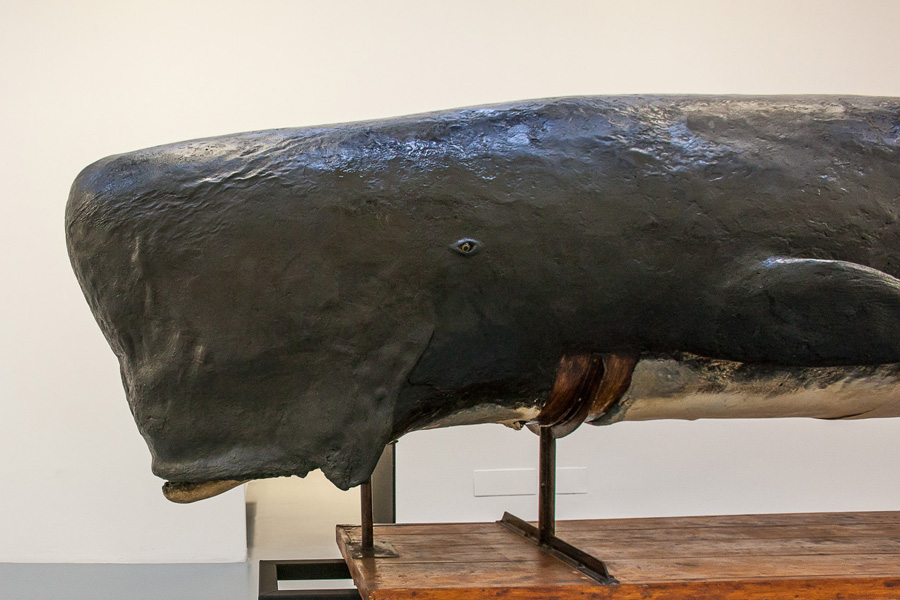
<p class="event_body generic_comunereggio_field_text generic_comunereggio_field">On the top floor, Laboratory spaces invite the public to participate actively and critically in relation to the contents of the visit and encourage their creativity. In continuity with these spaces, the Agora, a place of exchange and discussion, to renew the dialectic between doing and being, between work and the word, between creativity and exchange, comparison, participation. It is in particular with the idea of ​​the new <strong>Long Sleeve</strong>, space of the temporary museum, which occupies the whole large nave on the top floor, to highlight the message linked to contemporaneity starting from the first installation For inspiration only, curated directly by Italo Rota. In the Long Sleeve, the historic <a href="https://www.reggioemiliawelcome.it/en/reggio-emilia/discover-the-area/people-history-traditions/curiosities/una-balena-dalloceano-alle-rive-del-crostolo" class="internal-link" title="Opens the &quot;Sperm Whale&quot; file"><strong>Sperm Whale</strong></a> has found a new location and more adequate conditions of visibility, an object particularly important for the memory of the town and one of the typical symbols of the Museum.</p>
</div>
</div>
</div>]]></content:encoded>
    <dc:publisher>No publisher</dc:publisher>
    <dc:creator>magnaf</dc:creator>
    <dc:rights></dc:rights>
    <dc:date>2014-10-27T14:30:00Z</dc:date>
    <dc:type>Page</dc:type>
  </item>


  <item rdf:about="https://www.reggioemiliawelcome.it/en/scandiano/how-to-get-there/getting-around/rentals/mi-muovo">
    <title>Mi Muovo in bici</title>
    <link>https://www.reggioemiliawelcome.it/en/scandiano/how-to-get-there/getting-around/rentals/mi-muovo</link>
    <description>Bike Sharing Hire Service</description>
    <content:encoded xmlns:content="http://purl.org/rss/1.0/modules/content/"><![CDATA[<p>42019 Scandiano</p>
<p><a class="external-link" href="http://www.comune.scandiano.re.it/mi-muovo-in-bici/">Mi Muovo in bici a Scandiano</a></p>
<p> </p>
<p>The service is active every day from 06:00 a.m. to midnight.</p>
<h4 class="subtitle">Service activation</h4>
<ul>
<li><a class="external-link" href="http://www.mimuovoinbici.it/default.aspx" style="height: 1.5em;">www.mimuovoinbici.it</a></li>
<li><span style="height: 1.5em;">office of A.s.d. Pallacanestro Scandiano via Fogliani, 7 - phone +39 331 1537827 - +39 331 3706143</span></li>
</ul>
<h4 class="subtitle">Opening times</h4>
<p><span style="height: 21.6px;">Opening hours of the <span style="height: 21.6px;">office of A.s.d. Pallacanestro Scandiano<br /></span></span><span style="height: 1.5em;">Monday, Tuesday and Thursday from 09:30 a.m. to 12:30 p.m. and Wednesday from 03:00 to 05:00 p.m.</span></p>
<p>It is possible <strong>to enjoy the bike hire service every day from 06:00 a.m. to midnight</strong> in the following posts:</p>
<ul>
<li><span style="height: 1.5em;">Railway Station - Via Statale, n° 7 bike posts</span></li>
<li><span style="height: 1.5em;">Town Hall - Piazzetta F. Boiardo, n° 7 bike posts</span></li>
<li><span style="height: 1.5em;">Parking of Istituto Gobetti - Via Repubblica, n° 7 bike posts</span></li>
</ul>
<p> </p>
<p> </p>
<p> </p>
<p> </p>
<p> </p>
<p> </p>
<p> </p>
<p> </p>]]></content:encoded>
    <dc:publisher>No publisher</dc:publisher>
    <dc:creator>magnaf</dc:creator>
    <dc:rights></dc:rights>
    <dc:date>2014-10-13T09:30:00Z</dc:date>
    <dc:type>Page</dc:type>
  </item>


  <item rdf:about="https://www.reggioemiliawelcome.it/en/pictures/mediagallery">
    <title>Mediagallery</title>
    <link>https://www.reggioemiliawelcome.it/en/pictures/mediagallery</link>
    <description>Click on the buttons to download the photos and listen to the podcasts!</description>
    <content:encoded xmlns:content="http://purl.org/rss/1.0/modules/content/"><![CDATA[<p><a href="https://www.reggioemiliawelcome.it/en/podcast-1?set_language=en" class="external-link" target="_blank"><img class="image-left" src="../../immagini-per-italiano-e-inglese/1.png/@@images/a3a5fd83-eaaa-48aa-9a85-c055ddf99e0e.png" /></a></p>
<p><a class="external-link" href="https://www.flickr.com/photos/187136338@N05" target="_blank"><img class="image-left" src="../../immagini-per-italiano-e-inglese/2.png/@@images/a8e413ae-7794-4723-ad83-0c034ed85f4d.png" /></a></p>
<p> </p>
<p> </p>
<p> </p>
<p> </p>
<p> </p>
<p> </p>
<p> </p>
<p> </p>
<p> </p>]]></content:encoded>
    <dc:publisher>No publisher</dc:publisher>
    <dc:creator>magnaf</dc:creator>
    <dc:rights></dc:rights>
    <dc:date>2013-10-16T07:45:00Z</dc:date>
    <dc:type>Page</dc:type>
  </item>


  <item rdf:about="https://www.reggioemiliawelcome.it/en/quattro-castella/discover-the-area/people-history-traditions/famous-people/matilda-of-canossa">
    <title>Matilda of Canossa</title>
    <link>https://www.reggioemiliawelcome.it/en/quattro-castella/discover-the-area/people-history-traditions/famous-people/matilda-of-canossa</link>
    <description>Grand Countess Matilda of Canossa, also known as Matilda of Tuscany, was a medieval countess, duchess, marchioness and queen. Matilda was a powerful feudal landowner and an ardent supporter of the Papacy in the investiture struggle. Her story is an important part of the construction of Europe and her vicissitudes are emblematic of the role played by women in the history of Western Europe. 
</description>
    <content:encoded xmlns:content="http://purl.org/rss/1.0/modules/content/"><![CDATA[<p>A female figure of great importance in the history of the<strong> European Middle Ages,</strong> Matilde di Canossa at the age of six was already heir of a territory that went from today’s Lazio to Lake Garda, strategic because it was a mandatory passageway for both the popes who had to settle in Rome, and the emperors that were to be crowned there. <span>Second cousin of Emperor Henry IV, but a faithful follower of the Reformation of the Church carried out by Pope Gregory VII, she found herself at the centre of an epochal clash for the investiture struggle between the Papacy and the Empire.</span></p>
<p>For political reasons she married Goffredo the Hunchback and will have to leave her lands to settle in her husband’s homeland, Lorraine. The marriage ended after a few years and Matilda will be able to return to her mother Beatrice in the Italian territory. <span>Thus, she was an example of the worsening of differences between <strong>Pope Gregory VII</strong> and <strong>Emperor Henry IV</strong>, the first one determined to impose the supremacy of the Papacy over every earthly power, the second one ready for war to assert his rights as absolute sovereign.</span></p>
<p>After the excommunication of Henry IV, Matilda will act as mediator between the rebel sovereign and the Pope at the <strong>Canossa castle,</strong> showing her ambivalence due to loyalty to her cousin Emperor and the desire to be a good Christian. The humiliation of Henry IV is only a strategic move of convenience and the fight will resume shortly.</p>
<p>Because of her role as intermediary Matilda was stripped of the title of Countess and deprived of her lands,  so she was a lonely woman. Some vassals rebelled against her and, to defend her fiefdom under attack by the imperial troops, she contracted a second marriage, also unhappy and disastrous. Only in the last years of her existence Matilda will be able to devote herself to prayer and religion, which she neglected in her youth because of her political role. She will die near the monastery of Saint Benedict in Polirone, and since 1632 she has rested in <strong>Rome</strong>, in the <strong>Saint Peter church</strong><strong>.</strong></p>
<h4 class="subtitle">The forgiveness</h4>
<p class="subtitle"><span>Emperor Henry IV arrived in Canossa January 25, 1077 and was granted audience, then forgiveness, on January 28. Some historians have disputed claims that the Emperor had to wait three days at the entrance to the Canossa Castle in a state of severe physical discomfort, but the recorded date in which the Emperor was led to meet the Pope and appeared before him is actually January 28. The iconic image, passed down through the centuries, of the German Monarch kneeling in the snow during that harsh winter at the gates of theCanossa Castle, Matilda’s residence in the Reggio Emilia Apennines, remains the symbol of that event.</span></p>
<p><span> </span></p>
<h4 class="subtitle">The lands of Matilda</h4>
<p class="subtitle"><span>The lands of Matilda included the foggy mists of the low Po river valley, the cities of the plains and the ridges of the Apennines, and were characterized by an i<strong>mposing system of fortifications</strong> featuring countless castles, churches and tower houses. That landscape, the symbol of a political, social and religious system, has left us an invaluable heritage from that time which needs to be preserved so as to be handed down to posterity.</span></p>
<p>The <strong><a class="external-link" href="https://www.icastellidelledonne.it/en/castello/castello-di-canossa/" target="_blank">Canossa Castle,</a></strong> which hosts a national museum and is part of Italy’s national heritage, is therefore the centre of a territory sculpted by the history that led to the transition between medieval and modern Europe. During that time, the charisma of Countess Matilda shaped the landscape of the Reggio Emilia Apennines almost after her own image and characteristics, and that landscape still bears proudly the thousands of marks left by her passage. This territory, which was at the heart of European medieval history and provided the stage for such leading players as Pope Gregory VII, Emperors Henry IV and Henry V and Saint Francis, offers a blend of nature and drama, history and culture, economics and environment, and to this day enjoys a strong cultural tradition deeply engrained in the memory and the very identity of the local communities. The Canossa Castle itself was the main stronghold in a defensive theatre - certainly unique in Europe during the period between the X and XII centuries -designed to secure control over communication routes across the Po river plain and the Apennines. Throughout the period of the wars of investiture, this system provided crucial military support to the Papacy, with Countess Matilda of Tuscany, in its continual struggles against Emperor Henry IV.</p>
<h4 class="subtitle">Historical studies</h4>
<p class="subtitle"><strong><img alt="Sito web" class="image-inline" src="../../../../../icone-info/sito-web/@@images/a06e0894-0798-4988-83c4-aa8b811c35d5.png" title="Sito web" /> <a class="external-link" href="https://www.icastellidelledonne.it/en/castelli/" target="_blank">Castles</a><br /></strong><strong><img alt="Pdf" class="image-inline" src="../../../../../icone-info/pdf-1/@@images/9ac01e98-b109-425c-95ab-5ce44fe58e96.png" title="Pdf" /><a class="external-link" href="http://www.castellodicanossa.com/wp-content/uploads/2017/11/DEPLIANT_CANOSSA_WEB_2017.pdf" target="_blank">Brochure | The Canossa Castle</a></strong></p>
<p class="subtitle"><img src="https://www.reggioemiliawelcome.it/it/quattro-castella/scopri-il-territorio/personaggi-storia-tradizioni/personaggi-illustri/GiorgioGaleottiBadlandsCanossa2014CCBYNC2.0Copia.jpg" alt="G.Galeotti_Castello di Canossa" class="image-inline" title="G.Galeotti_Castello di Canossa" /></p>
<p class="subtitle"><i>Giorgio Galeotti, Badlands - Canossa, 2014, CC BY-NC 2.0</i></p>]]></content:encoded>
    <dc:publisher>No publisher</dc:publisher>
    <dc:creator>magnaf</dc:creator>
    <dc:rights></dc:rights>
    <dc:date>2014-10-17T07:30:00Z</dc:date>
    <dc:type>Page</dc:type>
  </item>


  <item rdf:about="https://www.reggioemiliawelcome.it/en/trade-fairs-and-convention-services/tourist-services/tourism-professionals/tourist-guide-martinelli-marco">
    <title>Martinelli Marco</title>
    <link>https://www.reggioemiliawelcome.it/en/trade-fairs-and-convention-services/tourist-services/tourism-professionals/tourist-guide-martinelli-marco</link>
    <description>Tourist Guide and Tour Escort</description>
    <content:encoded xmlns:content="http://purl.org/rss/1.0/modules/content/"><![CDATA[<h4 class="subtitle">Address and contacts</h4>
<p><img src="https://www.reggioemiliawelcome.it/copy2_of_icone-info/indirizzo" alt="Address" class="image-inline" title="Address" /> Reggio Emilia<br /><span><img src="https://www.reggioemiliawelcome.it/copy2_of_icone-info/phone" alt="Phone" class="image-inline" title="Phone" /></span><span><strong> 0039 0522 294049<br /></strong></span><span><strong><img src="https://www.reggioemiliawelcome.it/copy2_of_icone-info/mobile" alt="Mobile" class="image-inline" title="Mobile" /> +39 339 3932347</strong><br /></span><img src="https://www.reggioemiliawelcome.it/icone-servizi/email.gif" alt="Email" class="image-inline" title="Email" /> <a class="mail-link" href="mailto:ciofek@yahoo.it" title="Opens the email address of: &quot;Martinelli Marco&quot;">ciofek@yahoo.it<br /></a><img alt="Website" class="image-inline" src="../../../../copy2_of_icone-info/website" title="Website" /> <a class="external-link" href="https://www.guidereggiane.it/en/" title="Opens the external link to: &quot;Guide Reggiane&quot;">Associazione Guide Turistiche Reggiane</a></p>
<h4 class="subtitle">Activity</h4>
<p>Tourist guide for Reggio Emilia and province. It also operates on Parma and Modena and, in general, on the whole Emilia-Romagna region<br /><span>Tour Escort</span></p>
<h4 class="subtitle">Reservation</h4>
<p>By phone</p>
<h4 class="subtitle">Prices</h4>
<div class="td_converted_to_div"><strong>€ 230.00 </strong>- Full day (<span class="muted"><strong>six</strong></span> consecutive <span class="muted"><strong>hours</strong></span>) - <span class="muted"><strong>up to 15 people</strong></span><br />
<p><strong>€ 115.00</strong> - Half a day (<span class="muted"><strong>three</strong></span> consecutive <span class="muted"><strong>hours</strong></span>) - <span class="muted"><strong>up to 15 people</strong></span></p>
</div>
<p><span class="text-warning"><strong>Extras</strong></span><br /><strong>€ 2.50</strong> - Each additional person <br /><strong>€ 30.00</strong> - Each additional hour <br /><strong>€ 20.00</strong> - Service in foreign language half a day<br /><strong>€ 40.00</strong> - Service in foreign language full day</p>
<h4 class="subtitle">Sphere of reference</h4>
<p><span>Historical - Artistic - Geographic</span></p>
<h4 class="subtitle">Languages known</h4>
<div class="visualClear"><span>
<p>English - Spanish</p>
<p> </p>
<p> </p>
<p> </p>
<p> </p>
<p> </p>
</span></div>]]></content:encoded>
    <dc:publisher>No publisher</dc:publisher>
    <dc:creator>magnaf</dc:creator>
    <dc:rights></dc:rights>
    <dc:date>2014-01-13T11:05:00Z</dc:date>
    <dc:type>Page</dc:type>
  </item>


  <item rdf:about="https://www.reggioemiliawelcome.it/en/reggio-emilia/discover-the-area/people-history-traditions/famous-people/melato-maria">
    <title>Maria Melato</title>
    <link>https://www.reggioemiliawelcome.it/en/reggio-emilia/discover-the-area/people-history-traditions/famous-people/melato-maria</link>
    <description>Maria Melato was born in Reggio Emilia October 16, 1885. She was one of the best theatre and cinema actresses of the first half of the 20th century, icon of elegance, glamour and passion. Panizzi Library hosts the Foundation with scripts, photos and documents.
</description>
    <content:encoded xmlns:content="http://purl.org/rss/1.0/modules/content/"><![CDATA[<p>.</p>]]></content:encoded>
    <dc:publisher>No publisher</dc:publisher>
    <dc:creator>magnaf</dc:creator>
    <dc:rights></dc:rights>
    <dc:date>2021-12-16T12:06:01Z</dc:date>
    <dc:type>Page</dc:type>
  </item>


  <item rdf:about="https://www.reggioemiliawelcome.it/en/reggio-emilia/discover-the-area/people-history-traditions/famous-people/marco-gerra">
    <title>Marco Gerra</title>
    <link>https://www.reggioemiliawelcome.it/en/reggio-emilia/discover-the-area/people-history-traditions/famous-people/marco-gerra</link>
    <description>Marco Gerra (Reggio Emilia 1925 - 2000) started his artistic work in Modena, where he knew Afro, Spazzapan and Corsi, and in Bologna from 1946, where he attended Morandi and Guidi's lessons at Fine Arts Academy.

</description>
    <content:encoded xmlns:content="http://purl.org/rss/1.0/modules/content/"><![CDATA[<p>In 1955 he participated at Quadrennial Exhibition in Rome, in 1958 he came back to Reggio Emilia, where he started his art research in the informal field.</p>]]></content:encoded>
    <dc:publisher>No publisher</dc:publisher>
    <dc:creator>magnaf</dc:creator>
    <dc:rights></dc:rights>
    <dc:date>2014-03-12T14:05:00Z</dc:date>
    <dc:type>Page</dc:type>
  </item>


  <item rdf:about="https://www.reggioemiliawelcome.it/en/reggio-emilia/discover-the-area/people-history-traditions/famous-people/malaguzzi-loris">
    <title>Loris Malaguzzi</title>
    <link>https://www.reggioemiliawelcome.it/en/reggio-emilia/discover-the-area/people-history-traditions/famous-people/malaguzzi-loris</link>
    <description>Loris Malaguzzi (Correggio, 1920 - Reggio Emilia, 1994), graduate in pedagogy and psychology, tirelessly promoted an innovative philosophy of education appraising the wealth of potentials and resources of all children, as expressed in the concept of the “hundred languages of children".</description>
    <content:encoded xmlns:content="http://purl.org/rss/1.0/modules/content/"><![CDATA[<p style="text-align: justify; ">After graduating in pedagogy and psychology, Loris Malaguzzi began his career as an elementary school teacher in the 1940s. In 1950 he created the Municipal Psycho-Pedagogical Medical Center in Reggio Emilia, where he worked for more than twenty years. In 1963 he began collaborating with the local Municipality for the opening of the first municipal pre-schools. This network of services, which in 1967 also incorporated the “people’s nursery schools” built in the post-War period, was enhanced in 1971 to include the first early childhood centres. Malaguzzi managed these educational services for many years, working in co-operation with other colleagues.</p>
<p style="text-align: justify; ">Consultant to the Italian Ministry of Education, director of the education magazines Zerosei and Bambini, in 1980 he founded the National Early Childhood Group in Reggio Emilia. In 1991 the magazine Newsweek mentioned the Early Childhood School "Diana", representing Reggio Emilia nursery and early childhood schools, among the 10 best schools of the world.</p>
<p style="text-align: justify; ">Loris Malaguzzi died January 30, 1994.</p>]]></content:encoded>
    <dc:publisher>No publisher</dc:publisher>
    <dc:creator>magnaf</dc:creator>
    <dc:rights></dc:rights>
    <dc:date>2014-04-07T10:10:00Z</dc:date>
    <dc:type>Page</dc:type>
  </item>


  <item rdf:about="https://www.reggioemiliawelcome.it/en/guastalla/discover-the-area/people-history-traditions/curiosities/lido-po">
    <title>Lido Po</title>
    <link>https://www.reggioemiliawelcome.it/en/guastalla/discover-the-area/people-history-traditions/curiosities/lido-po</link>
    <description>At the confluence of the Crostolo stream with the Po River there was once a garden belonging to Prince Gonzaga.

</description>
    <content:encoded xmlns:content="http://purl.org/rss/1.0/modules/content/"><![CDATA[<p> </p>
<p>This garden, which was originally called "Jardin del Principe" and has now disappeared, is clearly marked on a map of Guastalla and surrounding areas made in 1689 by D. Joseph Chafrion ¹. It is still possible to see the raised mooring of the old pontoon bridge built in 1927-29 now replaced by the modern bridge. A charming feature is the characteristic Chalet now turned into a restaurant ²</p>
<p> </p>
<ul>
<li>Bibliography</li>
</ul>
<p>¹ Il Tempo 1985, 175<br />² IORI 1989, 106</p>
<ul>
<li> Cartographic reference: IGM</li>
</ul>
<p>IGM F 74 IV NE</p>
<ul>
<li>Altitude: 26 m above sea level</li>
</ul>]]></content:encoded>
    <dc:publisher>No publisher</dc:publisher>
    <dc:creator>magnaf</dc:creator>
    <dc:rights></dc:rights>
    <dc:date>2014-10-17T08:35:00Z</dc:date>
    <dc:type>Page</dc:type>
  </item>


  <item rdf:about="https://www.reggioemiliawelcome.it/en/novellara/discover-the-area/people-history-traditions/famous-people/lelio-orsi">
    <title>Lelio Orsi</title>
    <link>https://www.reggioemiliawelcome.it/en/novellara/discover-the-area/people-history-traditions/famous-people/lelio-orsi</link>
    <description>Lelio Orsi was certainly one of the most refined and complex protagonists of the second phase of Mannierism, "in architecture magno, in pictura maiori et in delineamentis optimo", as cited on his tombstone currently located in Novellara-based Church of Santo Stefano.</description>
    <content:encoded xmlns:content="http://purl.org/rss/1.0/modules/content/"><![CDATA[<p><span title="Nato a Novellara nel 1511, Lelio Orsi ha trascorso la prima giovinezza nell'ambiente culturalmente raffinato e stimolante della corte dei Gonzaga (il padre era Capitano della porta del Castello di Novellara) e il suo apprendistato artistico fu certamente influenzato dai frequenti viaggi e soggiorni a">Born in 1511 at Novellara , Lelio Orsi  spent his early childhood in the culturally refined and challenging the court of the Gonzaga family (his father was Captain of the door of Novellara Castle) and his artistic apprenticeship was certainly influenced by frequent trips and stays in </span><span title="Mantova, sede della maggiore signoria gonzaghesca, dove fra l'altro potè vedere l'opera di Giulio romano, Iniziiò ben presto la sua attività artistica lavorando in Rocca a Novellara e probabilmente al progetto del Casino di sopra: in un documento del 1530 e già">Mantova, home to the largest Gonzaga lordship, where among other things he could see the work of Giulio Romano. He worked in Novellara Castle and probably on the design of Casino di Sopra: in a document dated 1530 and already </span><span title="chiamato &quot;maestro&quot;.">called "master."</span></p>
<div class="g-section" id="gt-c">
<div id="gt-form-c">
<div id="gt-text-all">
<div id="gt-main">
<div id="gt-text-c">
<div id="gt-text-top">
<div class="g-unit" id="gt-res-c">
<div id="gt-res-p">
<div id="gt-res-data">
<div id="gt-res-wrap">
<div class="almost_half_cell" id="gt-res-content">
<div dir="ltr"><span id="result_box"><span title="Nel 1533 dipinse un fregio nella canonica del Castello di Querciola, la prima testimonianza pittorica nota in terra reggiana, Da Reggio, dove realizzò alcune opere (fre le quali le pitture esterne della torre dell'Orologio in Piazza del Duomo), dovette fuggire, nel">In 1533 he painted a frieze in the presbytery of Querciola Castle, the first known pictorial testimony in the Reggio Emilia area, where he created a number of works (paintings such as the frequency of the external clock tower in Piazza del Duomo); he had to flee in </span><span title="1546, perchè ingiustamente accusato di complcità in un omicidio (la sua estraneità al fatto fu poi riconosciuta sei anni dopo).">1546 because he was wrongly accused of complicity in a murder (his strangeness to the fact it was then recognized six years later). </span><span title="Accolto e protetto nella sua Novellara, l'Orsi sarà da ora e per quarant'anni l'artista di corte dei Gonzaga,">Welcomed and protected in his native Novellara, Orsi was then and for the next forty years the court artist of Gonzaga.<br /><br /></span><span title="Il 1563 è l'anno di inizio di un'intensa attività edilizia e pittorica nella piccola capitale gonzaghesca, vero e proprio &quot;genius loci&quot;, l'Orsi operò assiduamente in in tutte le fabbriche erette dai Gonzagam come archietto e pittore.">1563 was the year of the beginning of an intense building and painting in the small capital Gonzaga, a true "genius loci" , Orsi worked assiduously in all the factories built by Gonzaga, as architect and painter. </span><span title="La Novellara rinascimental reca inequivocabilmente la sua impronta: ha elaborato il disegno del centro storico : progettato la Chiesa di Santo Stefano, il secondo piano e il loggiato della Rocca ed alcune case di Novellara, continuò in più occasioni a lavorare anche a Reggio, fino a">The Novellara Renaissance unmistakably bears his mark: he elaborated the design of the old town centre, he designed Santo Stefano Church, the second floor and loggia of the Fortress and some houses in Novellara, on several occasions he continued to work in Reggio Emilia, up to </span><span title="metà degli anni ottanta.">the mid-eighties. </span><span title="Morì in patria il 3 maggio 1587.">He died at home May 3, 1587. </span><span title="I suoi disegni ei suoi dipinti sono ora sparsi nei maggiori musei del mondo, A Novellara rimangono le sue opere archiettoniche, i fregi e il ciclo pittorico del Casino di Sopra (ora nel Museo Gonzaga).">His drawings and paintings are now scattered in major museums around the world, in Novellara remain his architectural works, the friezes and the pictorial cycle of the Casino di Sopra (now in the <a href="https://www.reggioemiliawelcome.it/en/novellara/discover-the-area/art-and-culture/museums-and-galleries/gonzaga-museum" class="internal-link">Museum Gonzaga) .</a></span></span></div>
</div>
<div id="gt-res-tools">
<div id="gt-res-tools-l">
<div id="gt-pb-star">
<div class="trans-pb-button goog-inline-block goog-toolbar-button"><span class="jfk-button-img"> </span></div>
</div>
<div class="goog-toolbar-button select-button" id="gt-res-select"><span class="jfk-button-img"> </span></div>
<div id="gt-res-undo"></div>
</div>
</div>
</div>
</div>
</div>
</div>
</div>
</div>
</div>
</div>
</div>
</div>]]></content:encoded>
    <dc:publisher>No publisher</dc:publisher>
    <dc:creator>magnaf</dc:creator>
    <dc:rights></dc:rights>
    <dc:date>2013-12-19T08:55:00Z</dc:date>
    <dc:type>Page</dc:type>
  </item>


  <item rdf:about="https://www.reggioemiliawelcome.it/en/scandiano/hotels-and-restaurants/where-to-stay/bed-breakfast/la-formica-b-b">
    <title>La Formica B&amp;B</title>
    <link>https://www.reggioemiliawelcome.it/en/scandiano/hotels-and-restaurants/where-to-stay/bed-breakfast/la-formica-b-b</link>
    <description>Via Montanara, 4 - 42019 Scandiano</description>
    <content:encoded xmlns:content="http://purl.org/rss/1.0/modules/content/"><![CDATA[<p><br /></p>
<p><img src="https://www.reggioemiliawelcome.it/en/reggio-emilia/hotels-and-restaurants/where-to-stay/room-rentals-inns/room-rentals_images/HOTEL_Immaginenondisponibile_ING.jpg/@@images/22e16240-e28a-4e95-a19b-1e8f71303b09.jpeg" alt="Image unavailable" class="image-inline" title="Image unavailable" /></p>
<p>Bed &amp; Breakfast</p>

<h4 class="subtitle">How to get there</h4>
<p>Scandiano</p>
<p><span class="text-warning"><strong>By car</strong></span><br />From A1 motorway Reggio Emilia exit, take SS467 ring-road towards Scandiano-Sassuolo.<br />From Modena, take SS486 "Passo delle Radici" road towards Sassuolo, then at Veggia take SS467 road towards Scandiano-Reggio Emilia.</p>
<p><span class="text-warning"><strong>By train</strong></span><br />There are local <a href="https://www.reggioemiliawelcome.it/collegamenti/tper-reggio-sassuolo" class="internal-link" title="Opens the external link to: &quot;TPER-Trasporto Passeggeri Emilia-Romagna&quot;">trains for Reggio-Sassuolo</a> which leave from Reggio Emilia Station.</p>
<p><span class="text-warning"><strong>By bus</strong></span><br />From Piazzale Europa <a href="https://www.reggioemiliawelcome.it/collegamenti/seta-percorsi-extraurbani" class="internal-link" title="Opens the external link to the website of the train connections">bus No. 46</a> line Reggio E. - Baiso (Cerredolo) - Carpineti - C. Monti.</p>
<p> </p>]]></content:encoded>
    <dc:publisher>No publisher</dc:publisher>
    <dc:creator>magnaf</dc:creator>
    <dc:rights></dc:rights>
    <dc:date>2013-11-02T15:45:00Z</dc:date>
    <dc:type>DoveDormire</dc:type>
  </item>


  <item rdf:about="https://www.reggioemiliawelcome.it/en/reggio-emilia/discover-the-area/art-and-culture/modern-architecture/high-speed-mediopadana-railway-station">
    <title>High-Speed Mediopadana Railway Station </title>
    <link>https://www.reggioemiliawelcome.it/en/reggio-emilia/discover-the-area/art-and-culture/modern-architecture/high-speed-mediopadana-railway-station</link>
    <description>This unique architectural piece of art, designed by the Spanish architect and engineer Santiago Calatrava, has also a relevant logistic funcion, thanks to its strategic position in the mid-Po-river valley.
</description>
    <content:encoded xmlns:content="http://purl.org/rss/1.0/modules/content/"><![CDATA[<h4 class="subtitle image-inline" style="text-align: justify; ">Address and contacts</h4>
<p class="image-inline visualClear" style="text-align: justify; ">Via Città del Tricolore - 42124 Reggio Emilia<br /><img src="https://www.reggioemiliawelcome.it/icone-info/website" alt="sito web" class="image-inline" title="sito web" /> <a href="https://www.reggioemiliawelcome.it/collegamenti/girareggio-1" class="internal-link" title="Opens the external link to: &quot;Comune di Reggio Emilia, GiraReggio&quot;">GiraReggio</a></p>
<h4 class="subtitle" style="text-align: justify; ">How to get there</h4>
<p style="text-align: justify; "><span>Reggio nell'Emilia</span></p>
<p style="text-align: justify; "><span>The station is located about 4 km north of the town centre, in Via Città del Tricolore at Mancasale, district of Reggio Emilia, less than 1 km from Reggio Emilia motorway exit: it is easy to reach it from Autostrada del Sole, Autobrennero and from Reggio Emilia bypass.</span></p>
<h4 class="subtitle image-inline" style="text-align: justify; ">Description</h4>
<p style="text-align: justify; ">Reggio Emilia has hosted, since June 2013, the new <strong><a title="Opens the: &quot;AV (High Speed) Mediopadana Railway Station&quot; file" style="text-align: justify; " href="https://www.reggioemiliawelcome.it/it/reggio-emilia/come-arrivare/collegamenti/in-treno/stazione-mediopadana-alta-velocita-av" class="external-link" target="_blank">AV Mediopadana Railway Station</a></strong>, the only stop between Milan and Bologna on the High Speed line of the railway network.</p>
<p style="text-align: justify; ">It is a roof structure, entirely made of <b>white-painted steel and glass</b>, with a total length of 483 metres. <br />The width of the structure is variable, up to a maximum of about 50 metres, its height is also variable and reaches an average of 20 metres. <br />It is a covering made up of a repeated succession of 13 closed-section portals, geometrically different, for a total of 457 portals, so as to outline the sinusoidal trend that characterizes the infrastructure. <br />The station is spread over two levels: in the lower one, accessible from the outside, are the station's own services, and in the upper one are the platforms. <br />The two levels are connected each other through four escalators on each side and two panoramic lifts.<br />The project is as signature of <a class="external-link" href="https://www.calatrava.com/projects/reggio-emilia-stazione-mediopadana-reggio-emilia.html" title="Opens the external link to: &quot;Calatrava, Reggio Emilia Stazione Mediopadana&quot;"><b>three bridges</b></a> built in 2007 as part of the urban redevelopment of the northern area of the town.</p>
<h4 class="subtitle" style="text-align: justify; ">Routes</h4>
<p style="text-align: justify; "><a href="https://www.reggioemiliawelcome.it/en/reggio-emilia/discover-the-area/routes-and-tours/history-and-culture-routes/a-contemporary-tour" class="internal-link" title="Opens the: &quot;A contemporary tour&quot; file">A contemporary tour</a></p>
<p style="text-align: justify; "> </p>
<p style="text-align: justify; "><strong><br /></strong></p>]]></content:encoded>
    <dc:publisher>No publisher</dc:publisher>
    <dc:creator>magnaf</dc:creator>
    <dc:rights></dc:rights>
    <dc:date>2013-12-04T10:30:00Z</dc:date>
    <dc:type>Page</dc:type>
  </item>


  <item rdf:about="https://www.reggioemiliawelcome.it/en/guastalla/trade-fairs-and-convention-services/useful-services/health/guastalla-hospital">
    <title>Guastalla Civil Hospital</title>
    <link>https://www.reggioemiliawelcome.it/en/guastalla/trade-fairs-and-convention-services/useful-services/health/guastalla-hospital</link>
    <description>Public Hospital</description>
    <content:encoded xmlns:content="http://purl.org/rss/1.0/modules/content/"><![CDATA[<p>Via Donatori di Sangue, 1 - 42016 Guastalla<br />Phone 0039 0522 837111<br /><a class="external-link" href="http://www.ausl.re.it/ospedali/ospedale-civile-di-guastalla">Ospedale Civile di Guastalla</a></p>
<p> </p>
<p id="content_tabschede"><b>Opening times</b> 07:00 a.m. - 09:00 p.m.</p>
<p> </p>
<p> </p>
<p> </p>
<p> </p>
<p> </p>
<p> </p>]]></content:encoded>
    <dc:publisher>No publisher</dc:publisher>
    <dc:creator>magnaf</dc:creator>
    <dc:rights></dc:rights>
    <dc:date>2013-12-13T08:05:00Z</dc:date>
    <dc:type>Page</dc:type>
  </item>


  <item rdf:about="https://www.reggioemiliawelcome.it/en/reggio-emilia/how-to-get-there/getting-around/parkings/funakoshi-parking">
    <title>Funakoshi Parking</title>
    <link>https://www.reggioemiliawelcome.it/en/reggio-emilia/how-to-get-there/getting-around/parkings/funakoshi-parking</link>
    <description>Free parking. Shuttle bus service, route E. It is possible to get the ticket at the automatic machines.</description>
    <content:encoded xmlns:content="http://purl.org/rss/1.0/modules/content/"><![CDATA[<p>Piazzale Funakoshi - 42122 Reggio Emilia<br /><img alt="Email" class="image-inline" src="../../../../../icone-info-2/email" title="Email" /> <a class="mail-link" href="mailto:info@reggioparcheggi.it">info@reggioparcheggi.it<br /></a><img alt="Sito web - Website" class="image-inline" src="../../../../../icone-info-2/sito-web-website-1" title="Sito web - Website" /> <a class="external-link" href="http://www.reggioparcheggi.it/home.html">Mappa Parcheggi</a></p>
<p> </p>
<p><strong>Free parking open every day 24h/24h</strong></p>
<p>Car capacity: 174</p>
<p>The parking is connected to the town centre by shuttle bus <a href="https://www.reggioemiliawelcome.it/collegamenti/seta-percorsi-urbani" class="internal-link">Minibus E</a>.<br />The shuttle service is free for the parking user, prior to the ticket collection.</p>
<h4 class="subtitle">Opening times shuttle bus</h4>
<p><strong>Monday-Saturday</strong> from <strong>06:45 a.m.</strong> to <strong>08:50 p.m.</strong><br />every 12 minutes</p>
<h4 class="subtitle">How to collect the ticket</h4>
<ul>
<li>Go close by car to the parkometre at the parking entrance;</li>
<li>press the green button as many times as the people aboard;</li>
<li>take the ticket (valid for a round trip by Minibus)</li>
</ul>
<h4 class="subtitle">Info</h4>
<p><img src="https://www.reggioemiliawelcome.it/copy2_of_icone-info/phone" alt="Phone" class="image-inline" title="Phone" /> <strong>840 000 216</strong> - Call Center Seta (information on urban and extra-urban buses)   <br /><img src="https://www.reggioemiliawelcome.it/icone-info/telefono.gif" alt="telefono" class="image-inline" title="telefono" /> <strong>0039 0522 927875 - 876 - 822</strong> (about stopping, parking and ZTL)</p>
<h4 class="subtitle">How to get there</h4>
<p>Enter from Via Amendola - Via Vittorio Mattei</p>
<p> </p>]]></content:encoded>
    <dc:publisher>No publisher</dc:publisher>
    <dc:creator>magnaf</dc:creator>
    <dc:rights></dc:rights>
    <dc:date>2014-04-14T08:25:00Z</dc:date>
    <dc:type>Page</dc:type>
  </item>


</rdf:RDF>