<?xml version="1.0" encoding="utf-8" ?>
<rdf:RDF xmlns:rdf="http://www.w3.org/1999/02/22-rdf-syntax-ns#" xmlns:dc="http://purl.org/dc/elements/1.1/" xmlns:syn="http://purl.org/rss/1.0/modules/syndication/" xmlns="http://purl.org/rss/1.0/">


<channel rdf:about="https://www.reggioemiliawelcome.it/en/novellara/discover-the-area/tourist-locations/all-files-of-novellara/RSS">
  <title>all files of Novellara</title>
  <link>https://www.reggioemiliawelcome.it</link>

  <description>


  </description>


            <syn:updatePeriod>daily</syn:updatePeriod>
            <syn:updateFrequency>1</syn:updateFrequency>
            <syn:updateBase>2015-02-11T00:28:36Z</syn:updateBase>


  <image rdf:resource="https://www.reggioemiliawelcome.it/logo.png"/>

  <items>
    <rdf:Seq>
      
        <rdf:li rdf:resource="https://www.reggioemiliawelcome.it/en/novellara/how-to-get-there/transports/by-train/novellara-railway-station"/>
      
      
        <rdf:li rdf:resource="https://www.reggioemiliawelcome.it/en/novellara/how-to-get-there/getting-around/public-transports/public-out-of-town-and-railway-transport-services"/>
      
      
        <rdf:li rdf:resource="https://www.reggioemiliawelcome.it/en/novellara/how-to-get-there/maps/maps-of-territory"/>
      
      
        <rdf:li rdf:resource="https://www.reggioemiliawelcome.it/en/novellara/discover-the-area/tourist-locations/novellara"/>
      
      
        <rdf:li rdf:resource="https://www.reggioemiliawelcome.it/en/novellara/discover-the-area/art-and-culture/museums-and-galleries/gonzaga-museum"/>
      
      
        <rdf:li rdf:resource="https://www.reggioemiliawelcome.it/en/novellara/discover-the-area/art-and-culture/museums-and-galleries/works-by-augusto-daolio-permanent-hall"/>
      
      
        <rdf:li rdf:resource="https://www.reggioemiliawelcome.it/en/novellara/discover-the-area/art-and-culture/museums-and-galleries/permanent-museum-for-agricultural-civilizatiom"/>
      
      
        <rdf:li rdf:resource="https://www.reggioemiliawelcome.it/en/novellara/discover-the-area/art-and-culture/abbeys-monasteries-sanctuaries/beata-vergine-della-fossetta-sanctuary"/>
      
      
        <rdf:li rdf:resource="https://www.reggioemiliawelcome.it/en/novellara/discover-the-area/art-and-culture/churches-baptisteries/collegiate-church-of-santo-stefano"/>
      
      
        <rdf:li rdf:resource="https://www.reggioemiliawelcome.it/en/novellara/discover-the-area/art-and-culture/villas-historical-residences-and-theatres/teatro-comunale-della-rocca"/>
      
      
        <rdf:li rdf:resource="https://www.reggioemiliawelcome.it/en/novellara/discover-the-area/art-and-culture/castles-towers-bell-towers/the-fortress"/>
      
      
        <rdf:li rdf:resource="https://www.reggioemiliawelcome.it/en/novellara/discover-the-area/people-history-traditions/famous-people/lelio-orsi"/>
      
      
        <rdf:li rdf:resource="https://www.reggioemiliawelcome.it/en/novellara/discover-the-area/people-history-traditions/famous-people/i-nomadi"/>
      
      
        <rdf:li rdf:resource="https://www.reggioemiliawelcome.it/en/novellara/discover-the-area/people-history-traditions/curiosities/acquetta-di-novellara"/>
      
      
        <rdf:li rdf:resource="https://www.reggioemiliawelcome.it/en/novellara/discover-the-area/people-history-traditions/curiosities/pharmacy-vases"/>
      
    </rdf:Seq>
  </items>

</channel>


  <item rdf:about="https://www.reggioemiliawelcome.it/en/novellara/how-to-get-there/transports/by-train/novellara-railway-station">
    <title>Novellara Railway Station</title>
    <link>https://www.reggioemiliawelcome.it/en/novellara/how-to-get-there/transports/by-train/novellara-railway-station</link>
    <description></description>
    <content:encoded xmlns:content="http://purl.org/rss/1.0/modules/content/"><![CDATA[<p>Via Roma - <span style="height: 1.5em;">42017 Novellara<br /></span><img alt="Sito web - Website" class="image-inline" src="../../../../../icone-info-2/sito-web-website-1" title="Sito web - Website" /> <a href="https://www.reggioemiliawelcome.it/collegamenti/ferrovie-emilia-romagna-orari-treni" class="internal-link">Ferrovie Emilia Romagna<br /></a><img alt="Sito web - Website" class="image-inline" src="../../../../../icone-info-2/sito-web-website-1" title="Sito web - Website" /> <a href="https://www.reggioemiliawelcome.it/collegamenti/tper-reggio-guastalla" class="internal-link">Tper<br /></a><img alt="Sito web - Website" class="image-inline" src="../../../../../icone-info-2/sito-web-website-1" title="Sito web - Website" /> <a href="https://www.reggioemiliawelcome.it/collegamenti/trenitalia" class="internal-link">Trenitalia</a></p>
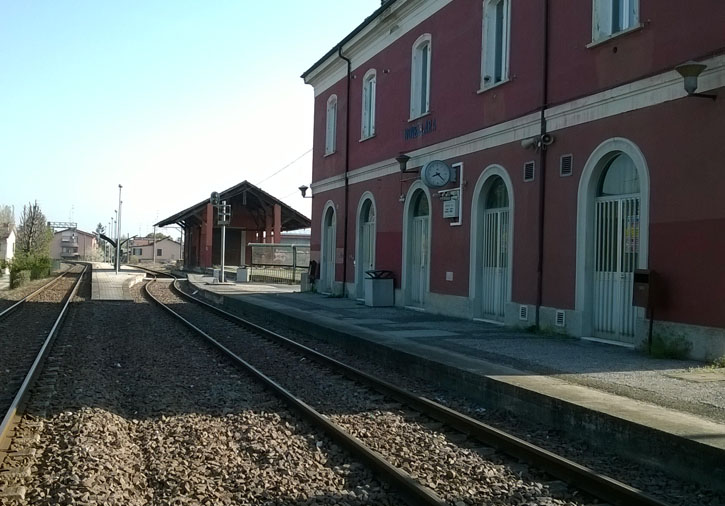
<p><a href="https://www.reggioemiliawelcome.it/en/novellara/how-to-get-there/transports/by-train/StazioneNovellara.jpg" class="internal-link"><img src="https://www.reggioemiliawelcome.it/en/novellara/how-to-get-there/transports/by-train/StazioneNovellara.jpg/@@images/3e409cbb-6f5b-404f-8fea-1a32d98b8824.jpeg" alt="Novellara Railway station image" class="image-inline" title="Novellara Railway station image" /></a></p>
<div>Railway station</div>
<h4 class="subtitle">Railway line</h4>
<div><span style="height: 1.5em;"><b>Reggio Emilia - Guastalla</b></span></div>
<div>Reggio San Lazzaro - Reggio Emilia - Reggio Santa Croce - Reggio Stadio Giglio - Reggio AV Mediopadana - Pratofontana - Bagnolo in Piano - Bagnolo Soave - Pieverossa - San Tomaso - Vezzola - San Giovanni - Novellara - San Bernardino - San Giacomo - Guastalla</div>
<div>
<h4 class="subtitle">Information</h4>
<p id="content_tabschede"><img alt="Telefono -  Phone" class="image-inline" src="../../../../../copy2_of_icone-info/telefono-phone" title="Telefono -  Phone" /><strong>800 198 637</strong> - Information about trains<br /><img alt="Telefono -  Phone" class="image-inline" src="../../../../../copy2_of_icone-info/telefono-phone" title="Telefono -  Phone" /><strong>840 00 216</strong> - Information about urban and suburban buses: call center Seta <a style="width: 0px;" href="https://www.reggioemiliawelcome.it/collegamenti/seta-percorsi-extraurbani" class="internal-link">www.setaweb.it</a></p>
<p>The service is active <strong>Monday-Saturday</strong> from 07:00 a.m. to 07:00 p.m.; <strong>Sunday</strong> from 08:20 a.m. to 05:00 p.m.</p>
<p> </p>
<p> </p>
<p> </p>
<p> </p>
</div>]]></content:encoded>
    <dc:publisher>No publisher</dc:publisher>
    <dc:creator>Fioranna Magnanini</dc:creator>
    <dc:rights></dc:rights>
    <dc:date>2020-04-28T10:33:14Z</dc:date>
    <dc:type>Page</dc:type>
  </item>


  <item rdf:about="https://www.reggioemiliawelcome.it/en/novellara/how-to-get-there/getting-around/public-transports/public-out-of-town-and-railway-transport-services">
    <title>Public out-of-town and railway transport services</title>
    <link>https://www.reggioemiliawelcome.it/en/novellara/how-to-get-there/getting-around/public-transports/public-out-of-town-and-railway-transport-services</link>
    <description></description>
    <content:encoded xmlns:content="http://purl.org/rss/1.0/modules/content/"><![CDATA[<p>42017 Novellara</p>
<p><img src="https://www.reggioemiliawelcome.it/icone-info/website" alt="sito web" class="image-inline" title="sito web" /> <a href="https://www.reggioemiliawelcome.it/collegamenti/seta-percorsi-extraurbani" class="internal-link">Timetable of extra-urban routes</a></p>
<p>Transport service</p>
<h4 class="subtitle">Phone</h4>
<p><strong><img src="https://www.reggioemiliawelcome.it/copy2_of_icone-info/phone" alt="Phone" class="image-inline" title="Phone" /> 840 000 216</strong> - Contact Center Seta (Monday-Saturday from 07:00 a.m. to 07:00 p.m.; Sunday from 09:00 a.m. to 05:00 p.m., closed on weekday holidays)<br /><strong><img src="https://www.reggioemiliawelcome.it/copy2_of_icone-info/phone" alt="Phone" class="image-inline" title="Phone" /> 840 151 152</strong> - Railway Call Center</p>
<p>Tickets can also be purchased in the tobacconist shops (tabaccheria).</p>
<p> </p>
<p> </p>
<p> </p>
<p> </p>]]></content:encoded>
    <dc:publisher>No publisher</dc:publisher>
    <dc:creator>Massimo Campobianchi</dc:creator>
    <dc:rights></dc:rights>
    <dc:date>2020-04-30T13:19:05Z</dc:date>
    <dc:type>Page</dc:type>
  </item>


  <item rdf:about="https://www.reggioemiliawelcome.it/en/novellara/how-to-get-there/maps/maps-of-territory">
    <title>Province Map</title>
    <link>https://www.reggioemiliawelcome.it/en/novellara/how-to-get-there/maps/maps-of-territory</link>
    <description></description>
    <content:encoded xmlns:content="http://purl.org/rss/1.0/modules/content/"><![CDATA[<p> </p>
<p><span style="height: 21px;">Here are <a href="https://www.reggioemiliawelcome.it/en/interactive-map" class="internal-link">the maps</a></span><a style="height: 21px;" href="https://www.reggioemiliawelcome.it/en/montecchio-emilia/how-to-get-there/interactive-map" class="internal"> </a><span style="height: 21px;">of the 32 Municipalities of the local editorial staff of Reggio Emilia:</span></p>
<p>Reggio nell'Emilia<br />Albinea<br />Bagnolo in Piano<br />Bibbiano<br />Boretto<br />Brescello<br />Cadelbosco Sopra<br />Campagnola Emilia<br />Campegine<br />Casalgrande<br />Castellarano<br />Castelnovo Sotto<br />Cavriago<br />Correggio<br />Fabbrico<br />Gattatico<br />Gualtieri<br />Guastalla<br />Luzzara<br />Montecchio Emilia<br />Novellara<br />Poviglio<br />Quattro Castella<br />Reggiolo<br />Rio Saliceto<br />Rolo<br />Rubiera<br />San Martino in Rio<br />San Polo d'Enza<br />Sant'Ilario d'Enza<br />Scandiano<br />Vezzano sul Crostolo</p>
<p> </p>
<p> </p>
<p> </p>
<p> </p>
<p> </p>
<p> </p>
<p> </p>
<p> </p>
<p> </p>]]></content:encoded>
    <dc:publisher>No publisher</dc:publisher>
    <dc:creator>Daniela Lasagni</dc:creator>
    <dc:rights></dc:rights>
    <dc:date>2013-11-20T09:00:00Z</dc:date>
    <dc:type>Page</dc:type>
  </item>


  <item rdf:about="https://www.reggioemiliawelcome.it/en/novellara/discover-the-area/tourist-locations/novellara">
    <title>Novellara</title>
    <link>https://www.reggioemiliawelcome.it/en/novellara/discover-the-area/tourist-locations/novellara</link>
    <description>Novellara is located in the heart of the Reggio Emilia Lowlands, not too far from the Po River.</description>
    <content:encoded xmlns:content="http://purl.org/rss/1.0/modules/content/"><![CDATA[<h4 class="subtitle" style="text-align: left; ">Information</h4>
<p style="text-align: left; "><strong>Altitude:</strong> 24 m<br /><strong>Inhabitants:</strong> 13,274 (updated to December 31, 2022)<br /><strong>Postal code:</strong> 42017<br /><strong>Weekly market day: </strong>Thursday<br /><strong>Patron Saint:</strong> San Cassiano (May 4)</p>
<h4 class="subtitle" style="text-align: left; ">Contacts</h4>
<p style="text-align: left; "><img src="https://www.reggioemiliawelcome.it/copy2_of_icone-info/phone" alt="Phone" class="image-inline" title="Phone" /> <strong>0039 0522 655454</strong> - Municipality <br /><img src="https://www.reggioemiliawelcome.it/icone-info/website" alt="sito web" class="image-inline" title="sito web" /> <a class="external-link" href="http://www.comunedinovellara.gov.it/servizi/notizie/notizie_homepage.aspx" target="_blank" title="Opens the external link to: &quot;Comune di Novellara&quot; (Novellara Municipality)">Comune di Novellara</a> (Novellara Municipality)</p>
<h4 class="subtitle" style="text-align: left; ">How to get there</h4>
<p style="text-align: left; ">Novellara</p>
<p style="text-align: left; "><span class="text-warning"><strong>By car</strong></span><br />From the Reggio Emilia exit on the A1 motorway: take National Road SS12 travelling north.</p>
<p style="text-align: left; ">Travelling on National Road SS9, when you reach Reggio Emilia take National Road SS12, which leads from the northern ring road to the A1 motorway and on to Bagnolo in Piano and Novellara.</p>
<p style="text-align: left; ">Coming from Mantua on the A22 motorway, which runs between Modena and Brennero, exit at Reggiolo-Rolo.</p>
<p style="text-align: left; ">From the town of Reggiolo, which is only a few kilometres away, take National Road SS12 travelling south. <br />It is also possible to take the National Road SS63 from Mantua to Guastalla, and turn left at Guastalla to travel southeast, arriving directly in Novellara.</p>
<p style="text-align: left; "><span class="text-warning"><strong>By train</strong></span><br />From the Reggio Emilia Railway Station: route <span style="width: 0px;"><a href="https://www.reggioemiliawelcome.it/collegamenti/tper-reggio-guastalla" class="internal-link" title="Opens the external link to: &quot;TPER - Trasporto Passeggeri Emilia-Romagna&quot;">Reggio Emilia-Guastalla</a>.</span></p>
<p style="text-align: left; "><span class="text-warning"><strong>By bus</strong></span><br />From Reggio Emilia, Piazzale Europa: <a href="https://www.reggioemiliawelcome.it/collegamenti/seta-percorsi-extraurbani" class="internal-link" title="Opens the external link to the website of the bus connections">bus No. 43</a>.</p>
<h4 class="subtitle" style="text-align: left; ">Location</h4>
<p style="text-align: left; ">Novellara is 20 km from Reggio Emilia, the administrative centre of the province.</p>
<h4 class="subtitle" style="text-align: left; ">Historical notes</h4>
<p style="text-align: left; ">It is likely that the early name of this town before it became Novellara was <i>"Nubilaria"</i> or <i>"Nuvelaria"</i>, in reference to the fog and clouds that frequently waft into the area from the wetlands.</p>
<p style="text-align: left; ">In 1100, a Lombardic noble by the name of Gherardaccio Malapresa turned the village into a fortified town by building a strong watchtower on the highest spot to defend the area.</p>
<p style="text-align: left; ">About 200 years later, Feltrino Gonzaga of the famous Gonzaga family of Mantua became lord of Reggio Emilia.<br />Threatened by the military might of Marquis Nicolò d'Este, the Manfredi family, and Count Lucio of Lando, Feltrino was forced to sell Reggio Emilia to Bernabò Visconti, keeping Bagnolo and Novellara for his own family. <br />Thus a minuscule fief was created which, when raised to the status of county, was wisely governed by the Gonzaga family until 1728, the year of the death of the last Count of Gonzaga, Filippo Alfonso.<br />The early part of the Gonzaga Lordship was not a quiet time, since bitter hatred separated the Gonzagas of Novellara from their cousins in Mantua. <br />In order to create a strong shelter against their enemies, the Gonzagas began construction on the Novellara Fortress under the direction of Guido.</p>
<p style="text-align: left; ">He also ordered plans drawn up for the construction of a new village, to be built to the west of the fortress along straight lines and including the fascinating porticoes that now characterize Novellara.<br />Land reclamation projects were started, and gradually contributed to the elimination of diseases caused by stagnant, infested waters. <br />New roads, fine churches, and sumptuous little country villas were built, and a standard of living that attracted new inhabitants was created. <br />People were also attracted to the town by what could be considered a good, wise government for the times.<br />After the death of the last member of the Gonzaga family of Novellara, Filippo Alfonso, the fief was confiscated and later given to the Duke of Modena by the emperor.</p>
<p style="text-align: left; ">Today Novellara preserves many memories of its past. Unfortunately, many buildings, convents, and churches have been damaged, but in spite of this, it is not difficult to find signs of the town's past dignity in the old streets with their low, silent porticoes.</p>
<h4 class="subtitle" style="text-align: left; ">Reasons to visit</h4>
<div id="_mcePaste" style="width: 1px; height: 1px; overflow: hidden; text-align: left;">Novellara has been most ancient Gonzaga lordship and in its town centre maintains the XVI-century urban layout of which the painter, Lelio Orsi, who was born here, was also a protagonist; Piazza Unità d’Italia with Renaissance porticoes around the perimeter, is the beating heart of the town. There is also the Collegiate Church of Santo Stefano, inside of which are important paintings and decorations, and the Sanctuary of the Beata Vergine della Fossetta and the Franco Tagliavini Municipal Theatre.</div>
<div style="text-align: left; "></div>
<p style="text-align: left; ">Novellara has been most ancient Gonzaga lordship and in its town centre maintains the 16th-century urban layout of which the painter, Lelio Orsi, who was born here, was also a protagonist.<br />Piazza Unità d’Italia with Renaissance porticoes around the perimeter, is the beating heart of the town.<br />The <strong><a href="https://www.reggioemiliawelcome.it/en/novellara/discover-the-area/art-and-culture/churches-baptisteries/collegiate-church-of-santo-stefano" class="internal-link" title="Opens the: &quot;Santo Stefano Collegiate Church&quot; file">Santo Stefano Collegiate Church</a></strong> is a valuable work of architecture by Lelio Orsi; t<span style="text-align: justify; ">he <strong><a href="https://www.reggioemiliawelcome.it/en/novellara/discover-the-area/art-and-culture/castles-towers-bell-towers/the-fortress" class="internal-link" title="Opens : &quot;The Fortress&quot; file">Fortress</a></strong> still maintains medieval and Renaissance structures in its walls. <br />A collection of pharmaceutical ceramic jars of rare beauty is left from the old Jesuit pharmacy. The Gonzaga family archives are of exceptional interest, and the </span><strong><strong><a href="https://www.reggioemiliawelcome.it/en/novellara/discover-the-area/art-and-culture/museums-and-galleries/gonzaga-museum" class="internal-link" title="Opens the: &quot;Gonzaga Museum&quot; file">Gonzaga Museum</a></strong></strong><span style="text-align: justify; "> will become an absolute must for visitors of the interior of the fortress.<br /></span>And again the <strong><a href="https://www.reggioemiliawelcome.it/en/novellara/discover-the-area/art-and-culture/abbeys-monasteries-sanctuaries/beata-vergine-della-fossetta-sanctuary" class="internal-link" title="Opens the: &quot;Beata Vergine della Fossetta Sanctuary&quot; file">Beata Vergine della Fossetta Sanctuary</a></strong> and the <strong><a href="https://www.reggioemiliawelcome.it/en/novellara/discover-the-area/art-and-culture/villas-historical-residences-and-theatres/teatro-comunale-della-rocca" class="internal-link" title="Opens the: &quot;Franco Tagliavini Municipal Theatre&quot;">Franco Tagliavini Municipal Theatre</a></strong>.</p>
<h4 class="subtitle" style="text-align: left; ">Not to be missed</h4>
<p style="text-align: left; ">The <strong><a style="width: 0px;" href="https://www.reggioemiliawelcome.it/en/novellara/discover-the-area/art-and-culture/castles-towers-bell-towers/the-fortress" class="internal-link" title="Opens : &quot;The Fortress&quot; file">Fortress</a></strong> is Novellara’s most important monument. The imposing construction, built at the end of the 14th century for defensive purposes, was transformed during the 16th century into a noble residence. <br />The rooms were embellished with decorations and the Gonzagas adorned them with valuable works of art. <br />The Fortress is now the seat of the municipal administration and cultural services: the <strong><a style="width: 0px;" href="https://www.reggioemiliawelcome.it/en/novellara/discover-the-area/art-and-culture/museums-and-galleries/gonzaga-museum" class="internal-link" title="Opens the: &quot;Gonzaga Museum&quot; file">Gonzaga Museum</a></strong>, the <strong><a href="https://www.reggioemiliawelcome.it/en/novellara/enjoy-and-relax/leisure-time/cinemas-theatres/theatre-della-rocca" class="internal-link" title="Opens the: &quot;Della Rocca Theatre&quot; file">Theatre</a></strong>, the Library and Historical Archives.<br />Inside are the <strong>Sala del Fico</strong> (Fico Hall), decorated with grotesques dating back to the mid-16th-century, and the Council Hall, painted in a scenographic style in the 19th century.</p>
<p style="text-align: left; ">The Civic Hall inside the Fortress hosts a <a href="https://www.reggioemiliawelcome.it/en/novellara/discover-the-area/art-and-culture/museums-and-galleries/works-by-augusto-daolio-permanent-hall" class="internal-link" title="Opens the: &quot;Works by Augusto Daolio - Permanent hall&quot; file">permanent collection of paintings by <strong>Augusto Daolio</strong></a>, the dear departed leader of the music band <strong>"I Nomadi"</strong>.</p>
<h4 class="subtitle" style="text-align: left; ">The Gonzaga Museum</h4>
<p style="text-align: left; ">The <strong><a style="width: 0px;" href="https://www.reggioemiliawelcome.it/en/novellara/discover-the-area/art-and-culture/museums-and-galleries/gonzaga-museum" class="internal-link" title="Opens the: &quot;Gonzaga Museum&quot; file">Gonzaga Museum</a></strong> occupies several rooms of the 16th-century apartment of the Gonzaga Counts, on the noble floor of the Gonzaga Fortress, designed, built and decorated under the direction of Lelio Orsi. <br />Several rooms that host collections have coffered ceilings, are decorated with friezes and have 16th-century fireplaces in Verona marble. <br />Finally, there is the room with the valuable collection of 16th-century <a href="https://www.reggioemiliawelcome.it/en/novellara/discover-the-area/people-history-traditions/curiosities/pharmacy-vases" class="internal-link" title="Opens the: &quot;pharmacy vases&quot; file">pharmacy vases</a>, from the Novellara-based Convent of the Jesuits, one of the most valuable important Italian collections.</p>
<h4 class="subtitle" style="text-align: left; ">Events</h4>
<p style="text-align: left; "><span class="text-warning"><strong>NomadIncontro</strong></span> - <span class="muted"><strong>Third weekend of February</strong></span><br />Meeting dedicated to fans of "Nomadi", band from Novellara, with two concert performances.</p>
<p style="text-align: left; "><span class="text-warning"><strong>San Cassiano Festival</strong></span> - <span class="muted"><strong>First weekend of May</strong></span><br />Arts and crafts, antiques market, exhibitions, food and wine, funfair.</p>
<p style="text-align: left; "><strong><span class="text-warning">Miss Anguria Blues</span> </strong>- <span class="muted"><strong>Last weekend of July</strong></span><br />Concert of blues and roots music, street artists and musicians, gastronomic stands, melon stalls, games, market stalls, traditional crafts, contest of sugar content and flavour, heaviest water melon contest, parade of floats of gigantic water melons.</p>
<p style="text-align: left; "><span class="text-warning"><strong>Balsamic Novellara</strong></span> - <span class="muted"><strong>First Sunday of October</strong></span><br />Market show of local products, good food and antiques; crushing and cooking of the must.</p>
<ul style="text-align: left; ">
</ul>
<h4 class="subtitle" style="text-align: left; ">What to eat</h4>
<p style="text-align: left; "><strong><a href="https://www.reggioemiliawelcome.it/en/novellara/flavours/typical-products/reggio-emilia-watermelon-igp-protected-geographic-indication" class="internal-link" title="Opens the: &quot;Reggio Emilia Watermelon Igp (Protected Geographic Indication)&quot; file">Reggio Emilia Watermelon Igp (Protected Geographic Indication)</a></strong><br />Sweet and refreshing Novellara water melon is the main summer fruit in the Reggio Emilia Lowlands and has obtained the Protected Geographical Indication mark for its unique qualities.</p>
<p style="text-align: left; "><strong><a href="https://www.reggioemiliawelcome.it/en/reggio-emilia/flavours/typical-products/traditional-balsamic-vinegar-of-reggio-emilia" class="internal-link" title="Opens the: &quot;Traditional Balsamic Vinegar of Reggio Emilia&quot; file">Reggio Emilia Traditional Balsamic Vinegar</a></strong><br />In the attic of the Fortress is the <strong><a href="https://www.reggioemiliawelcome.it/en/novellara/flavours/food-and-wine-factories/novellara-vinegar-factory" class="internal-link" title="Opens the: &quot;Novellara Municipal vinegar cellar&quot; file">municipal vinegar cellar</a></strong>, where the prestigious Balsamic vinegar of Reggio Emilia matures; inside are two sets of the precious barrels branded with the coat of arms of the town of Novellara.</p>
<h4 class="subtitle" style="text-align: left; ">Keeping fit</h4>
<p style="text-align: left; "><strong>Novellara Valleys</strong><br />Outside the inhabited town, on the border between the areas of Reggiolo and Guastalla, are the so-called Valleys, large areas of ecological rebalancing and protection of biodiversity, obtained from the marshy territories of the Emilia plain. Spring is the time to see the rare “meadow violet” along the banks of ditches and canals where the "pavera" also grows, a marsh grass which, woven by the skilful hands of local craftsmen, was used for making chairs, baskets and bags.</p>
<p style="text-align: left; ">Opened in 2017, the <a class="external-link" href="https://cainovellara.wordpress.com/sentiero-608/">CAI 608</a> path starts from Ponte del Pastore and continues for 10 kilometres for a walk of around two and a half hours. The route is not particularly difficult and is suitable for everyone.</p>
<h4 class="subtitle" style="text-align: left; ">In the vicinity</h4>
<p style="text-align: left; ">The country residences of the Gonzaga family for the court nobility were located outside the inhabited towns, in the direction of Guastalla and Bagnolo in Piano: they are the Casini di Sopra e di Sotto.</p>
<h4 class="subtitle" style="text-align: left; ">Useful links</h4>
<ul>
<li><a href="https://www.reggioemiliawelcome.it/en/novellara/discover-the-area/art-and-culture/museums-and-galleries" class="internal-link" title="Opens the &quot;Museums in Novellara&quot; file">Museums in Novellara</a></li>
<li><a href="https://www.reggioemiliawelcome.it/en/novellara/discover-the-area/art-and-culture/churches-baptisteries" class="internal-link" title="Opens the &quot;Churches in Novellara&quot; file">Churches in Novellara</a></li>
<li><a href="https://www.reggioemiliawelcome.it/en/novellara/discover-the-area/art-and-culture/castles-towers-bell-towers/the-fortress" class="internal-link" title="Opens the &quot;The fortress in Novellara&quot; file">The fortress of Novellara</a></li>
<li><a href="https://www.reggioemiliawelcome.it/en/novellara/hotels-and-restaurants/where-to-stay" class="internal-link" title="Opens the &quot;Where to stay in Novellara&quot; file">Where to stay in Novellara</a></li>
<li><a href="https://www.reggioemiliawelcome.it/en/novellara/hotels-and-restaurants/where-to-eat" class="internal-link" title="Opens the &quot;Where to eat in Novellara&quot; file">Where to eat in Novellara</a></li>
<li><a href="https://www.reggioemiliawelcome.it/en/novellara/discover-the-area/tourist-locations/all-files-of-novellara" class="internal-link" title="Opens all files of Novellara">All files of Novellara</a></li>
</ul>
<p style="text-align: left; "> </p>
<ul>
</ul>]]></content:encoded>
    <dc:publisher>No publisher</dc:publisher>
    <dc:creator>IAT</dc:creator>
    <dc:rights></dc:rights>
    <dc:date>2025-05-06T12:55:07Z</dc:date>
    <dc:type>Page</dc:type>
  </item>


  <item rdf:about="https://www.reggioemiliawelcome.it/en/novellara/discover-the-area/art-and-culture/museums-and-galleries/gonzaga-museum">
    <title>Gonzaga Museum</title>
    <link>https://www.reggioemiliawelcome.it/en/novellara/discover-the-area/art-and-culture/museums-and-galleries/gonzaga-museum</link>
    <description>The Gonzaga Museum is hosted inside some rooms of the residence of the XV century, which is on the elevated floor of the Fortress.</description>
    <content:encoded xmlns:content="http://purl.org/rss/1.0/modules/content/"><![CDATA[<h4 class="subtitle">Indirizzo e contatti</h4>
<p>Piazzale Marconi, 1 - 42017 Novellara<br /><img src="https://www.reggioemiliawelcome.it/copy2_of_icone-info/phone" alt="Phone" class="image-inline" title="Phone" /> <strong>0039.0522.655471   -    00393393021715</strong> - Municipality<br /><img src="https://www.reggioemiliawelcome.it/icone-servizi/email.gif" alt="Email" class="image-inline" title="Email" /> <a class="mail-link" href="mailto:e.ghidini@comune.novellara.re.it" title="Opens the mail of the Novellara Municipality">t</a>urismo@comune.novellara.re.it<br /><img src="https://www.reggioemiliawelcome.it/icone-info/website" alt="sito web" class="image-inline" title="sito web" /> <a class="external-link" href="https://roccadellacultura.it/" target="_blank" title="Opens the website of the Novellara Municipality, Museo Gonzaga file">Gonzaga Museum</a></p>
<h4 class="subtitle">Opening times</h4>
<p><strong>Monday</strong>: closed.<br /><strong>Tuesday-Friday</strong> 10.00 a.m. - 1.00 p.m. (upon reservation, phone 0039.0522.655471)<br /><strong>Saturday-Sunday</strong> 10.00 a.m. - 1.00 p.m. and 3.00-7.00 p.m.</p>
<p><strong>Prices </strong><br />€ 4.00; € 2.00 reduced (people aged 18-25, university students, visitors with guided tour)<br />Free<strong> </strong>entrance for:<strong> </strong>residents in Novellara, children under 18, disabled and their helpers, ICOM members, journalists, guides, first Sunday of each month.</p>
<p><strong><span class="text-success">Guided tours</span></strong><br /><strong>Sunday</strong> for groups of at least 4 people, with <strong>Pro Loco guide</strong>. Prices: € 4.00; € 3.00 (people over 65); free (children under 12). Reservation recommended.<br /><strong>Sunday</strong> for groups of maximum 50 people, with <strong>own guide</strong>. Free entrance. Reservation recommended.<br /><strong>Working days</strong> for groups of minimum 10 people, with the <strong>museum's guide</strong>. Price: € 5.00 (to be added to the reduced ticket or free as per reductions). Reservation recommended.<br /><strong>Working days</strong> for groups of minimum 10 people, with<strong> own guide</strong>. Price: as per reductions. Reservation recommended.<br /><strong>Working days</strong> for schools, with the <strong>museum's guide</strong>. Free entrance. Reservation recommended.</p>
<p> </p>
<h4 class="subtitle">How to get there</h4>
<p><span class="text-warning"><strong>By car</strong></span><br />From the Reggio Emilia exit on the A1 motorway, take National Road SS12 travelling north.<br />Travelling on National Road SS9, when you reach Reggio Emilia take National Road SS12, which leads from the northern ring road to the A1 motor-way and on to Bagnolo and Novellara.<br />Coming from Mantua on the A22 motor-way, which runs between Modena and Brennero, exit at Reggiolo/Rolo. From the town of Reggiolo, which is only a few kilometres away, take National Road SS12 travelling south.<br />You can also take National Road SS63 from Mantua to Guastalla, and turn left at Guastalla to travel southeast, arriving directly in Novellara.</p>
<p><span class="text-warning"><strong>By train</strong></span><br />From the Reggio Emilia railway station line <span style="width: 0px;"><a href="https://www.reggioemiliawelcome.it/collegamenti/tper-reggio-guastalla" class="internal-link" title="Opens the website of the train connections">Reggio-Guastalla</a></span></p>
<p><span class="text-warning"><strong>By bus</strong></span><br />From Piazzale Europa <a href="https://www.reggioemiliawelcome.it/collegamenti/seta-percorsi-extraurbani" class="internal-link" title="Opens the website of the bus connections">bus No. 43</a></p>
<h4 class="subtitle">Historical notes</h4>
<p>The Museum is located on the noble floor of Novellara’s fortress. Its displays take up 13 rooms, including five dedicated to Lelio Orsi, who worked as an artist for the House of Gonzaga for 40 years. These five rooms now host Orsi’s cycle of frescos from the central hall of the Casino di Sopra, which the painter decorated on the basis of Count Camillo the First’s instructions, presumably in 1558. The fortress still displays the Verona marble fireplaces designed by Orsi himself as well as some of the original vaulted ceilings, furniture, pottery, local coins, and pharmacy vases, which along with albarello jars, bottles, and jugs from the XV to the XVIII century, make up a collection of about 170 items. The first room displays three fragments of frescos dating back to 1280, and originally located in a long-destroyed local church. The portrait gallery features illustrious members of the Gonzaga dynasty: from Camillo the First to Filippo Alfonso, Grandee of Spain; from Vittoria di Capua to Matilde d'Este.</p>
<p>Quality Museum - acknowledgement given by Regione Emilia Romagna - Institute of Culture "IBC"</p>]]></content:encoded>
    <dc:publisher>No publisher</dc:publisher>
    <dc:creator>Isotta Chiari</dc:creator>
    <dc:rights></dc:rights>
    <dc:date>2024-04-24T10:50:32Z</dc:date>
    <dc:type>Page</dc:type>
  </item>


  <item rdf:about="https://www.reggioemiliawelcome.it/en/novellara/discover-the-area/art-and-culture/museums-and-galleries/works-by-augusto-daolio-permanent-hall">
    <title>Works by Augusto Daolio - Permanent hall</title>
    <link>https://www.reggioemiliawelcome.it/en/novellara/discover-the-area/art-and-culture/museums-and-galleries/works-by-augusto-daolio-permanent-hall</link>
    <description>Hosted n the Gonzaga Fortress Civic Hall, the collection hosts paintings and other artworks by Augusto Daolio, the first leader of the "Nomadi" music band.</description>
    <content:encoded xmlns:content="http://purl.org/rss/1.0/modules/content/"><![CDATA[<h4 class="subtitle">Address and contacts</h4>
<p><strong>Rocca dei Gonzaga Fortress, "Augusto Daolio" Civic Hall</strong><br />Piazzale Marconi, 1 - 42017 Novellara<br /><img src="https://www.reggioemiliawelcome.it/copy2_of_icone-info/phone" alt="Phone" class="image-inline" title="Phone" /><strong> 0039</strong> <strong>0522 655471</strong><br /><img src="https://www.reggioemiliawelcome.it/icone-servizi/email.gif" alt="Email" class="image-inline" title="Email" /> <a class="mail-link" href="mailto:turismo@comune.novellara.re.it" title="Opens the mail of the Tourism Office of the Novellara Municipality">turismo@comune.novellara.re.it</a><br /><img src="https://www.reggioemiliawelcome.it/icone-info/website" alt="sito web" class="image-inline" title="sito web" /> <a class="external-link" href="http://www.augustoperlavita.it/" target="_blank" title="Opens the website of the Augusto per la vita Association">Associazione Augusto per la vita</a></p>
<h4 class="subtitle">Opening times</h4>
<p>Tuesday-Friday 10.00 a.m. - 1.00 p.m.; Saturday-Sunday <span>10.00 a.m. - 1.00 p.m. and 3.00-7.00 p.m.</span></p>
<h4 class="subtitle">Entrance fees</h4>
<p>The hall can be visited as part of the Gonzaga Museum's museum itinerary, included in the entrance ticket.</p>
<h4 class="subtitle">How to get there</h4>
<p><span class="text-warning"><strong>By car</strong></span><br />From the Reggio Emilia exit on the A1 motorway, take National Road SS12 travelling north.<br />Travelling on National Road SS9, when you reach Reggio Emilia take National Road SS12, which leads from the northern ring road to the A1 motor-way and on to Bagnolo and Novellara.<br />Coming from Mantua on the A22 motor-way, which runs between Modena and Brennero, exit at Reggiolo/Rolo. From the town of Reggiolo, which is only a few kilometres away, take National Road SS12 travelling south.<br />You can also take National Road SS63 from Mantua to Guastalla, and turn left at Guastalla to travel southeast, arriving directly in Novellara.</p>
<p><span class="text-warning"><strong>By train</strong></span><br />From the Reggio Emilia railway station: route <span style="width: 0px;"><a href="https://www.reggioemiliawelcome.it/collegamenti/tper-reggio-guastalla" class="internal-link" title="Opens the website of the train connections">Reggio-Guastalla</a>.</span></p>
<p><span class="text-warning"><strong>By bus</strong></span><br />From Piazzale Europa: <a href="https://www.reggioemiliawelcome.it/collegamenti/seta-percorsi-extraurbani" class="internal-link" title="Opens the website of the bus connections">bus No. 43</a>.</p>
<h4 class="subtitle">Historical notes</h4>
<p>In the Gonzaga Fortress is a permanent hall dedicated to Augusto Daolio, singer and founder of Nomadi band in the early 60s, died in 1992. In this hall, used only for conferences and meetings, it is possible to admire a few paintings and drawings made by Augusto Daolio.</p>
<p>The immersive hall is an integral part of the Gonzaga Museum itinerary.</p>]]></content:encoded>
    <dc:publisher>No publisher</dc:publisher>
    <dc:creator>Isotta Chiari</dc:creator>
    <dc:rights></dc:rights>
    <dc:date>2026-02-19T16:03:08Z</dc:date>
    <dc:type>Page</dc:type>
  </item>


  <item rdf:about="https://www.reggioemiliawelcome.it/en/novellara/discover-the-area/art-and-culture/museums-and-galleries/permanent-museum-for-agricultural-civilizatiom">
    <title>Permanent Display of Agricultural Civilization</title>
    <link>https://www.reggioemiliawelcome.it/en/novellara/discover-the-area/art-and-culture/museums-and-galleries/permanent-museum-for-agricultural-civilizatiom</link>
    <description>The display is hosted in the cellar of the Gonzaga Fortress, Piazzale Marconi. </description>
    <content:encoded xmlns:content="http://purl.org/rss/1.0/modules/content/"><![CDATA[<h4 class="subtitle">Address and contacts</h4>
<p>Piazzale Marconi - 42017 Novellara<br /><img alt="Telefono" class="image-inline" src="../../../../../icone-info/telefono" title="Telefono" /> <strong>0039 0522 651378</strong> - Pro Loco Novellara<br /><img alt="Email" class="image-inline" src="../../../../../copy2_of_icone-info/email" title="Email" /> <a class="external-link" href="http://proloco.novellara@gmail.com/" target="_blank">proloco.novellara@gmail.com</a></p>
<h4 class="subtitle">Opening times</h4>
<p><strong>First Sunday of each month<br /></strong><strong><span class="muted">10.00 a.m. - 12.30 p.m. / 3.00 - 6.30 p.m.</span></strong></p>
<h4 class="subtitle">Prices</h4>
<p>Free entrance</p>
<p> </p>
<p><span>History</span></p>
<p>The Permanent Display for Agricultural Civilization was born in the first half of the seventies of the XX century within the local Middle School. In the context of a research by the students on the work of their grandparents, many objects and tools used in the countryside were collected, being the grandparents for the most part farmers. Taking into account that this material was only a small part of what was still kept, but no longer used, there was the proposal to make an organic collection, that saw the children busy - with the assistance of teachers, janitors and parents - wandering around the country houses, always meeting the generous availability of the families they visited.</p>
<p>The relaunch of the activity of the Display is proposed within the same logic: favouring the privileged relationship with schools and young people, enhancing voluntary work and local products.</p>
<p>This new life of the exhibition is actually made possible thanks to the commitment, which lasted for 8 years, of many volunteers and thanks to the sensitivity of hundreds of citizens who have enriched the exhibition path with thousands of donations. The Permanent Display is the result of the commitment of an entire community which thus intended to preserve the material documentation of its roots in order to propose them to new generations and new citizens.</p>
<p>There is a close relationship between the local food and wine products (Lambrusco, Parmigiano Reggiano, cured meats, watermelons, honey, etc.) and ancient and widespread knowledge, skills and sensitivity that the exhibition intends to enhance.</p>
<p>The Display is located in the suggestive environment of the XV-century cellar of the<strong> Gonzaga Fortress</strong>, a few steps from the Gonzaga Museum, the Tagliavini Theatre and the Municipal Vinegar cellar. This inclusion contributes, already now and even more in the future, to making the Fortress a museum and cultural container of absolute importance.</p>]]></content:encoded>
    <dc:publisher>No publisher</dc:publisher>
    <dc:creator>Massimo Campobianchi</dc:creator>
    <dc:rights></dc:rights>
    <dc:date>2021-12-27T09:35:00Z</dc:date>
    <dc:type>Page</dc:type>
  </item>


  <item rdf:about="https://www.reggioemiliawelcome.it/en/novellara/discover-the-area/art-and-culture/abbeys-monasteries-sanctuaries/beata-vergine-della-fossetta-sanctuary">
    <title>Beata Vergine della Fossetta Sanctuary</title>
    <link>https://www.reggioemiliawelcome.it/en/novellara/discover-the-area/art-and-culture/abbeys-monasteries-sanctuaries/beata-vergine-della-fossetta-sanctuary</link>
    <description>Church dedicated to Beata Vergine della Fossetta, destination of numerous pilgrimages.  </description>
    <content:encoded xmlns:content="http://purl.org/rss/1.0/modules/content/"><![CDATA[<h4 class="subtitle">Address and contacts</h4>
<p><span>Stradello della Fossetta - 42017 Novellara</span><br /><span><img src="https://www.reggioemiliawelcome.it/copy2_of_icone-info/phone" alt="Phone" class="image-inline" title="Phone" /> <strong>0039 0522 654240</strong></span></p>
<h4 class="subtitle"><span>How to get there</span></h4>
<p>Novellara</p>
<p><span class="text-warning"><strong>In auto</strong></span><br />Dal casello autostradale di Reggio Emilia (A1) prendere SS12 in direzione nord. Dalla Via Emilia (SS9), una volta raggiunta Reggio Emilia, imboccando SS12 che dalla circonvallazione nord porta verso il casello A1 e successivamente a Bagnolo e subito dopo Novellara. <br />Provenendo da Mantova percorrendo la A22 (Modena/Brennero) uscita al casello Reggiolo/Rolo, raggiungere Reggiolo a pochi km proseguendo verso sud sempre sulla SS12. Sempre da Mantova, tramite SS63 è raggiungibile Guastalla, all'altezza della quale svoltando a sinistra in direzione sud-est ci si dirige direttamente a Novellara.</p>
<p><span class="text-warning"><strong>In treno</strong></span><br />Dalla stazione FS di Reggio Emilia <a href="https://www.reggioemiliawelcome.it/collegamenti/tper-reggio-guastalla" class="internal-link">linea <span class="uppercase">TPER</span> Reggio-Guastalla</a></p>
<p><span class="text-warning"><strong>In autobus</strong></span><br />Da Piazzale Europa <a href="https://www.reggioemiliawelcome.it/collegamenti/seta-percorsi-extraurbani" class="internal-link">autobus n° 43</a></p>
<h4 class="subtitle">Historical notes</h4>
<p>In 1564 Count Alfonso the Ist built a small chapel with an image painted by Lelio Orsi. It was located north of the fortress, facing the bridge that joins a ring road with one directed at Campagnola. The chapel was later enlarged in the first half of the seventeenth century with the addition of a portico. In 1654 a new church was constructed following a design by architect G.B. Negri, dedicated to Our Lady of Fossetta on land donated by Lady Barbara Gonzaga with a structure similar to Chiesa del Gesù in Bologna. <br />The plant is a Greek cross with central dome and an upper dome supported by four pillars. New interventions were carried out in 1784 and the clock was placed in 1821 after the facade was restored and partly raised. The old chapel of XVI century was tore down and at its place was erected a memorial pillar. <br />The building has an elegant feature, divided by the sequence of lights in portico, and framed by pilasters. <br />The facade is broken up into niches with paintings and statues of saints. <br />The bell tower stands at a little distance on the west side and is surmounted by a cell trifore.</p>
<p>Behind the altar there is a fresco on the solid image of the Blessed Virgin of Fossetta painted according to tradition by Lelio Orsi in 1564. <br />Since its foundation, the Sanctuary, for the presence of the image of the Blessed Virgin Mary, considered miraculous, is the destination of many pilgrimages.</p>
<h4 class="subtitle">Useful information</h4>
<p><img src="https://www.reggioemiliawelcome.it/icone-info/website" alt="sito web" class="image-inline" title="sito web" /> <a class="external-link" href="http://www.pmap.it/parrocchiemap/consultazione/parrocchie/orarimesse.jsp?icsc=2090023" style="width: 0px;" target="_blank" title="Apre orari messe UP">Mass timetable</a></p>
<p> </p>]]></content:encoded>
    <dc:publisher>No publisher</dc:publisher>
    <dc:creator>Fioranna Magnanini</dc:creator>
    <dc:rights></dc:rights>
    <dc:date>2021-12-14T15:21:24Z</dc:date>
    <dc:type>Page</dc:type>
  </item>


  <item rdf:about="https://www.reggioemiliawelcome.it/en/novellara/discover-the-area/art-and-culture/churches-baptisteries/collegiate-church-of-santo-stefano">
    <title>Santo Stefano Collegiate Church</title>
    <link>https://www.reggioemiliawelcome.it/en/novellara/discover-the-area/art-and-culture/churches-baptisteries/collegiate-church-of-santo-stefano</link>
    <description>The church was originally intended to be imposing and lavishly decorated. The first construction design had an east-facing apse, in the manner of ancient churches. </description>
    <content:encoded xmlns:content="http://purl.org/rss/1.0/modules/content/"><![CDATA[<h4 class="subtitle">Address and contacts</h4>
<p><span>Piazza Battisti, 2 - 42017 Novellara</span><br /><span>Phone 0039 0522 654240</span></p>
<h4 class="subtitle"><span>Opening times</span></h4>
<p><span>From 08:00 a.m. to 12:00 a.m., and from 03:30 to 07:30 p.m.</span></p>
<h4 class="subtitle"><span>How to get there</span></h4>
<p>See the indication to reach <a href="https://www.reggioemiliawelcome.it/en/novellara/discover-the-area/tourist-locations/novellara" class="internal-link" target="_blank">Novellara</a></p>
<h4 class="subtitle">Historical note</h4>
<p>Construction works began in 1512, but were never completed.<br />In 1567, Alfonso I of the Gonzaga family arranged for a new church to be built on the site of the original one, to celebrate his marriage to Victoria of Capua. The works were completed half a century later, in 1616, with the construction of the bell tower.<br />The 16th-century façade was remodelled around 1750, with the addition of the serliana and four niches. The statues were made in 1848. <br />The internal structure, which is mostly original, has a Latin cross layout with a single nave with four chapels on each side. <br />The church has a barrel vault, a shallow transept, a hemispherical dome, and a semicircular apse.<br />Entering the church from the right, you can see the chapel of the Holy Sacrament, decorated with stucco work by Giuseppe Mazza in 1690. On the left is the chapel of Our Lady of the Rosary containing a sun-dial.<br />The artistic workmanship of the other, shallower side chapels is also of excellent quality.<br />The pillar at the point of intersection between the nave and the northern transept contains the tombstone of Lelio Orsi, transferred from the Church of the Carmine in 1774, bearing the family coat of arms and the epigraph “Lelio Orsi great in architecture, superior in painting and excellent in drawing”.<br />The two chapels in the transept, decorated by Mazza in 1704, are dedicated to the Madonna del Buon Consiglio and to Jesus on the Cross. <br />On the two pillars of the presbytery are the portraits of Camillo I Gonzaga and his wife Barbara Borromeo.<br />The most interesting paintings in the church are by pupils of Lelio Orsi and include “the Ascension of Christ” by Pietro Maria Bagnatore, “St. Michael the Archangel” by Mario Lodi, located in the left transept, and “the Martyrdom of St. Lawrence”, in the right transept.<br />The baptistery is also particularly beautiful, decorated with exquisite marble-work. It was donated to the church by Donna Ricciarda, sister of the last Count of Novellara in 1752.</p>
<p> </p>]]></content:encoded>
    <dc:publisher>No publisher</dc:publisher>
    <dc:creator>Isotta Chiari</dc:creator>
    <dc:rights></dc:rights>
    <dc:date>2023-06-22T14:55:09Z</dc:date>
    <dc:type>Page</dc:type>
  </item>


  <item rdf:about="https://www.reggioemiliawelcome.it/en/novellara/discover-the-area/art-and-culture/villas-historical-residences-and-theatres/teatro-comunale-della-rocca">
    <title>Franco Tagliavini Municipal Theatre</title>
    <link>https://www.reggioemiliawelcome.it/en/novellara/discover-the-area/art-and-culture/villas-historical-residences-and-theatres/teatro-comunale-della-rocca</link>
    <description>The theatre, dedicated to Franco Tagliavini, is located inside the Fortress. Theatre seasons, concerts and cultural activities take place inside it.</description>
    <content:encoded xmlns:content="http://purl.org/rss/1.0/modules/content/"><![CDATA[<h4 class="subtitle image-inline">Address and contacts</h4>
<div class="visualClear image-inline"><span>Piazzale Marconi, 1 - </span><span>42017 Novellara</span></div>
<div class="visualClear image-inline"><span>Phone 0039 0522 655407</span><br /><a class="mail-link" href="mailto:teatro.novellara@gmail.com">teatro.novellara@gmail.com</a><br /><a class="external-link" href="https://teatronovellara.it/" target="_blank">Teatro di Novellara</a></div>
<h4 class="subtitle">Opening times</h4>
<p><span><span>The theater is normally accessible only for performances or events</span></span></p>
<h4 class="subtitle">Entrance fees</h4>
<p><span>According to the on going performance or event</span></p>
<h4 class="subtitle"><span>How to get there</span></h4>
<p>Novellara</p>
<p><strong>By car</strong><br />From the Reggio Emilia exit on the A1 motorway, take National Road SS12 travelling north.<br />Travelling on National Road SS9, when you reach Reggio Emilia take National Road SS12, which leads from the northern ring road to the A1 motor-way and on to Bagnolo and Novellara.<br />Coming from Mantua on the A22 motor-way, which runs between Modena and Brennero, exit at Reggiolo/Rolo. From the town of Reggiolo, which is only a few kilometres away, take National Road SS12 travelling south.<br />You can also take National Road SS63 from Mantua to Guastalla, and turn left at Guastalla to travel southeast, arriving directly in Novellara.</p>
<p><strong>By train</strong><br />From the Reggio Emilia railway station line <a style="width: 0px;" href="https://www.reggioemiliawelcome.it/collegamenti/tper-reggio-guastalla" class="internal-link">Reggio-Guastalla</a></p>
<p><strong>By bus</strong><br />From Piazzale Europa <a href="https://www.reggioemiliawelcome.it/collegamenti/seta-percorsi-extraurbani" class="internal-link">bus n. 43</a></p>
<h4 class="subtitle"><span>Historical notes</span></h4>
<div class="visualClear image-inline"><span>Known for certain is that an ancient hall for theatre performances existed at court of the nobility of Novellara in the second half of the 16th century. A letter to Count Alfonso I Gonzaga in 1567 refers that the “scene” was almost ready and that Lelio (Orsi) would be able to begin painting it. This hall was to be inaugurated on 28 January 1568 in occasion of the marriage celebration of Count Alfonso I with a play enriched with rare and novel intermezzos, fruit of the genius of one Sir Mutio Busi of Novellara, while the beautiful stage sets would done by Lelio Orsi (cfr. Melloni 1988, p.5).</span></div>
<p class="visualClear">Little documentation exists concerning this ancient theatre, which was probably located in the same area of the Rocca where the present theatre stands today. A plan of the entire Rocca in the 17th century that reveals little and a curious description by Malagoli (transcribed by C. Melloni in <i>Cronistoria di un teatro</i>) provide the only information available to date. Instead, the various theatre performances held there are frequently mentioned, tied as they are to the life at court. It is worthwhile to quote Malagoli’s description of the ceiling over the stalls which was painted by Lelio Orsi and his pupils.<br />“Represented was a gallery with four railings and above each was a crimson damask cushion with gold tassels that hung over the side. In the midst of this sumptuous gallery (which was shaped like an arena) one could see the sky, with Jupiter holding the book of fate open in his left hand and in his right, thunderbolts. From one side the eagle observed what Jupiter was doing. At the top of the walls along the ceiling there was a garland with large melons, radishes, watermelons, a white beet and a black beet, as well as various species of birds including a Pelican. Painted as well was a man, who appeared to be a Jew with a triangular hat crammed down on his head, wearing a black jacket, and with large eyeglasses on his nose, leaning on the cushion on the railing, which looked out on the proscenium, as if he were the impresario observing all.”<br />In 1786 boxes were added to hall, whose 16th century arrangement had presumably remained unchanged for two centuries. By the middle of the 19th century the original building no longer satisfied new stage demands nor the public’s needs and slowly, over time, the idea of building an entirely new theatre took root. The abundant correspondence between the promoters of this initiative – who wanted to bring it about in the best way possible – and the Società dei palchettisti of Carpi (constituted in 1848) still exists and reveals an exchange of opinions, advice, and so on.<br />The choice of the architect to whom the project would be entrusted was also shrewd: Antonio Tegani, who had gained experience by assisting Cesare Costa in the construction of the Municipal Theatre of Reggio Emilia. The ancient theatre of the Gonzaga family was demolished in 1858, along with all the rooms on the south side of the Rocca in order to allow entrance onto the stage of the new theatre that would stand in the same area. In 1862 building of the new theatre was begun. Tegani reproposed a sort of reduced version of the Municipal Theatre of Reggio Emilia, which can be seen in the horseshoe-shaped hall, three tiers of boxes, a gallery in the ample and elegant central box, the proscenium surmounted by a clock and a large stage with wooden trellis-work. Interior decoration was entrusted to Cesare Cervi, who planned for the ceiling of the stalls an elaborate square with mixtilineal borders. According to the contract with his client, Cervi was to provide not only the interior decoration but also stage sets and the machines necessary to create the effects of lightning, rain, thunder and thunderbolts (see Maccarini-Masselli 1988, pp.93-94). The new theatre was inaugurated on 25 July 1868 in occasion of the Fair of S. Anna with the staging of <i>I Lombardi alla prima Crociata</i> di Giuseppe.</p>
<p class="visualClear"> </p>
<div id="content_tabschede"></div>]]></content:encoded>
    <dc:publisher>No publisher</dc:publisher>
    <dc:creator>Fioranna Magnanini</dc:creator>
    <dc:rights></dc:rights>
    <dc:date>2022-01-11T07:45:08Z</dc:date>
    <dc:type>Page</dc:type>
  </item>


  <item rdf:about="https://www.reggioemiliawelcome.it/en/novellara/discover-the-area/art-and-culture/castles-towers-bell-towers/the-fortress">
    <title>The Fortress</title>
    <link>https://www.reggioemiliawelcome.it/en/novellara/discover-the-area/art-and-culture/castles-towers-bell-towers/the-fortress</link>
    <description>"Valiant fort" was the expression coined in 1520 by the pontifical governor Francesco Guicciardini to describe the powerful structure of the castle of Novellara.</description>
    <content:encoded xmlns:content="http://purl.org/rss/1.0/modules/content/"><![CDATA[<div class="visualClear image-inline"><span><b>Piazzale Marconi</b></span></div>
<p><b>42017 Novellara</b></p>
<p>The fortress, situated in the centre of the town, houses the Town Hall offices, the<a title="Enter file Teatro della Rocca" href="https://www.reggioemiliawelcome.it/en/novellara/discover-the-area/art-and-culture/villas-historical-residences-and-theatres/teatro-comunale-della-rocca" class="internal-link" target="_blank"> Teatro della Rocca (Castle Theatre) </a>and the <a title="Enter file &quot;Gonzaga&quot; Museum" href="https://www.reggioemiliawelcome.it/en/novellara/discover-the-area/art-and-culture/museums-and-galleries/gonzaga-museum" class="internal-link" target="_blank">Gonzaga Museum </a>(under restoration). <br />Mention of Novellara first appears in a document dated 962 but the construction of a "castrum" is to be attributed to Gherardo Malapresa at the beginning of the 12th century. Malapresa built a tower surrounded by moats and embankments to substitute the pre-existing rudimentary enclosure, reinforced with paling. At his death the feudal land was inherited by his son and then sold in 1142. A contract of purchase dated 1270, leads us to suppose that before domination by the Gonzaga family, beginning in1358, it was the Sessi family which controlled Novellara. The building by Malapresa survived until Feltrino Gonzaga, invested with feudal power, decided to destroy the old building, conserving the "turris vetus" and designed a new structure which still stands today. Gonzaga created an efficient and organised building site; soon the foundation vaults were completed, and in 1386 the walls were raised as far as the first floor. The work, spanning more than seventy years led to the completion of the original building. <br />The castle in the form of a quadrangle had thick, crenellated, external walls with four large towers, one at each corner. It had two draw-bridges - one at the main entrance and the other on the opposite side of the castle, together with a wide moat At the entrance there was a ravelin to protect the main door onto which the trapdoors opened. The four projecting towers around the perimeter of the quadrangle plan have been heavily damaged in the past but conserve traces of<br />the Ghibbeline crenellations, especially on the west side. At the foot of the south-west tower, on the left when entering, there was a prison which can still be visited by going up a steep, brick stairway. The ground floor of the south-east tower has been incorporated into the Teatro Comunale (Municipal Theatre) built to replace the Gonzaga Theatre.<br />In 1492 Novellara suffered a terrible siege by Correggio troops, which finished after two months with the capitulation of the fort. The heavy damages suffered by the castle village and its still incomplete fortifications were repaired by Francesco I of Gonzaga, who having taken possession of the feudal land, finished the work on the defence structures and improved them by introducing artillery. In the years from1494 to1499 new fortifications were added to the castle which was threatened by the dispute over boundaries with Guastalla, governed by the Counts of Torelli, and with the States governed by their Mantovan cousins. When Costanza, wife of Alessandro Gonzaga, obtained rights over the fiefdom at the beginning of the 16th century, she started on a series of improvements beginning in 1541 for the reclaiming of marshlands, the building of the "Casino di Sopra" also known as "Bell'Aria" and for raising the level of one of the floors in the castle. The castle itself became the permanent site of the court of the lords at the end of the 1500s and was transformed into an official residence, thus losing its military connotations. The magnificence of the renaissance architecture and the efforts by the nobles to adapt to it, led Alfonso I Gonzaga and his brother Camillo to improve the building with a new floor and a loggia. From 1561 to 1566, under the direction of the painter Lelio Orsi, the castle rooms were decorated and given painted wooden ceilings, embellished with fine paintings, statues and great fireplaces carved from Verona marble. Having finished the residential apartments, attention was turned in 1670 to the servants quarters and to building a look-out tower, now known as the "Campanone" and which houses a clock and a bell. The keep, commissioned by Alfonso I, was partly adapted as a State prison and is entered by a door on the west side looking towards the castle.<br />When Filippo Alfonso, the heir of Alfonso II, died in 1728 ay the age of 28, all the feudal lands were given in dowry to the daughter of Ricciarda Gonzaga, Maria Teresa, the bride of Ercole d'Este , duke of Modena. The "salone dei Gonzaga" a room of great prestige, with beautiful carved wooden ceilings designed by Lelio Orsi, was created at this time in the tower at the northern extremity of the west side of the castle. When the Gonzaga dynasty died out, the Este family sold the castle to the community of Novellara in 1754. It was decided to demolish the Belvedere in 1850 because it was in dangerous condition. In 1884 an ice chamber was built underground in a north-easterly direction and pits containing human skeletons were found there in 1901; a macabre find preceded by a similar episode in 1885 in the chapel of San Carlo Borromeo.</p>
<div id="content_tabschede"><br /><strong>How to get there:</strong>
<p class="td_converted_to_div">From the Reggio Emilia exit on the A1 motor-way, take National Road SS 12 travelling north. Travelling on National Road SS 9, when you reach Reggio Emilia take National Road SS 12, which leads from the northern ring road to the A1 motor-way and on to Bagnolo and Novellara. Novellara is located immediately after Bagnolo. When coming from Mantua on the A22 motor-way, which runs between Modena and Brennero, exit at Reggiolo/Rolo. From the town of Reggiolo, which is only a few kilometres away, take National Road SS 12 travelling south. You can also take National Road SS 63 from Mantua to Guastalla, and turn left at Guastalla to travel southeast, arriving directly in Novellara. The muncipalities which border on Novellara are Bagnolo in Piano, Cadelbosco Sopra, Campagnola Emilia, Guastalla, and Reggiolo. Novellara Railway Station</p>
<p class="td_converted_to_div"><strong>Telephone</strong><br />0039/0522/655426 - Municipality</p>
<p class="td_converted_to_div"><strong>Weekday Opening Times</strong><br />guided tours upon reservation for groups only</p>
<p class="td_converted_to_div"><strong>Sunday and Bank Holiday Opening Times</strong><br />10.00 a.m. - 12.30 p.m. and 3.00 - 6.30 p.m.; closed on April 23, 2008 and in August.</p>
<p class="td_converted_to_div"><strong>Group Charges</strong><br />guided tours upon reservation for groups only (minimum 10 persons) <br />€ 4,00 each (free for - children under 12 years)<br />To reserve: 0039-0522-655426 (morning)</p>
</div>]]></content:encoded>
    <dc:publisher>No publisher</dc:publisher>
    <dc:creator>Fioranna Magnanini</dc:creator>
    <dc:rights></dc:rights>
    <dc:date>2026-03-11T11:37:50Z</dc:date>
    <dc:type>Page</dc:type>
  </item>


  <item rdf:about="https://www.reggioemiliawelcome.it/en/novellara/discover-the-area/people-history-traditions/famous-people/lelio-orsi">
    <title>Lelio Orsi</title>
    <link>https://www.reggioemiliawelcome.it/en/novellara/discover-the-area/people-history-traditions/famous-people/lelio-orsi</link>
    <description>Lelio Orsi was certainly one of the most refined and complex protagonists of the second phase of Mannierism, "in architecture magno, in pictura maiori et in delineamentis optimo", as cited on his tombstone currently located in Novellara-based Church of Santo Stefano.</description>
    <content:encoded xmlns:content="http://purl.org/rss/1.0/modules/content/"><![CDATA[<p><span title="Nato a Novellara nel 1511, Lelio Orsi ha trascorso la prima giovinezza nell'ambiente culturalmente raffinato e stimolante della corte dei Gonzaga (il padre era Capitano della porta del Castello di Novellara) e il suo apprendistato artistico fu certamente influenzato dai frequenti viaggi e soggiorni a">Born in 1511 at Novellara , Lelio Orsi  spent his early childhood in the culturally refined and challenging the court of the Gonzaga family (his father was Captain of the door of Novellara Castle) and his artistic apprenticeship was certainly influenced by frequent trips and stays in </span><span title="Mantova, sede della maggiore signoria gonzaghesca, dove fra l'altro potè vedere l'opera di Giulio romano, Iniziiò ben presto la sua attività artistica lavorando in Rocca a Novellara e probabilmente al progetto del Casino di sopra: in un documento del 1530 e già">Mantova, home to the largest Gonzaga lordship, where among other things he could see the work of Giulio Romano. He worked in Novellara Castle and probably on the design of Casino di Sopra: in a document dated 1530 and already </span><span title="chiamato &quot;maestro&quot;.">called "master."</span></p>
<div class="g-section" id="gt-c">
<div id="gt-form-c">
<div id="gt-text-all">
<div id="gt-main">
<div id="gt-text-c">
<div id="gt-text-top">
<div class="g-unit" id="gt-res-c">
<div id="gt-res-p">
<div id="gt-res-data">
<div id="gt-res-wrap">
<div class="almost_half_cell" id="gt-res-content">
<div dir="ltr"><span id="result_box"><span title="Nel 1533 dipinse un fregio nella canonica del Castello di Querciola, la prima testimonianza pittorica nota in terra reggiana, Da Reggio, dove realizzò alcune opere (fre le quali le pitture esterne della torre dell'Orologio in Piazza del Duomo), dovette fuggire, nel">In 1533 he painted a frieze in the presbytery of Querciola Castle, the first known pictorial testimony in the Reggio Emilia area, where he created a number of works (paintings such as the frequency of the external clock tower in Piazza del Duomo); he had to flee in </span><span title="1546, perchè ingiustamente accusato di complcità in un omicidio (la sua estraneità al fatto fu poi riconosciuta sei anni dopo).">1546 because he was wrongly accused of complicity in a murder (his strangeness to the fact it was then recognized six years later). </span><span title="Accolto e protetto nella sua Novellara, l'Orsi sarà da ora e per quarant'anni l'artista di corte dei Gonzaga,">Welcomed and protected in his native Novellara, Orsi was then and for the next forty years the court artist of Gonzaga.<br /><br /></span><span title="Il 1563 è l'anno di inizio di un'intensa attività edilizia e pittorica nella piccola capitale gonzaghesca, vero e proprio &quot;genius loci&quot;, l'Orsi operò assiduamente in in tutte le fabbriche erette dai Gonzagam come archietto e pittore.">1563 was the year of the beginning of an intense building and painting in the small capital Gonzaga, a true "genius loci" , Orsi worked assiduously in all the factories built by Gonzaga, as architect and painter. </span><span title="La Novellara rinascimental reca inequivocabilmente la sua impronta: ha elaborato il disegno del centro storico : progettato la Chiesa di Santo Stefano, il secondo piano e il loggiato della Rocca ed alcune case di Novellara, continuò in più occasioni a lavorare anche a Reggio, fino a">The Novellara Renaissance unmistakably bears his mark: he elaborated the design of the old town centre, he designed Santo Stefano Church, the second floor and loggia of the Fortress and some houses in Novellara, on several occasions he continued to work in Reggio Emilia, up to </span><span title="metà degli anni ottanta.">the mid-eighties. </span><span title="Morì in patria il 3 maggio 1587.">He died at home May 3, 1587. </span><span title="I suoi disegni ei suoi dipinti sono ora sparsi nei maggiori musei del mondo, A Novellara rimangono le sue opere archiettoniche, i fregi e il ciclo pittorico del Casino di Sopra (ora nel Museo Gonzaga).">His drawings and paintings are now scattered in major museums around the world, in Novellara remain his architectural works, the friezes and the pictorial cycle of the Casino di Sopra (now in the <a href="https://www.reggioemiliawelcome.it/en/novellara/discover-the-area/art-and-culture/museums-and-galleries/gonzaga-museum" class="internal-link">Museum Gonzaga) .</a></span></span></div>
</div>
<div id="gt-res-tools">
<div id="gt-res-tools-l">
<div id="gt-pb-star">
<div class="trans-pb-button goog-inline-block goog-toolbar-button"><span class="jfk-button-img"> </span></div>
</div>
<div class="goog-toolbar-button select-button" id="gt-res-select"><span class="jfk-button-img"> </span></div>
<div id="gt-res-undo"></div>
</div>
</div>
</div>
</div>
</div>
</div>
</div>
</div>
</div>
</div>
</div>
</div>]]></content:encoded>
    <dc:publisher>No publisher</dc:publisher>
    <dc:creator>magnaf</dc:creator>
    <dc:rights></dc:rights>
    <dc:date>2013-12-19T08:55:00Z</dc:date>
    <dc:type>Page</dc:type>
  </item>


  <item rdf:about="https://www.reggioemiliawelcome.it/en/novellara/discover-the-area/people-history-traditions/famous-people/i-nomadi">
    <title>I Nomadi</title>
    <link>https://www.reggioemiliawelcome.it/en/novellara/discover-the-area/people-history-traditions/famous-people/i-nomadi</link>
    <description>Augusto Daolio, founder and soloist voice, died in 1992, but the band - founded in 1963 - has continued its activity during more than 50 years of music and concerts all over the world.</description>
    <content:encoded xmlns:content="http://purl.org/rss/1.0/modules/content/"><![CDATA[<div></div>
<div><a href="http://www.nomadi.it/">Website - I Nomadi</a></div>
<div></div>
<div><br /><br /><br /><br /></div>]]></content:encoded>
    <dc:publisher>No publisher</dc:publisher>
    <dc:creator>Fioranna Magnanini</dc:creator>
    <dc:rights></dc:rights>
    <dc:date>2020-08-27T09:06:31Z</dc:date>
    <dc:type>Page</dc:type>
  </item>


  <item rdf:about="https://www.reggioemiliawelcome.it/en/novellara/discover-the-area/people-history-traditions/curiosities/acquetta-di-novellara">
    <title>Acquetta di Novellara</title>
    <link>https://www.reggioemiliawelcome.it/en/novellara/discover-the-area/people-history-traditions/curiosities/acquetta-di-novellara</link>
    <description>Powerful arsenic-based poison used by Matilda d'Este to get rid of her enemies.</description>
    <content:encoded xmlns:content="http://purl.org/rss/1.0/modules/content/"><![CDATA[<p>Matilda d'Este, the daughter of Sigismund Francis d'Este (Sigismund IV, 1647-1732, a descendant of Sigismund d'Este), Marquis of St. Martin, and Teresa Maria Grimaldi (1648-1723) of Monaco, married Camillo III Gonzaga, Count of Novellara in 1695.</p>
<p>She is famous for creating an arsenic-based poison, known as "acquetta di Novellara", which she used to get rid of her enemies.</p>
<p>After learning that her husband had become infatuated with Orsola Manari, Matilda tried to have him killed by two hired killers who, June 8, 1714, fired some harquebus shots at his carriage as he was leaving the castle. The Count escaped unhurt, but as a punishment, and in order to avoid any scandal, he sent Matilda back to her father, keeping their children with him. Matilda returned to Novellara just eleven years later for the christening of her grand-daughter Maria Teresa, Ricciarda’s daughter (according to what was written by the canon Vincenzo Davolio in his <em>Memorie Storiche della Contea di Novellara - Historical Memories of the County of Novellara</em>).</p>]]></content:encoded>
    <dc:publisher>No publisher</dc:publisher>
    <dc:creator>magnaf</dc:creator>
    <dc:rights></dc:rights>
    <dc:date>2014-10-20T08:45:00Z</dc:date>
    <dc:type>Page</dc:type>
  </item>


  <item rdf:about="https://www.reggioemiliawelcome.it/en/novellara/discover-the-area/people-history-traditions/curiosities/pharmacy-vases">
    <title>Pharmacy jars</title>
    <link>https://www.reggioemiliawelcome.it/en/novellara/discover-the-area/people-history-traditions/curiosities/pharmacy-vases</link>
    <description>Inside the Gonzaga Museum, piazzale Marconi 1, is kept a valuable collection of pharmacy jars from the ancient Jesuits' Apothecary.
</description>
    <content:encoded xmlns:content="http://purl.org/rss/1.0/modules/content/"><![CDATA[<p>In 1570 the Jesuits, called by Count Camillo Gonzaga, opened an imposing pharmacy, where the medicines were produced by processing natural elements. Their selection and conservation required a series of battery of jars, safe for the seal of the essences. The Jesuits purchased jars from famous Italian majolica workshops and, in over two centuries, they collected pieces of exceptional quality and value. After the suppression of the Jesuit Order the jars were purchased by the Municipality.</p>
<p>The Gonzaga Museum now houses over 160 pieces, wonderfully decorated, often figured and linked by the monogram with the emblem of the name of Jesus. It is an artistic treasure source of information for the study of the history of pharmacy.</p>
<div id="_mcePaste" style="width: 1px; height: 1px; overflow: hidden;">In 1570 the Jesuits, called by Count Camillo Gonzaga, opened an imposing pharmacy, where the medicines were produced by processing natural elements. The selection and conservation required a series of battery of vases, safe for the seal of the essences. The Jesuits purchased vases from famous Italian majolica workshops and, in over two centuries, they collected pieces of exceptional quality and value. With the suppression of the order, the vases reached the Municipality.</div>
<div id="_mcePaste" style="width: 1px; height: 1px; overflow: hidden;"></div>
<div id="_mcePaste" style="width: 1px; height: 1px; overflow: hidden;">The Gonzaga Museum now houses over 160 pieces, beautifully decorated, often figured and linked by the monogram with the emblem of the name of Jesus. It is an artistic treasure source of information for the study of the history of the pharmacy.</div>]]></content:encoded>
    <dc:publisher>No publisher</dc:publisher>
    <dc:creator>Massimo Campobianchi</dc:creator>
    <dc:rights></dc:rights>
    <dc:date>2020-05-04T11:10:00Z</dc:date>
    <dc:type>Page</dc:type>
  </item>


</rdf:RDF>